Electronic Components Supplier | Transformers, Inductors, Inverters


Against the backdrop of accelerating global energy structure transformation, solar panels have become one of the fastest-growing technological paths in the field of new energy. Whether it is large-scale ground power stations, distributed roofs, or self use projects in industry and commerce, photovoltaic systems are developing towards higher efficiency, lower cost of electricity (LCOE), and greater intelligence. This article will provide a systematic analysis from five dimensions: technical principles, component evolution, system design optimization, energy storage integration, and application trends, to help enterprise users obtain higher search weight and accurate traffic in independent website content layout.
1.Technical principles and efficiency boundaries of solar photovoltaics
Solar panels generate electricity based on the “photovoltaic effect”. When photons are incident on semiconductor materials (usually silicon), they excite electrons to form an electric current. Its core efficiency is determined by the following factors:
Bandgap of semiconductor materials
Battery structure design (PERC, TOPCon, HJT, etc.)
Surface passivation and anti reflection technology
temperature coefficient
In theory, the Shockley Queisser efficiency limit of single junction silicon cells is about 33%, but the actual production efficiency of components has reached the range of 22% -24%, and even higher for high-end products. The key to improving efficiency is no longer solely dependent on the materials themselves, but on system level optimization.
2.Comparison of mainstream photovoltaic module technology routes
- PERC technology (Passivated Emission and Rear Cell)
Advantages:
mature and stable
cost controllable
The foundation for large-scale mass production is well-established
Disadvantages:
Potential Light Attenuation (LID)
Limited space for efficiency improvement
- TOPCon technology
Advantage:
Higher open circuit voltage
Lower attenuation rate
Better double-sided power generation performance
TOPCon has become the mainstream technology direction for 2025-2026, rapidly expanding in the distributed and ground power station markets.
- HJT heterojunction technology
Advantage:
Extremely low temperature coefficient
high conversion efficiency
More suitable for high-temperature areas
Disadvantages:
High equipment investment
The manufacturing cost is relatively high
For export-oriented enterprises, HJT components have significant competitive advantages in high-temperature markets such as the Middle East and Africa.
3.System level optimization: not just Solar Panels
Many project failures are not due to component quality issues, but rather system design errors. An efficient photovoltaic system must include:
Reasonable inclination design (optimized according to latitude)
Avoid shadow occlusion
Efficient inverter matching
Reasonable DC/AC ratio
Cable loss control
Grounding and lightning protection design
For example, a DC/AC ratio between 1.1-1.3 is usually reasonable and can increase power generation revenue. Blindly pursuing low costs while neglecting system losses often leads to a decline in long-term returns.
4.Photovoltaic+energy storage: a new growth point in the market
With the widening of the peak valley price difference in the power grid and the intensification of power instability issues, “Solar Panels+Energy Storage” has become a high growth track.
Main advantages:
peak shaving and valley filling
Increase the proportion of spontaneous self use
Backup power supply guarantee
Participate in power auxiliary services
The energy storage technology roadmap includes:
Lithium iron phosphate battery (LFP)
Sodium ion electricity
Industrial and commercial energy storage cabinet
Container energy storage system
The future trend is the integration of light storage and charging, which is particularly suitable for industrial parks and agricultural greenhouses (such as distributed application scenarios with loads of 300-330W per greenhouse).
5.Trends in Photovoltaic Applications in Industry, Commerce, and Agriculture
- Industrial and commercial roofs
Spontaneous self use to reduce electricity bills
Green power certification enhances brand image
Carbon emission compliance
- Agricultural photovoltaics and greenhouse applications
Photovoltaic+Planting
Photovoltaic+Irrigation System
Microgrid application
For small and medium power loads (such as a single greenhouse of 300W level), using a small distributed photovoltaic system with energy storage can achieve off grid or weak grid operation.
6.Hot Trends in the Photovoltaic Industry in 2026
Efficient large-sized components (182mm/210mm)
Double sided double glass component
AI intelligent operation and maintenance (O&M)
Low carbon manufacturing and carbon footprint certification
BIPV Building Photovoltaic Integration
RELATED POSTS

Ceramic insulators assist the electronic industry: stable operation of high voltage and high-power electronic devices
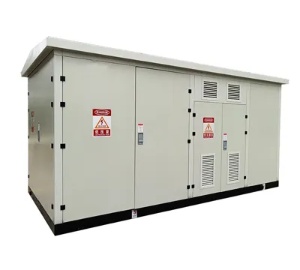
Three Phase Dry Type Transformer: The Ultimate Guide for 2024

Key Features of Oil-Immersed Distribution Transformers
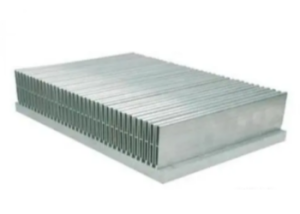
The mystery of semiconductor radiators takes you into the fantastic world of electronic equipment!

Technical Analysis of 1000 kVA Oil-Filled Power Transformers: Design, Applications, and Performance Considerations