


Electronic Components Supplier | Transformers, Inductors, Inverters


Three phase Voltage Regulator

200KW three-phase compensated Voltage regulator China Manufacturer

Three phase stabilizer voltage Regulator 100KVA China Manufacturer

Voltage Regulator / Stabilizer (SBW-50KVA) China Manufacturer

150KVA/380V Voltage Regulator Stabilizer China Manufacturer

3 Phase 30kVA Automatic Voltage Regulator China Manufacturer

three phase voltage regulator 380v 80KVA China Manufacturer

250kva voltage regulator 380v controller China Manufacturer

400KVA voltage regulator 380V 220V China Manufacturer

500KVA voltage regulator 380v controller China Manufacturer

Three-phase 380v automatic voltage regulator China Manufacturer

3phase high-powered 380V voltage regulator China Manufacturer

three phase hot sale high voltage regulator China Manufacturer
Overview of Three Phase Voltage Regulator
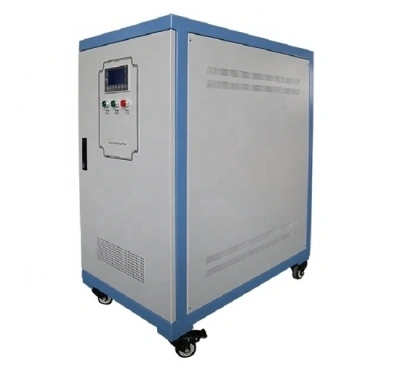
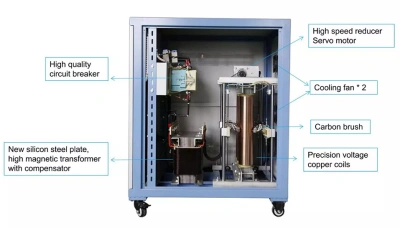
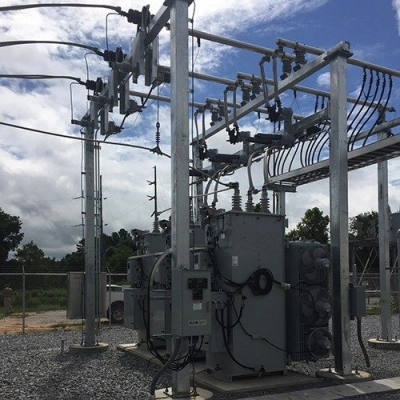
Three phase voltage regulators are designed to stabilize and regulate voltage levels in three-phase power systems. They ensure a consistent voltage supply, protecting electrical equipment from voltage fluctuations, surges, and drops.
These regulators are widely used in industrial plants, factories, data centers, and power distribution systems, especially where stable voltage is critical.
How Three Phase Voltage Regulators Work
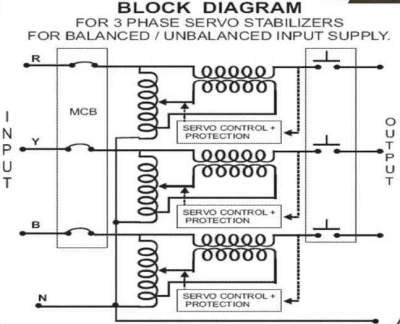
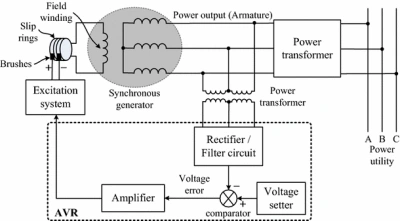
Voltage regulators adjust output voltage automatically.
| Component | Function |
|---|---|
| Transformer | Adjusts voltage levels according to system requirements |
| Control System | Detects voltage fluctuations and controls the regulation process |
| Servo Motor / AVR | Automatically regulates output voltage |
| Voltage Sensing Unit | Measures the input and output voltage continuously |
| Control Panel | Displays operating parameters and allows system settings |
| Tap Changer | Changes transformer turns ratio to maintain the required voltage |
| Protection System | Prevents overvoltage, undervoltage, overload, and other abnormal conditions |
| Circuit Breaker | Disconnects the circuit during faults or abnormal operation |
| Bypass System | Allows the load to continue operating during maintenance or regulator failure |
| Cooling System | Controls operating temperature and helps prevent overheating |
| Surge Protection | Protects the regulator and connected equipment from voltage surges |
| Enclosure | Protects internal components from dust, moisture, and environmental conditions |
Types of Three Phase Voltage Regulators
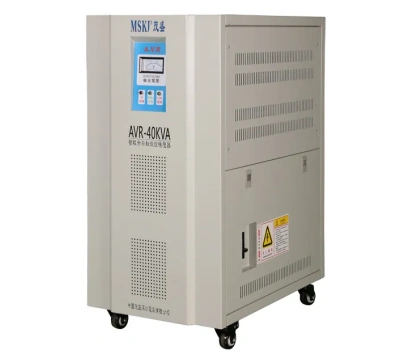
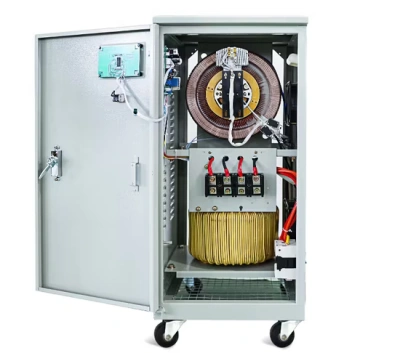
- Servo Voltage Regulator – High precision regulation
- Static Voltage Regulator (AVR) – Fast response electronic control
- Automatic Voltage Stabilizer – Widely used in industrial systems
- Distribution Voltage Regulator – Grid-side voltage control
Advantages of Voltage Regulators
- Reliable Industrial Operation
- Stable Output Voltage
- Protection for Electrical Equipment
- Improved Power Quality
- Energy Efficiency
Company Profile
Luoyang Datang Energy Technology Co., Ltd. is a high-tech enterprise integrating R&D, manufacturing, and supply of power equipment and renewable energy solutions. Specializing in transformers, new energy components, distribution cabinets, and inverters, we have expanded our portfolio to include solar power systems, energy storage solutions, and air source heat pumps. With technological innovation as our core, we focus on creating high-reliability and high-performance power and energy efficiency solutions to serve global customers. Through a strict quality control system and international standard certification, we continuously deliver excellent products that empower our customers to build safe, stable, and sustainable power systems.
If you want a high-quality Three Phase Voltage Regulator supplier, we invite you to contact us or inquire about related products.
Payment Methods for Three-Phase Voltage Regulator
L/C, T/T, Western Union, Paypal, Credit Card etc.
Shipping of Three-Phase Voltage Regulator
Once payment is received, by sea, air, or express as soon as possible.
FAQs of Three Phase Voltage Regulator
1. What is a three phase voltage regulator?
A three phase voltage regulator is an electrical device designed to automatically stabilize and regulate voltage in three-phase power systems. It compensates for voltage fluctuations and maintains a more consistent output voltage for connected electrical equipment.
2. Why is voltage regulation important?
Stable voltage is important for the safe and reliable operation of electrical equipment. Excessive voltage fluctuations can cause overheating, reduced equipment life, malfunction, or unexpected shutdowns. A voltage regulator helps maintain the voltage within the required operating range.
3. How does a three phase voltage regulator work?
The regulator continuously monitors the input voltage through a voltage sensing system. When the voltage rises or falls outside the preset range, the control system adjusts the regulating mechanism to increase or decrease the output voltage. This process helps provide a stable voltage to the connected load.
4. What industries use three phase voltage regulators?
Three phase voltage regulators are commonly used in manufacturing plants, factories, data centers, commercial buildings, telecommunications facilities, hospitals, laboratories, and power distribution systems. They are particularly useful where sensitive equipment requires a stable power supply.
5. What is the difference between servo and static voltage regulators?
Servo voltage regulators use a motor-driven mechanical mechanism to adjust the voltage, while static voltage regulators use electronic components to regulate voltage without moving mechanical parts. Servo regulators are commonly selected for applications requiring reliable voltage stabilization, while static regulators can provide very fast voltage correction.
6. Can a three phase voltage regulator improve energy efficiency?
A voltage regulator can help improve the operating conditions of electrical equipment by maintaining a stable supply voltage. It may reduce unnecessary energy consumption and equipment stress caused by excessive or unstable voltage. However, the actual energy savings depend on the characteristics of the electrical system and connected loads.
7. What is the difference between a voltage regulator and a transformer?
A transformer primarily changes the voltage level between the input and output sides, while a voltage regulator automatically adjusts the output voltage to compensate for fluctuations. Some voltage regulation systems combine transformer technology with automatic voltage control to provide both voltage transformation and stabilization.
8. Can a three phase voltage regulator protect electrical equipment?
Yes. By maintaining a stable output voltage, a regulator can help reduce the risk of equipment problems caused by overvoltage and undervoltage. Many systems can also be equipped with protection functions such as overload, short-circuit, overvoltage, and undervoltage protection.
9. What voltage range can a three phase voltage regulator handle?
The applicable voltage range depends on the regulator model and system requirements. Common specifications include different input and output voltage levels, such as 380V, 400V, 415V, or other customized ratings. The required input range, output voltage, capacity, and frequency should be confirmed before selection.
10. How do I choose the right three phase voltage regulator?
The selection should be based on several factors, including rated power, input voltage range, required output voltage, frequency, load type, regulation accuracy, response time, installation environment, and protection requirements. For industrial applications, the maximum load and starting current of equipment should also be considered.
11. Can a three phase voltage regulator be used for industrial equipment?
Yes. Three phase voltage regulators are widely used for industrial equipment such as CNC machines, motors, pumps, compressors, production lines, welding equipment, and other electrical systems. The regulator capacity should be selected according to the actual load and operating conditions.
12. Does a three phase voltage regulator require maintenance?
Regular inspection is recommended to ensure reliable operation. Maintenance may include checking electrical connections, cooling systems, control components, protection devices, and the operating condition of the regulator. For servo-type regulators, the mechanical components should also be inspected periodically.
13. Can the voltage regulator be customized?
Yes. Three phase voltage regulators can often be customized according to project requirements, including input and output voltage, capacity, regulation range, accuracy, frequency, enclosure type, protection functions, and installation method. Customers should provide the electrical system parameters so the appropriate model can be selected.
14. What information should I provide when requesting a quotation?
For an accurate quotation, it is recommended to provide the input voltage, required output voltage, rated capacity (kVA/kW), frequency, number of phases, voltage regulation range, regulation accuracy, load type, installation environment, and quantity. If available, a technical specification or electrical system diagram can also help the supplier recommend a suitable model.