Lieferant elektronischer Komponenten | Transformatoren, Induktoren, Wechselrichter


PRODUKTPARAMETER
Beschreibung
📌 Einführung
Da die Energiepreise steigen und die Netzinstabilität zunimmt, Hausbesitzer wenden sich an Energiespeichersysteme für Privathaushalte für Energieunabhängigkeit und Notstromversorgung.
Unser Energiespeicherlösung für zu Hause kombiniert fortschrittliche Lithiumbatterien mit intelligenten Wechselrichtern, um moderne Haushalte unterbrechungsfrei und effizient mit Strom zu versorgen.
⚙️ Hauptmerkmale
- Kompaktes Wand- oder Standdesign
- Smarte Überwachung per mobiler App
- Notstromversorgung bei Ausfällen
- Kompatibel mit Solaranlagen auf dem Dach
- Leiser Betrieb
📊 Technische Spezifikationen
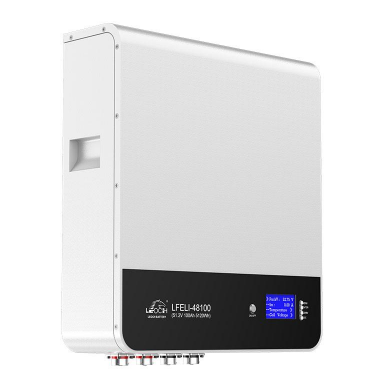
| Parameter | Spezifikation |
|---|---|
| Akku-Typ | LiFePO4 |
| Kapazität | 5 kWh – 30 kWh |
| Nennspannung | 48V / 51.2V |
| Wechselrichtertyp | Hybrid / Netzunabhängig |
| Zyklusleben | ≥6000 Zyklen |
| Garantie | 5–10 Jahre |
🏡 Bewerbungen
- Wohnhäuser
- Villen
- Kleine Unternehmen
- Leben außerhalb des Stromnetzes
💡 Vorteile
- Reduzieren Sie Ihre Stromrechnungen
- Stellen Sie die Stromversorgung bei Stromausfällen sicher
- Maximieren Sie den solaren Eigenverbrauch
- Einfache Installation & Wartung
🔋 How Does a Residential Solar Energy Storage System Work?
A residential solar energy storage system is designed to maximize the use of renewable energy while ensuring a stable and uninterrupted power supply for your home. By storing excess electricity generated by solar panels, the system allows homeowners to use clean energy even when the sun is not shining.
During the daytime, rooftop photovoltaic (PV) panels generate electricity. The generated power is first supplied to household appliances, such as lighting, air conditioners, televisions, and kitchen equipment. When solar production exceeds the home’s immediate electricity demand, the surplus energy is stored in the lithium battery instead of being exported to the utility grid.
At night or during periods of low solar generation, the stored energy is automatically discharged from the battery to power your home. This intelligent energy management significantly reduces dependence on the utility grid and helps lower monthly electricity bills.
In the event of a power outage, the hybrid inverter instantly switches the battery into backup mode, providing continuous electricity for essential household loads such as refrigerators, internet routers, Beleuchtungssysteme, security equipment, and medical devices. The transition is automatic, allowing homeowners to enjoy uninterrupted power without manual intervention.
With an advanced Battery Management System (BMS) and intelligent inverter technology, the entire process is monitored in real time to ensure safe charging, stable discharging, and optimal battery performance throughout its service life.
🌞 Why Residential Energy Storage Is Becoming Essential
The global transition toward renewable energy has made residential battery storage an increasingly important part of modern homes. As electricity prices continue to rise and power grids face growing pressure, homeowners are looking for smarter ways to manage their energy consumption.
A home energy storage system enables users to store inexpensive solar energy generated during the day and use it during peak electricity pricing periods. This reduces energy costs while improving overall energy efficiency.
For regions experiencing unstable power supply or frequent blackouts, battery storage also provides peace of mind by ensuring continuous operation of critical household appliances. Families can maintain lighting, communication devices, refrigeration, and other essential equipment even during prolonged outages.
Zusätzlich, residential battery systems help reduce carbon emissions by maximizing the utilization of clean solar energy instead of relying on electricity generated from fossil fuels.
As more countries introduce incentives for renewable energy adoption, residential energy storage has become not only an environmentally responsible choice but also a valuable long-term investment for homeowners.
⚡ Advantages of LiFePO4 Battery Technology
Our residential energy storage system utilizes advanced Lithium Iron Phosphate (LiFePO4) battery cells, one of the safest and most reliable battery technologies available today.
Compared with traditional lead-acid batteries, LiFePO4 batteries offer significantly longer service life, higher charging efficiency, and improved operational safety. They require virtually no routine maintenance and maintain stable performance even under frequent charge and discharge cycles.
Key advantages include:
- More than 6,000 charge-discharge cycles for extended service life
- High thermal stability and excellent safety performance
- Deep discharge capability with high usable battery capacity
- Fast charging and high energy conversion efficiency
- Lightweight and compact design for easier installation
- Environmentally friendly materials with no heavy metal pollution
- Low maintenance requirements throughout the battery lifespan
These advantages make LiFePO4 batteries an ideal choice for residential solar applications where long-term reliability and consistent performance are critical.
🏠 Flexible Installation Options
Every household has different energy requirements and available installation space. Our residential energy storage solutions are designed with flexibility in mind and can be configured to suit a wide range of residential environments.
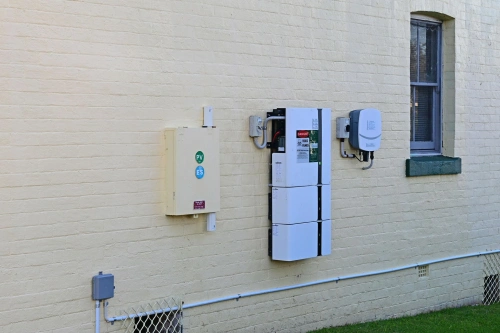
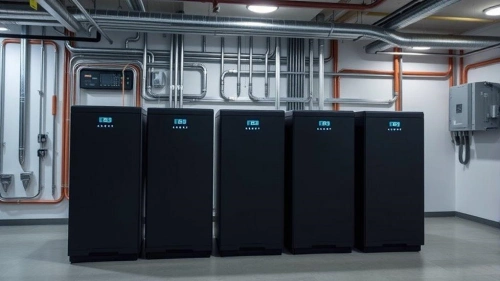
Depending on the project requirements, customers can choose from wall-mounted battery units for compact spaces, floor-standing cabinets for higher capacities, or modular stackable battery systems that allow future expansion.
Typical installation locations include:
- Garage
- Utility room
- Basement
- Outdoor protected area
- Mechanical room
- Residential storage room
The compact design minimizes installation space while maintaining easy access for inspection and maintenance. With support for modular expansion, homeowners can increase battery capacity in the future as their electricity demand grows, making the system a scalable investment for long-term energy management.
Fordern Sie ein Angebot an
VERWANDTE PRODUKTE
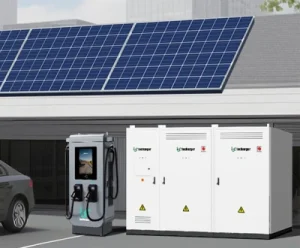
🚗 Laden von Elektrofahrzeugen + Energiespeichersystem – Intelligente Ladeinfrastruktur
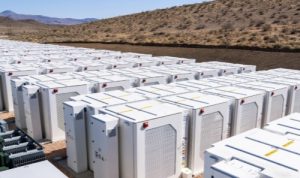
Antreibende Intelligenz: Wie Energiespeicher die KI-Revolution ermöglichen
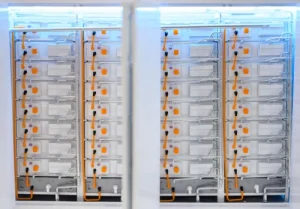
⚡ Containerisiertes Energiespeichersystem – Energielösung im Versorgungsmaßstab
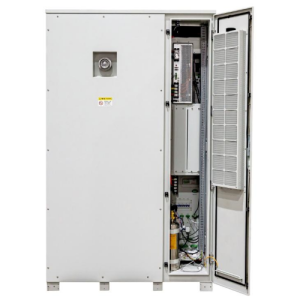
⚡ Off-Grid-Energiespeichersystem – Zuverlässige Energie für abgelegene Gebiete
Konvertertechnologie: der Allround-Pionier im neuen Energiezeitalter