Pemasok Komponen Elektronik | transformator, Induktor, Inverter


PARAMETER PRODUK
Keterangan
PERMINTAAN PENAWARAN
Keterangan
Overview of Reliable Long-wave Infrared Temperature Sensor for Industrial Use
Reliable Long-wave Infrared Temperature Sensor for Industrial Use is used to monitor the temperature during industrial production processes, yang penting untuk pengoperasian peralatan, kualitas produk, dan keselamatan produksi. Ada berbagai jenis, seperti termometer tahan panas, termometer termokopel, termometer inframerah, termometer optik, dll., masing-masing dengan kelebihannya, kekurangan, dan rentang yang berlaku, yang perlu dipilih sesuai dengan lingkungan penggunaan spesifik dan persyaratan pengukuran. Periksa dan kalibrasi secara teratur untuk memastikan keakuratan dan keandalan, menyediakan data pengukuran suhu yang andal untuk produksi industri. Memilih dan menggunakan termometer industri dengan benar dapat menjamin kelancaran hasil industri.
Characteristics of Reliable Long-wave Infrared Temperature Sensor for Industrial Use
Pengukuran presisi tinggi: Biasanya memiliki fungsi pengukuran suhu presisi tinggi, Yang secara akurat dapat mengukur dan menampilkan nilai suhu. Hal ini berkat penggunaan sensor suhu presisi dan sirkuit pengukuran.
Kisaran suhu yang luas: mampu beradaptasi dengan berbagai suhu dan mengukur serta mengendalikan proses industri dari suhu yang sangat rendah hingga tinggi. Model pengontrol suhu yang berbeda mungkin memiliki rentang suhu yang berbeda, dan pengguna dapat memilih model yang sesuai dengan kebutuhan spesifik mereka.
Beberapa mode kontrol: Biasanya mendukung beberapa mode kontrol, seperti kontrol proporsional, kontrol PID, kontrol kabur, dll.. Mode kontrol ini dapat dipilih dan disesuaikan berdasarkan kebutuhan aktual untuk mencapai kontrol dan stabilitas suhu yang tepat.
Beberapa mode keluaran: Dengan beberapa mode keluaran untuk komunikasi dan kontrol dengan perangkat atau sistem lain. Metode keluaran umum mencakup keluaran analog (seperti sinyal arus atau tegangan), keluaran digital (seperti antarmuka komunikasi RS485), dan keluaran relai.
Tampilan layar besar: Dilengkapi dengan tampilan layar besar, itu dapat dengan jelas menampilkan suhu saat ini, mengatur suhu, dan informasi terkait lainnya. Hal ini memungkinkan pengguna memantau perubahan suhu dan status perangkat secara visual, membuatnya nyaman untuk mengoperasikan dan menyesuaikan parameter.
Kemampuan anti-interferensi yang kuat: Seringkali terdapat berbagai sumber gangguan dalam lingkungan industri, seperti interferensi elektromagnetik, getaran, dan fluktuasi suhu. Termometer industri biasanya memiliki kemampuan anti-interferensi yang kuat, dan desain anti-interferensi serta algoritma penyaringan diadopsi untuk mengurangi dampak interferensi pada pengukuran dan kontrol suhu.
Fungsi yang dapat diprogram: Dengan fungsi yang dapat diprogram, pengguna dapat menyesuaikan pengaturan dan pengoperasian sesuai dengan kebutuhan mereka. Pengguna dapat mengatur kurva suhu, kontrol waktu, dan fungsi alarm melalui antarmuka pemrograman untuk memenuhi kebutuhan proses industri yang kompleks.
Fungsi perlindungan keamanan: biasanya memiliki beberapa fungsi perlindungan keamanan untuk menjamin keamanan peralatan dan proses. Misalnya, itu dapat memiliki fungsi seperti perlindungan suhu berlebih, memori pemadaman listrik, dan alarm kesalahan untuk mencegah pengambilan tindakan tepat waktu jika suhu melebihi kisaran aman atau kegagalan peralatan.
Instalasi mudah: Termometer industri dapat dipasang dengan berbagai cara, seperti aksial, radial, dan universal, sehingga nyaman bagi pengguna untuk menggunakannya.
Daya tahan dan keandalan yang baik: Termometer industri biasanya terbuat dari bahan dan proses berkualitas tinggi, yang memiliki daya tahan dan keandalan yang baik serta dapat bekerja secara stabil dalam waktu lama.”
Specification of Reliable Long-wave Infrared Temperature Sensor for Industrial Use
Here’s the specification content for the Reliable Long-wave Infrared Temperature Level Sensing Unit for Industrial Use:
This commercial long-wave infrared temperature sensing unit measures temperature levels accurately. It uses the 8 ke 14 µm wavelength array. This range benefits numerous industrial materials. It sees the heat objects emit. The sensor does not require to touch the object. It gauges temperature levels from -20 °C sampai 600 °C. Some versions measure higher temperatures. The accuracy is normally ± 1% of the analysis. It may be ± 1.5 °C. This depends upon the design. The optical resolution is essential. Typical ratios are 20:1 atau 30:1. This informs you the target size required at a range. A 30:1 ratio is better for smaller sized targets far.
The sensing unit reacts quick. Normal response time is 150 nanoseconds. It can be 100 ms in some variations. This rate is crucial for rapid procedures. It outputs the temperature level signal. Requirement outputs are 4-20mA analog. Some models provide digital outcomes. RS485 Modbus is common. Others include USB. The sensing unit needs a power supply. Typical voltages are 12-24 VDC. It is constructed hard for manufacturing facilities. The housing is typically stainless steel. It has an IP67 ranking. This safeguards against dust and water jets. Sensor menangani getaran dengan baik. Ini beroperasi di daerah hangat. Kisaran suhu pengoperasian sering kali -10 °C sampai 70 °C. Ini membutuhkan sedikit perawatan. Lensa tetap bersih lebih lama. Pengaturan emisivitasnya fleksibel. Hal ini memastikan pembacaan yang tepat untuk permukaan yang berbeda. Fokusnya ditangani atau fleksibel. Penekanan yang diperbaiki tidak terlalu rumit. Fokus yang dapat disesuaikan menggunakan keserbagunaan ekstra. Pemasangannya sangat mudah. Pilihannya mencakup barel atau flensa berulir. Itu menempel untuk mengatur sistem dengan cepat. Kalibrasi stabil seiring berjalannya waktu.
Penerapan Sensor Suhu Inframerah Gelombang Panjang yang Andal untuk Keperluan Industri
Pengaturan industri memerlukan pelacakan tingkat suhu yang dapat dipercaya. Unit penginderaan inframerah gelombang panjang memberikan keandalan ini. Mereka mengukur panas tanpa menyentuh apapun. Anda mengarahkannya ke peralatan dari jarak yang aman. Mereka memberikan analisis yang tepat dengan cepat. Ini penting untuk banyak pekerjaan industri.
Perhatikan motor listrik, bantalan, dan gearbox dengan mudah. Bagian-bagian ini berasap sebelum gagal. Sensor menempatkan lokasi ini lebih awal. Anda memperbaiki masalah sebelum mesin rusak. Ini menghemat uang untuk perbaikan. Hal ini juga menghindari penghentian produksi yang mahal. Menjaga semuanya berjalan lancar adalah masalah.
Dalam produksi, suhu produk biasanya penting. Asumsikan penanganan baja atau cetakan plastik. Unit penginderaan memeriksa suhu secara terus menerus. Ini menjamin produk dihangatkan atau didinginkan dengan benar. Kualitas reguler bergantung pada ini. Anda mencegah membuat barang-barang buruk. Scrap dan limbah turun.
Sistem kelistrikan juga mendapat untung. Sirkuit yang kelebihan beban dan sambungan yang longgar menjadi sangat panas. Sensor mendeteksi bahaya ini dengan cepat. Anda melindungi dari kebakaran dan kerusakan listrik. Pekerja tetap lebih aman. Memeriksa panel lebih cepat dan sederhana. Anda tidak perlu membuka penutup.
Proses bersuhu tinggi seperti sistem pemanas memerlukan pengamatan yang konstan. Sensor mengatur panas yang parah ini dengan mudah. Ini menawarkan informasi tingkat suhu waktu nyata. Operator mengontrol prosedur secara khusus. Efisiensi daya meningkat. Kualitas barang tetap tinggi. Kru pemeliharaan mengenali kapan lapisan seluler sistem pemanas aus. Mereka bermaksud perbaikan bekerja lebih baik.
Lingkungan fasilitas manufaktur yang keras sangatlah sulit. Kotoran, uap, dan getaran adalah hal biasa. Unit penginderaan ini dikembangkan untuk bertahan di sini. Mereka tetap bekerja dengan tepat. Anda memperoleh informasi yang dapat dipercaya hari demi hari. Angsuran biasanya sederhana. Asimilasi dengan sistem kontrol itu mudah.
Profil Perusahaan
PDDN Fotoelektron Technology Co., Ltd. adalah salah satu perusahaan terkemuka di bidang teknologi elektronika daya dan produk daya, yang terlibat penuh dalam pengembangan inverter surya, transformator, pengatur tegangan, lemari distribusi, thyristor, modul, dioda, pemanas, dan perangkat elektronik atau semikonduktor lainnya. Kami akan berkomitmen untuk menyediakan layanan berkualitas tinggi kepada pengguna, produk yang efisien dan layanan penuh perhatian.
Ia menerima pembayaran melalui Kartu Kredit, T/T, Serikat Barat, dan Paypal. PDDN akan mengirimkan barang ke pelanggan di luar negeri melalui FedEx, DHL, melalui laut, atau melalui udara. Jika Anda menginginkan Sensor Suhu Inframerah Gelombang Panjang yang Andal dan Berkualitas Tinggi untuk Keperluan Industri, silakan kirimkan pertanyaan kepada kami; kami akan berada di sini untuk membantu Anda.
Metode Pembayaran
L/C, T/T, Serikat Barat, Paypal, Kartu Kredit dll.
Pengiriman
Melalui laut, melalui udara, dengan mengungkapkan, sebagai permintaan pelanggan.
Kondisi Penyimpanan
1) Simpan di lingkungan kering pada suhu kamar.
2) Hindari lembab dan suhu tinggi.
3) Gunakan segera setelah membuka kantong kemasan bagian dalam.
5 FAQ Sensor Suhu Inframerah Gelombang Panjang yang Andal untuk Keperluan Industri
Sensor Suhu Inframerah Gelombang Panjang yang Andal untuk Keperluan Industri: Atas 5 Pertanyaan Dijawab
1. Seberapa akurat sensor ini?
Sensor ini memberikan akurasi yang sangat baik. Biasanya diukur dalam ±1°C atau ±1% dari suhu sebenarnya. Hal ini tergantung pada objek sasarannya. Sensor bekerja paling baik bila diarahkan dengan benar ke permukaan. Penyiapan yang baik sangat berarti untuk hasil terbaik.
2. Di mana saya harus memasang sensor?
Pasang sensor mengarah lurus ke permukaan yang ingin Anda ukur. Jaga jarak yang tepat. Periksa spesifikasi sensor untuk bidang pandangnya. Pastikan tidak ada yang menghalangi pandangan sensor. Debu, uap, atau jendela yang kotor dapat mengacaukan pembacaan. Pilih tempat yang stabil dengan getaran rendah.
3. Apa yang bisa menyebabkan pembacaan yang salah?
Beberapa hal dapat menimbulkan masalah. Udara kotor yang penuh debu atau asap menghalangi sinyal inframerah. Uap atau gas lain juga mengganggu. Benda yang sangat panas di dekat objek target dapat membingungkan sensor. Perubahan suhu udara di sekitar sensor secara tiba-tiba juga mempengaruhinya. Lensa yang kotor memberikan pembacaan yang buruk. Hindari situasi ini untuk mendapatkan data yang andal.
4. Apakah sensor ini cukup tangguh untuk pabrik saya?
Ya, sensor ini dibuat untuk tempat yang sulit. Ini menangani debu, kelembaban, dan getaran yang umum terjadi di pabrik. Biasanya memiliki casing logam yang kuat. Peringkat perlindungannya sering kali IP65 atau lebih tinggi. Artinya, ia tahan terhadap debu dan pancaran air. Ia bekerja di area panas atau dingin dalam jangkauan operasinya.
5. Seberapa sering perlu diperiksa?
Anda harus memeriksa kalibrasi sensor secara teratur. Seberapa seringnya bergantung pada seberapa kritis proses Anda dan kondisi pabrik Anda. Rencana yang baik adalah memeriksanya setiap enam bulan atau setahun sekali. Bandingkan dengan termometer akurat yang diketahui. Ini membuat pengukuran Anda dapat dipercaya.
PERMINTAAN PENAWARAN
PRODUK TERKAIT

Probe Sensor Termokopel Industri yang Dapat Disesuaikan Kepala Pengukuran Suhu Suhu Tinggi Waktu Nyata untuk OEM Kimia

Akurasi pengukuran kelas termometer universal 1.5 Produsen Cina
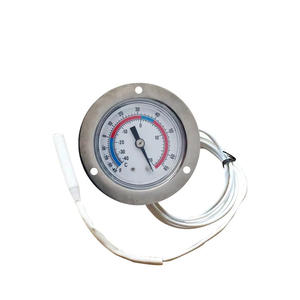
Termometer Inframerah Non-Kontak Industri Digital IR05A Pyrometer Dengan Rentang -40-1600C OEM Dapat Disesuaikan
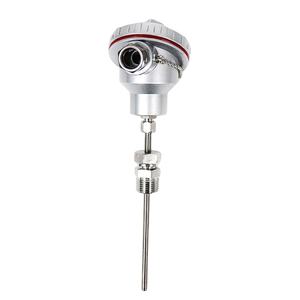
Baja Tahan Karat Berkualitas Tinggi 0-650 Derajat Insulated Dial Gauge Termometer Tekanan Logam Kapiler Industri Menggunakan Minyak Air
Factory Direct Customized 304 Instrumen Tampilan Suhu Lokal Tahan Ledakan Baja Tahan Karat PT100