Electronic Components Supplier | Transformers, Inductors, Inverters


1.Why oil immersed transformers are still the mainstream of the global power grid
Against the backdrop of rapid development of new energy and continuous expansion of the global power grid, oil immersed transformers still dominate the medium and high voltage power systems.
Whether on the power generation side, transmission side, or industrial distribution field, oil immersed transformers remain the preferred solution in the global market due to their high reliability, strong overload capacity, and mature technical system.
Especially in regions such as Africa, the Middle East, South America, and Southeast Asia, oil immersed transformers have been widely used by power companies and EPC projects for a long time due to their adaptability to harsh environments and low maintenance costs.
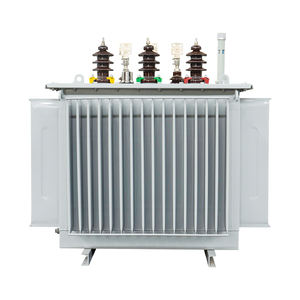
2.What is an oil immersed transformers
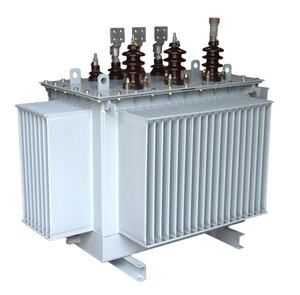
Oil immersed transformers refers to a transformer in which the winding and iron core are completely immersed in insulating oil during operation.
Insulating oil simultaneously undertakes three core functions:
- insulation
- heat dissipation
- Fault energy buffer
This is also the fundamental difference between it and dry-type transformers.
3.Core structure and technical principles of oil immersed transformers
3.1 Iron Core System
Cold rolled oriented silicon steel sheet
Ladder laminated structure
Reduce no-load losses and noise
👉 High end products have widely adopted low loss silicon steel and laser marking technology.
3.2 Winding System
Material: Copper winding/Aluminum winding
Form: cylindrical, continuous, spiral
Key indicators:
- mechanical strength
- thermal stability
- Anti short circuit capability
3.3 Insulation oil system
Common oils include:
- mineral oil
- natural ester oil
- Synthetic ester oil
Among them, environmentally friendly ester oils are becoming a new hotspot in the international market, especially in European projects.
4.Cooling method and model classification
| Cooling Type | Description | Typical Application |
|---|---|---|
| ONAN | Oil Natural, Air Natural | Distribution transformers |
| ONAF | Oil Natural, Air Forced | Medium & large transformers |
| OFAF | Oil Forced, Air Forced | High-load operation |
| OFWF | Oil Forced, Water Forced | Special industrial use |
5.Key performance advantages of oil immersed transformers
Superior heat dissipation performance
Strong overload capacity
Long operating lifespan (over 30 years)
Suitable for high voltage and large capacity
Mature maintenance experience and global applicability
6.Oil immersed vs. dry-type transformers (comparison from an engineering perspective)
| Item | Oil-Immersed | Dry-Type |
|---|---|---|
| Voltage level | Medium & High | Low & Medium |
| Capacity range | Large | Relatively limited |
| Cooling efficiency | ⭐⭐⭐⭐⭐ | ⭐⭐⭐ |
| Fire risk | Moderate | Low |
| Initial cost | Lower | Higher |
7.International Market Trends and Export Focus
The current focus of overseas customers’ attention includes:
- Compliance with IEC 60076
- Energy Efficiency Level (Low Loss Design)
- anti-corrosion coating
- Adaptability to high temperature, high humidity, and high altitude
Despite the continuous evolution of new energy technologies, oil immersed transformers remain an irreplaceable basic equipment in the global power system.
Its technological roadmap is mature, with a wide range of application scenarios, and it will continue to maintain stable growth for a considerable period of time in the future.
RELATED POSTS
Three Phase Distribution Transformers: The 2024 Ultimate Buyer’s Guide
How does the shortage of transformers hold AI and Musk’s neck?
Common faults and protection technology analysis of oil immersed transformer: from partial discharge to short circuit accidents
Why is industrial and commercial energy storage becoming increasingly popular? Analysis of the New Trend of Enterprise Cost Reduction in 2025
How can air source heat pumps reduce household heating costs by 50% -75%?