Electronic Components Supplier | Transformers, Inductors, Inverters


Giant energy storage battery compartments are neatly arranged on the grasslands of Inner Mongolia, while data centers across the ocean are experiencing anxiety due to a shortage of power supply.
On November 30th, the largest semi-solid lithium battery energy storage project in China’s installed capacity was successfully connected to the grid in Wuhai, Inner Mongolia.
This “super power bank” covering an area of about 100 acres can meet the electricity needs of about 4000 households for one month with a single discharge.
At the same time, the United States is facing a severe power crisis. According to a report by consulting firm Wood Mackenzie, the United States’ efforts to upgrade the power grid for artificial intelligence data centers will result in a demand for power transformers exceeding supply by 30% this year, with waiting times extending from 50 weeks to an astonishing 127 weeks.
1.Energy storage breakthrough: China’s “super power bank” connected to the grid
In the wave of global energy transition, China has achieved a landmark achievement in the field of energy storage.
The 200000 kW/800000 kWh semi-solid energy storage power station in Wuhai, Inner Mongolia has recently been successfully connected to the grid for power generation. This project is not only the largest independent new energy storage project on the grid side of semi-solid lithium batteries in China, but also the first large-scale energy storage project in Inner Mongolia to adopt semi-solid lithium iron phosphate battery technology.
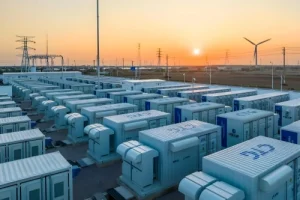
On the project site, 160 energy storage battery compartments and 40 integrated converter and boost compartments are neatly arranged, forming an efficient energy regulation system.
This’ super power bank ‘can deliver 189 million kilowatt hours of clean electricity to the grid annually, and the power station can discharge 282 equivalent discharges per year.
In terms of operation mode, it adopts peak shaving regulation mode, storing excess electricity when the grid load is low and releasing electricity during peak electricity consumption, effectively solving the challenges brought by large-scale new energy gathering in Wuhai and surrounding areas.
2.Algorithm Revolution: Computing Power Requirements from DeepSeek to Agent Year 1
The rapid development of artificial intelligence technology is reshaping the global computing power landscape. 2025 is considered by the industry to be the year of agents, and the demand for inference is driving explosive growth in computing power demand.
In this context, the scale of China’s intelligent computing power has reached 725.3 EFLOPS in 2024, with a year-on-year growth rate of up to 74.1%, which is more than three times the growth rate of general computing power during the same period.
The big models represented by DeepSeek are promoting the popularization and application of big models through algorithmic innovation. Algorithm innovation has become the core engine driving the development of artificial intelligence, driving the construction and transformation of computing infrastructure.
It is worth noting that the penetration speed of AI big model to the industry has exceeded the previous Internet revolution. According to the report of CITIC Think Tank, the penetration rate of ChatGPT in two years and one quarter roughly corresponds to the penetration rate of PC Internet in 10 years.
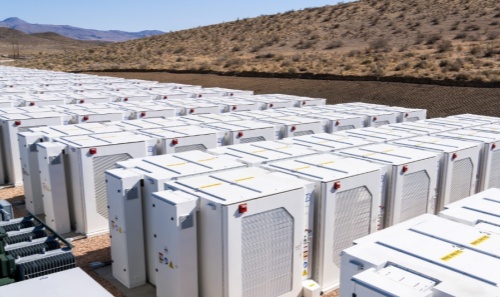
Energy storage is critical to unlocking the clean energy future
3.American dilemma: Transformer shortage becomes a bottleneck for AI development
While the global AI industry is rapidly developing, the United States is facing an unexpected bottleneck – a severe shortage of power transformers. This crisis is threatening the energy transition and grid reliability goals of the United States.
According to industry organizations, the US transformer market is facing a supply and demand gap of up to 30%, and the waiting time for some transformers has been extended from 50 weeks to 127 weeks (nearly two and a half years).
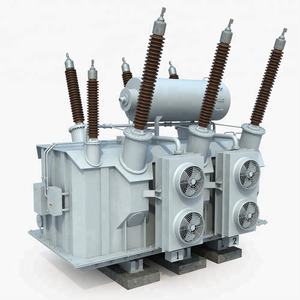
Transformers are one of the most critical components in power grid upgrades, and the domestic production capacity in the United States is severely insufficient, with about 80% of transformers relying on imports, mainly from countries such as South Korea and Mexico.
This shortage not only increases costs, but may also lead to the forced postponement of important infrastructure projects, seriously weakening the recovery capacity of the power grid.
4.Global Transformation: Analysis of Transformer Market Demand in Various Countries
The global transformer market is undergoing structural changes, with varying demand characteristics in different regions.
The Chinese market has invested heavily in the field of clean energy, with an investment of nearly $940 billion in clean energy by 2024, approaching the global scale of fossil fuel investment. This has driven strong demand for efficient transformer components.
The European market places greater emphasis on energy efficiency and sustainability, and is adopting innovative transformer technologies that comply with strict environmental regulations. Germany has set a clear goal of achieving climate neutrality by 2045.
The main driving force for the US market is the integration of renewable energy into the grid and the modernization of aging power grids. The US Department of Energy has invested $1.5 billion in four major transmission projects to improve grid reliability.
In terms of market size, the global power transformer market is expected to grow from $1.15 billion in 2025 to $1.524 billion in 2032, with an average annual compound growth rate of approximately 4.10%.
5.Musk’s Chess Game: Tesla’s Energy Strategy and Computing Power Loop
At the intersection of energy and computing power, Elon Musk is playing a big game. Tesla’s energy business has changed from a “supporting role” in the automotive business to a core engine of profit growth.
In the third quarter of 2025, Tesla’s energy business gross profit reached $1.1 billion, with a gross profit margin of 32%, surpassing the automotive business for the first time. In the first three quarters, energy revenue accounted for 12.8%, but contributed 23% of profits.
Tesla’s energy layout has formed a systematic positive feedback loop: FSD technology drives more electric vehicle sales, driving demand for supercharging and energy storage; The xAI/Colossus project increases computing power load and strengthens dependence on energy; The mass production of Optimus humanoid robots will drive up factory power consumption, which in turn will drive sales of Megapack energy storage systems.
It is worth noting that Tesla’s true moat is not battery hardware, but algorithms. Its Autobidding virtual power plant system can increase energy storage revenue by 30%, and this software as a service energy dispatch platform brings long-term subscription revenue.
Even more surprisingly, hydrogen energy occupies an important position in Tesla’s decarbonization roadmap. Tesla’s “Master Plan Part 3” predicts that in fully electrified America, hydrogen will provide 92% of the country’s fixed energy storage capacity to meet long-term energy storage needs.
When the “super power banks” on the grasslands of Inner Mongolia began to provide stable power to the grid, data centers in the United States were still anxiously waiting for a shortage of transformers, the “heart” of electricity. The alarm of a global transformer shortage of 30% has been sounded.
Faced with a delivery delay of up to 127 weeks for transformers, Wall Street analysts are reassessing the growth expectations of tech companies. Meanwhile, Tesla’s energy business gross profit margin has quietly climbed to 32%, surpassing its core automotive business.
The winner or loser of the future energy war may no longer be just the number of transistors on the chip, but also the stable flow of electrons in the power grid and the intelligent algorithms for scheduling these electrons.
Luoyang Datang Energy Technology Co., Ltd. is a high-tech enterprise integrating R&D, manufacturing and supply of power equipment such as transformers, new energy components, distribution cabinets and inverters. With technological innovation as the core, we focus on creating high-reliability and high-performance power solutions to serve global customers. With a strict quality control system and international standard certification, we continue to output excellent products and enable customers to build safe and stable power systems.
RELATED POSTS
The Gas Relay: The Unsung Hero That Prevents Transformer Disasters
The Enduring Value of Mineral Oil Transformers: A Proven Choice.
Single Phase vs Three Phase Pole Mounted Transformer: A Selection Guide (How to Choose)
Why has power transformers become a new focus of competition among major countries?
Why is industrial and commercial energy storage becoming increasingly popular? Analysis of the New Trend of Enterprise Cost Reduction in 2025