Electronic Components Supplier | Transformers, Inductors, Inverters


With the deepening of the national “dual carbon” strategy, a green revolution around building heating is quietly taking place. Recently, the National Development and Reform Commission, the Ministry of Industry and Information Technology, and six other departments jointly issued the “Action Plan for Promoting High Quality Development of the Heat Pump Industry”, which clearly states the need to encourage the promotion and application of air source heat pumps in cold and hot summer and cold winter areas. This heavyweight policy not only injects a stimulant into the industry, but also indicates that air source heat pump technology is moving from “alternative” to “mainstream” and standing at the forefront of green and low-carbon industries.
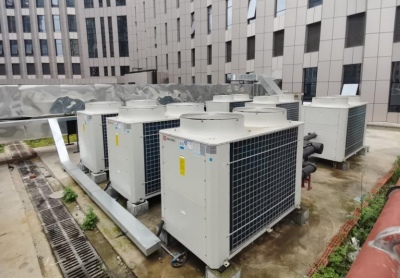
Air Source Heat Pump
1.Policy driven: Air source heat pumps enter a golden period of development
Policy is the core engine of industrial development. The release of this Action Plan has laid out a clear development blueprint for the air source heat pump industry.
1.1 Clear Development Goals
The Action Plan sets ambitious industry goals: striving to continuously enhance the production, manufacturing, and technological research and development capabilities of heat pumps by 2030, improve the energy efficiency level of key heat pump products by more than 20%, and make breakthroughs in core technology fields such as high-power high-temperature heat pumps, significantly improving the international competitive advantage of the industry. This has pointed out the direction for technological innovation and quality upgrading in the industry.
1.2 Wide application scenarios
The policy strongly guides heat pump technology to replace traditional high-energy consumption equipment in multiple key areas:
In the field of architecture, it is encouraged to promote the use of heat pump water heaters in public buildings such as schools, hospitals, hotels, and residential buildings where conditions permit, replacing traditional gas and electric direct heating hot water devices. At the same time, support the use of air source, ground source and other heat pumps to replace coal-fired boilers and loose coal combustion, and strengthen the guarantee of clean heating.
Industrial sector: Promote the use of heat pumps to recover waste heat from industrial wastewater and exhaust gas, providing high-temperature steam for industries such as petrochemicals, food processing, textile printing and dyeing, and achieving energy conservation and carbon reduction.
Other fields: The policy also encourages the expansion of heat pump technology to agricultural drying, transportation station heating, and even intelligent thermal management for electric vehicles to improve battery efficiency.
2.Market potential: a blue ocean with a penetration rate of less than 5%
Despite its broad prospects, air source heat pumps are still in the early stages of explosive growth in the Chinese market, with enormous potential.
2.1 The huge space in the construction market
Data shows that the current penetration rate of heat pumps in the field of building heating is less than 5%, and their scale in the water heater market is far less than that of gas water heaters. This means that with the promotion of policies and the improvement of consumer awareness, there is huge room for substitution and growth in the civilian market alone.
2.2 Industrial applications have just begun
The industrial sector is a major contributor to energy consumption and carbon emissions. Nearly 50% of industrial energy consumption in China is emitted in the form of waste heat, while the proportion of industrial heat pump applications is less than 1%. The Action Plan clearly prioritizes industrial waste heat recovery, which will open up a large-scale and urgently needed new market for development.
3.Technological evolution: Breaking through bottlenecks and embracing intelligence
The vigorous development of any industry cannot be separated from the continuous progress of technology. The air source heat pump industry is innovating to solve past pain points and move towards efficiency and intelligence.
3.1 Overcoming the Challenges of Low Temperature and Energy Efficiency
In the past, the decline in heating capacity in low-temperature environments was a challenge that hindered the promotion of air source heat pumps in northern regions. Nowadays, leading enterprises have made breakthroughs through technological innovation. For example, the use of jet enthalpy enhancement, frequency conversion technology, and special fin materials enables some products to operate efficiently and stably in extremely cold weather, greatly improving energy efficiency.
3.2 Deep integration with AI and the Internet of Things
The core keywords for industry development are “digital intelligence, low-carbon, and integration”. Artificial intelligence (AI) technology is like a “band conductor”, intelligently coordinating the operation of a heat pump system. AI heat pumps equipped with global optimization algorithms have emerged in the market, which can accurately predict loads, sense environmental changes, and automatically adjust to the optimal operating state, maximizing energy efficiency while improving comfort.
Luoyang Datang Energy Technology Co., Ltd. is a high-tech enterprise integrating R&D, manufacturing and supply of power equipment such as transformers, new energy components, distribution cabinets and inverters. With technological innovation as the core, we focus on creating high-reliability and high-performance power solutions to serve global customers. With a strict quality control system and international standard certification, we continue to output excellent products and enable customers to build safe and stable power systems.
RELATED POSTS

Two-phase thyristor controller: a powerful tool for power speed regulation
The hidden champion of the power industry: the mystery of the Rectifier Module
Thyristor Three-Phase Voltage Control Signal: The source of wisdom in power electronics
SolarEdge Current Transformer: The Ultimate Guide for Solar Monitoring

External Heat Sink: An Effective Solution for Heat Management