Electronic Components Supplier | Transformers, Inductors, Inverters


1.Definition of dry-type transformers
Dry-type transformers are power transformers that are naturally cooled by air and do not rely on liquid cooling media, thus having higher safety and environmental friendliness. It is mainly used in low and medium voltage distribution systems and has a wide range of applications in commercial, industrial, and urban power grids.
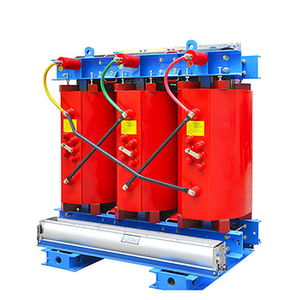
dry-type transformers
1.1 Working principle of dry-type transformers
Dry-type transformers use the principle of electromagnetic induction to convert electrical energy. When AC power passes through the high-voltage winding of a transformer, a changing magnetic field is generated around it, which is then conducted to the low-voltage winding through the iron core, inducing current in the low-voltage winding and completing voltage conversion.
1.2 Characteristics of dry-type transformers
Dry-type transformers do not use transformer oil and mainly rely on natural air heat dissipation. They are relatively small in size and have stronger safety and environmental friendliness. It is commonly found in high demand environments such as hospitals, power companies, shopping centers, etc.
2.Advantages of dry-type transformers
Compared to other types of transformers, dry-type transformers have the following advantages:
2.1 No risk of oil leakage
Due to the fact that dry-type transformers do not use oil as a cooling medium, there is no risk of oil leakage. This makes it a preferred choice in some situations that require high security.
2.2 Strong adaptability
Dry-type transformers have a small volume, flexible installation, and are suitable for various environments. Whether it is urban high-rise buildings or industrial facilities, dry-type transformers can provide stable power supply.
2.3 Low maintenance cost
Dry-type transformers do not require regular oil replacement or complex maintenance processes, therefore, they have lower maintenance costs and higher cost-effectiveness in long-term use.
3.Selection criteria for dry-type transformers
When choosing a dry-type transformer, the following key factors need to be considered:
3.1 Voltage and Power Requirements
Select the appropriate dry-type transformers model based on the voltage and power requirements of the specific application scenario. If it is a large industrial equipment, a transformer with higher power needs to be selected, while for households or small commercial areas, a dry-type transformer with lower power can be chosen.
3.2 Environmental Temperature
Dry-type transformers have certain requirements for ambient temperature. In high-temperature environments, it is necessary to choose transformers with better heat dissipation performance.
3.3 Installation Space
Due to the use of natural cooling in dry-type transformers, the installation space needs to consider air circulation. When selecting the installation location, ensure that there is sufficient space around it for effective heat dissipation.
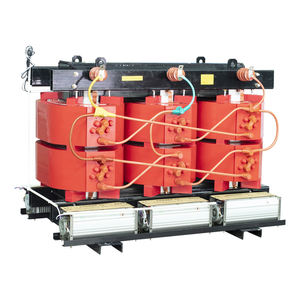
oil-free design
4.Market prospects of dry-type transformers
Dry-type transformers are favored by the market due to their safety, environmental friendliness, and low maintenance costs, especially in places with high requirements for safety and environmental protection. With the strict implementation of environmental regulations and the development of smart grids, the market demand for dry-type transformers will continue to grow.
4.1 Environmental regulations drive demand growth
Worldwide, environmental requirements are becoming increasingly strict, and many countries and regions have put forward higher requirements for the environmental performance of power equipment. Dry-type transformers have become the preferred equipment to meet environmental regulations due to their oil-free design and pollution-free emissions.
4.2 Assistance from Smart Grid
With the development of smart grid technology, dry-type transformers will gradually move towards intelligence and digitization. Through monitoring and automatic adjustment functions, dry-type transformers will be able to better integrate into the smart grid and improve the overall efficiency of the power system.
RELATED POSTS
How to choose between dry-type transformers and oil immersed transformers? 5 considerations to help you make decisions
Choosing an Inverter For Solar Panels

Epoxy dry type transformer: 11KV 30KVA class leads the new trend of industrial energy conservation
Can solar inverter work without battery?

Bengaluru launched its first underground transformer to enhance the city’s beauty and efficiency