Electronic Components Supplier | Transformers, Inductors, Inverters


1.Material characteristics of aluminum winding
Conductivity and thermal conductivity:
The conductivity of aluminum is lower than that of copper, about 60% of copper, which means that aluminum windings have higher resistance at the same size, leading to significant power loss. However, aluminum winding are relatively lightweight and suitable for some applications that require high weight.
The weight advantage of aluminum:
Aluminum has a lower density than copper and weighs about one-third of copper. Due to its lighter weight, aluminum winding transformers are more convenient for transportation and installation, especially in applications that require weight (such as mobile transformers or equipment with limited space), and aluminum winding transformers have shown significant advantages.
Connection technology and welding issues:
Aluminum windings are prone to oxide films during the welding process, which increases the difficulty of welding. To ensure the reliability of the connection, additional processing techniques or special connection technologies such as crimping are required.
2.Advantages of aluminum winding in low to medium power transformers
Low cost, high cost-effectiveness:
The price of aluminum is much lower than that of copper, which gives aluminum winding transformer a significant cost advantage. For some cost sensitive markets such as small transformers, distribution transformers, etc., aluminum winding transformers are a cost-effective choice.
Suitable for lightweight and easy to install applications:
Due to the lightweight nature of aluminum windings, they are very popular in certain situations where weight saving or quick installation is required. For example, aluminum winding transformers in distribution networks are easy to install and transport, which helps reduce installation costs.
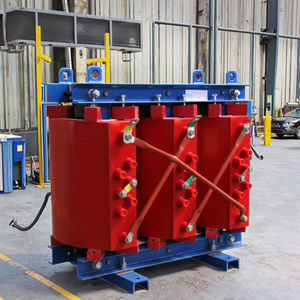
3.Technical challenges and solutions for aluminum windings
Low conductivity:
Although aluminum windings perform well in low-power applications, their low conductivity may lead to overheating and low efficiency in high load, high-power applications. Therefore, when designing aluminum winding transformers, it is necessary to consider increasing the cross-sectional area of the windings or using multiple winding layers to reduce resistance.
Difficulties in welding and connection technology:
The welding and connection issues of aluminum windings are still a technical challenge, as aluminum wires are prone to forming oxide layers, leading to problems at the connection points. Therefore, specialized welding techniques or the use of additional metals (such as copper) to connect aluminum wires are required to ensure the stability of the connection.
Long term stability and durability:
The durability of aluminum windings is relatively poor, especially in high temperature and high load environments. To overcome this problem, many aluminum winding transformers adopt special protective measures, such as increasing the insulation layer of the winding to reduce aluminum oxidation and corrosion.
4.Market prospects and development trends of aluminum winding
Advantages suitable for large-scale production:
Due to the low price and abundant resources of aluminum, aluminum winding transformers are suitable for large-scale production, especially for the low to medium power transformer market, where aluminum windings have significant market advantages.
The trend of environmental protection and lightweight drives the application of aluminum windings:
With the advancement of environmental protection requirements and lightweight technology, the application fields of aluminum windings have broader prospects. For example, in fields such as electric vehicles and solar power distribution systems, aluminum winding transformers are widely used due to their lightweight and environmental friendliness.
Luoyang Datang Energy Technology Co., Ltd. is a high-tech enterprise integrating R&D, manufacturing and supply of power equipment such as transformers, new energy components, distribution cabinets and inverters. With technological innovation as the core, we focus on creating high-reliability and high-performance power solutions to serve global customers. With a strict quality control system and international standard certification, we continue to output excellent products and enable customers to build safe and stable power systems.
RELATED POSTS
Revealing the secret weapon of solar power plants: Solar Power Plant Inverter

Solar Converter: The green energy converter of the future
Output characteristics and applications of single-phase thyristor controller rectifier

500 kVA Oil Filled Transformer Price – Factors & Buying Guide

Voltage Converter 110V to 220V: A Complete Guide for International Power Compatibility
