Electronic Components Supplier | Transformers, Inductors, Inverters


1.The rapid development of photovoltaic power generation has raised new requirements for power equipment
In the global context of “carbon neutrality” and “energy transition”, photovoltaic (PV) power generation has emerged as one of the fastest-growing forms of renewable energy. From large-scale centralized ground-mounted power plants to distributed rooftop PV systems for industrial and commercial buildings, the installed capacity of PV continues to climb. However, compared to PV modules and inverters, transformers are often underestimated, yet they are the key infrastructure equipment for the safe, stable, and efficient operation of PV systems.
Photovoltaic power generation exhibits characteristics of intermittency, variability, and strong power electronics, which directly alter the operational modes of power systems. These characteristics also pose new challenges to the design philosophy, technical parameters, and application scenarios of transformers.
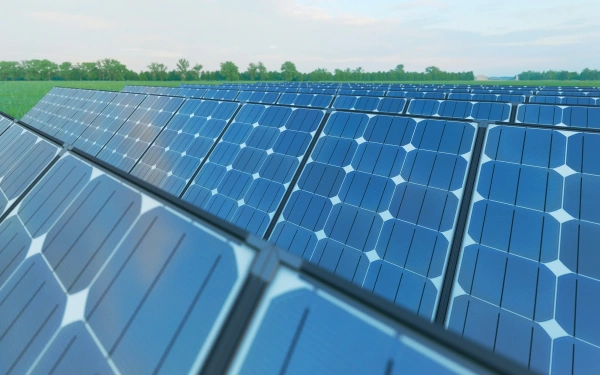
Photovoltaic power generation system
2.Analysis of photovoltaic system structure: The transformer occupies a pivotal position, serving as a link between the preceding and the following
A typical photovoltaic power generation system usually includes:
- PV module
- combiner box
- inverter
- step-up transformer
- Grid-connected system
Photovoltaic modules generate direct current (DC), which is converted into low-voltage alternating current (AC) (usually 400V or 690V) by an inverter. Then, it is stepped up to 10kV, 20kV, or 35kV through a photovoltaic step-up transformer, and finally connected to the power grid.
In this process, the transformer not only completes voltage level conversion, but also undertakes:
- Electrical isolation
- Power quality regulation
- System stability assurance
It can be said that without high-reliability transformers, photovoltaic power generation cannot operate on a large scale and be connected to the grid.
3.Essential differences between photovoltaic dedicated transformers and traditional distribution transformers
Compared to traditional distribution transformers, photovoltaic systems impose more complex technical requirements on transformers.
3.1 Long-term low-load operation characteristics
Photovoltaic power generation is significantly influenced by illumination, and transformers operate at partial load conditions for most of the time. Therefore, photovoltaic transformers place greater emphasis on:
- Low-load loss control
- High-efficiency interval optimization
This is significantly different from traditional distribution transformers that prioritize “full-load design”.
3.2 Adaptability to strong harmonic environment
Photovoltaic inverters are typical nonlinear loads that generate high-order harmonics. If the transformer is not specifically designed, it may lead to:
- The additional loss of the iron core increases
- Abnormal temperature rise of winding
- The service life is shortened
Therefore, photovoltaic transformers usually require stronger harmonic resistance capabilities.
4.Application differences of transformers in centralized and distributed photovoltaics
4.1 Transformer configuration for centralized photovoltaic power stations
In large-scale ground-based power stations, the following are commonly adopted:
- Oil-immersed step-up transformer
- Photovoltaic box-type substation
Its advantages lie in:
- Heat dissipation performance
- low loss
Suitable for long-term outdoor operation
Centralized projects place greater emphasis on the overall efficiency and long-term reliability of the system.
4.2 Transformer scheme in distributed photovoltaic system
For industrial and commercial roofs and places with high protection requirements, the following are more preferred:
- Dry-type transformer
- Compact box-type substation
This type of scheme places more emphasis on:
- fire resistance
- environmental friendliness
- Installation flexibility
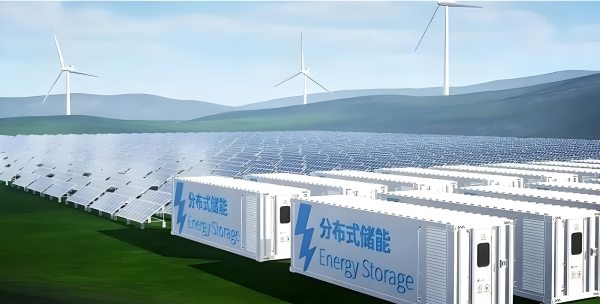
photovoltaic grid connection
5.The upgrading of transformer’s role under the trend of photovoltaic + energy storage
With the emergence of “photovoltaic + energy storage” as a mainstream configuration, power systems are beginning to exhibit bidirectional power flow characteristics. Transformers are no longer merely one-way transmission devices, but need to adapt to:
- Frequent power fluctuations
- Bidirectional energy flow
- Switching among multiple operating conditions
This has driven:
- High-efficiency transformer
- Intelligent monitoring transformer
The development of low-loss material applications.
6.The long-term impact of the development of the global photovoltaic market on the transformer industry
Regions such as Europe, the Middle East, Africa, and Latin America have continuously increased their investment in photovoltaics, posing more specific requirements for transformers:
- Complies with IEC / IEEE standards
- Customized voltage level
- High reliability and long-life design
For photovoltaic transformer manufacturers and export enterprises, understanding the photovoltaic system itself is more important than simply competing on price.
Luoyang Datang Energy Technology Co., Ltd. is a high-tech enterprise integrating R&D, manufacturing and supply of power equipment such as transformers, new energy components, distribution cabinets and inverters. With technological innovation as the core, we focus on creating high-reliability and high-performance power solutions to serve global customers. With a strict quality control system and international standard certification, we continue to output excellent products and enable customers to build safe and stable power systems.
RELATED POSTS

100 kVA 11kV/400V Transformer Price Guide – Factors & Market Trends

Realize DIY easy installation and enable photovoltaic home electrification mode
Thyristor Motor Control Three Phase: Definition, Characteristics, Applications and Optimization Strategies
Application and advantages of SCR Switch in industrial automation
Air source heat pump becomes the new favorite of building energy conservation
