इलेक्ट्रॉनिक घटक आपूर्तिकर्ता | ट्रान्सफ़ॉर्मर, कुचालक, इन्वर्टर


चाबी छीनना
- Buchholz relay detects slow-developing faults via gas accumulation and oil surge; दबाव राहत उपकरण अचानक दबाव स्पाइक्स छोड़ता है.
- Both devices are complementary and often used together for comprehensive transformer protection.
- Buchholz relay requires a conservator system; PRD works on most oil-filled transformers including sealed types.
- Selection depends on transformer size, oil preservation system, and fault energy considerations.
परिचय: Choosing Between Buchholz Relay and Pressure Relief Device
When protecting oil-immersed transformers, the Buchholz relay and the pressure relief device (पीआरडी) are two commonly discussed options. The direct answer to which protection you need is that they serve different, complementary roles. The Buchholz relay detects slow-developing faults such as partial discharges or insulation breakdown by monitoring gas accumulation and oil flow, while the PRD is a mechanical valve that rapidly releases excessive internal pressure caused by severe faults like arcing or short circuits. In most modern transformer protection schemes, both are used together to cover a wide range of fault conditions.
This article compares the two devices across key dimensions: operating principle, fault detection range, response time, and installation requirements. Understanding these differences helps engineers and operators select the appropriate protection for their specific transformer application.
What Is a Buchholz Relay?
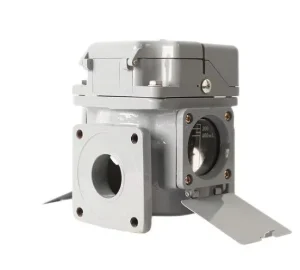
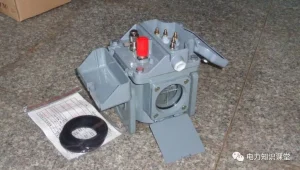
A Buchholz relay is a gas- and oil-actuated protection device installed in the pipe connecting the transformer main tank to the conservator. It operates on the principle that any fault inside the transformer generates gas due to decomposition of insulating oil. When minor faults occur, gas accumulates in the relay and triggers an alarm. In the event of a major fault, the rapid oil surge displaces the relay’s float, which directly trips the circuit breaker to isolate the transformer. The relay typically has two stages: an alarm stage for gas accumulation and a trip stage for oil surge. The Buchholz relay function is critical for early fault detection in transformers.
The Buchholz relay is particularly effective for detecting incipient faults such as core overheating, partial discharges, and winding insulation degradation. Its ability to provide early warning allows maintenance personnel to inspect and address issues before they escalate into catastrophic failures. तथापि, the relay requires the transformer to be oil-immersed and have a conservator system; it is not applicable to sealed or dry-type transformers.
What Is a Pressure Relief Device?
A pressure relief device (पीआरडी), also known as a pressure relief valve or rupture disk, is a safety device that automatically releases internal pressure when it exceeds a preset threshold. In oil-immersed transformers, the PRD is mounted on the tank wall or cover. During a severe internal fault, such as a high-current arc or short circuit, the rapid generation of gas and decomposition products creates a sudden pressure spike. The PRD opens instantaneously to vent the excess pressure, preventing tank rupture or explosion.
Pressure relief devices are passive mechanical components that require no electrical power to operate. They are typically designed to reseal after the pressure drops to a safe level, though some non-resealing types (rupture disks) must be replaced after activation. The PRD is a last line of defense against mechanical damage; it does not provide early warning of developing faults. Its response time is in milliseconds, making it essential for handling high-energy faults that could otherwise cause catastrophic failure.
Key Differences Between Buchholz Relay and Pressure Relief Device
The Buchholz relay and pressure relief device differ fundamentally in their detection mechanism, fault coverage, and response characteristics. The Buchholz relay detects conditions based on gas accumulation and oil flow, offering both alarm and trip functions. It is sensitive to low-energy, slow-developing faults. The PRD, on the other hand, responds only to absolute pressure magnitude, regardless of the fault type, and provides fast pressure relief without discrimination.
Another critical difference is the installation location. The Buchholz relay is placed in the pipe between the transformer tank and conservator, requiring a conservator system. The PRD is mounted directly on the tank, making it suitable for both conservator-type and sealed transformers. The Buchholz relay provides early warning and can be used for condition monitoring, while the PRD is purely a safety device that activates only when pressure exceeds dangerous levels. In terms of cost, the Buchholz relay is more complex and requires electrical connections for alarm and trip, whereas the PRD is a simple mechanical device with no electrical parts.
The table below summarizes the main differences across key parameters, but this blog does not include a table due to text format; the comparison is described in prose.
When to Use Each Device: चयन मानदंड
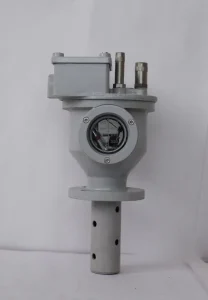
For oil-immersed transformers with a conservator, the importance of selecting the right Buchholz relay for your oil-immersed transformer cannot be overstated, as it helps detect incipient faults and provide early warning. It is especially valuable for large power transformers where downtime is costly and early fault detection can prevent major damage. Pressure relief devices are mandatory on almost all oil-filled transformers to comply with safety standards and protect against overpressure conditions.
In practice, these two devices are not mutually exclusive; they are often deployed together. The Buchholz relay handles the detection of slow-evolving faults, while the PRD provides a final safety layer for high-energy events. For sealed transformers (without conservator), a Buchholz relay cannot be used, so the pressure relief device becomes the primary mechanical protection. उसी प्रकार, for dry-type transformers, neither device is applicable, and alternative protection methods like thermal sensors are used.
When designing a protection scheme, engineers should consult the ट्रांसफार्मर सहायक उपकरण चयन गाइड to consider key parameters: transformer size, वेल्टेज रेटिंग, oil preservation system, रखरखाव क्षमता, and regulatory requirements. A typical approach for large power transformers is to equip both a Buchholz relay and multiple pressure relief devices sized for the expected fault energy.
Common Questions About Buchholz Relay and Pressure Relief Device
Can a Buchholz relay replace a pressure relief device? नहीं, because they address different fault types. The Buchholz relay cannot handle sudden pressure surges, and the PRD cannot detect slow gas accumulation. Both are needed for comprehensive protection.
What happens if a pressure relief device activates? It releases pressure and possibly some oil. The transformer should be inspected for internal damage before restoring service. The PRD may need to be reset or replaced depending on the type.
Is a Buchholz relay required for all oil-immersed transformers? Standards often require a Buchholz relay for transformers above a certain rating (जैसे, above 1 एमवीए). Local regulations vary, but for smaller transformers, a PRD alone may be acceptable.
Can a pressure relief device be tested? Some resealing types can be tested periodically by applying pressure to verify operation. Non-resealing disks must be replaced after activation and cannot be tested in place.
अक्सर पूछे जाने वाले प्रश्नों
Can a Buchholz relay replace a pressure relief device?
नहीं, because they are designed for different fault types. The Buchholz relay detects slow gas accumulation and oil flow, while the pressure relief device handles rapid pressure surges. Both are needed for full protection.
What happens when a pressure relief device activates?
It releases excess pressure and possibly some oil. The transformer should be inspected for internal damage. The device may need to be reset or replaced depending on the type (resealing or non-resealing).
Is a Buchholz relay required for all oil-immersed transformers?
Standards typically require a Buchholz relay for transformers above a certain rating, जैसे कि 1 MVA or more. Smaller transformers may rely on pressure relief devices alone. Local regulations should be consulted.
लुओयांग डेटांग एनर्जी टेक्नोलॉजी कंपनी, लिमिटेड. आर को एकीकृत करने वाला एक उच्च तकनीक उद्यम है&डी, ट्रांसफार्मर जैसे बिजली उपकरणों का निर्माण और आपूर्ति, नये ऊर्जा घटक, वितरण अलमारियाँ और इनवर्टर. तकनीकी नवाचार को मूल में रखते हुए, हम वैश्विक ग्राहकों की सेवा के लिए उच्च-विश्वसनीयता और उच्च-प्रदर्शन वाले पावर समाधान बनाने पर ध्यान केंद्रित करते हैं. सख्त गुणवत्ता नियंत्रण प्रणाली और अंतरराष्ट्रीय मानक प्रमाणीकरण के साथ, हम उत्कृष्ट उत्पादों का उत्पादन जारी रखते हैं और ग्राहकों को सुरक्षित और स्थिर बिजली प्रणाली बनाने में सक्षम बनाते हैं.
संबंधित पोस्ट

कृषि और उद्योग में वायु स्रोत ताप पंप: ग्रीनहाउस तापन से लेकर एकीकृत ऊर्जा प्रणालियों तक
एससीआर: "बुद्धिमान मस्तिष्क" जो हीटर को नियंत्रित करता है

संक्रमण को सशक्त बनाना: ईडीएफ बैटरी स्टोरेज कैसे भविष्य के लचीले ग्रिड का निर्माण कर रहा है
अपना परिदृश्य बदलें: हैम्पटन बे स्मार्ट ट्रांसफार्मर क्रांति

कैसे करता है 100 एम्प थाइरिस्टर औद्योगिक नियंत्रण क्षेत्र में दक्षता में सुधार करता है?