Fornitore di componenti elettronici | Trasformatori, Induttori, Invertitori


Driven by global energy transition and the rapid development of modern power systems, dry type transformers are evolving from passive distribution equipment into active intelligent nodes within the grid.
By 2025, the global dry type transformer market is expected to reach USD 6.83 billion, growing to USD 12.15 billion by 2034 with a CAGR of 6.8%. Nel frattempo, China’s market continues expanding under industrial upgrading and infrastructure investments.
Behind this growth lies a clear technological trajectory:
Dry type transformers are shifting from single-function insulation systems A integrated ecosystems combining materials, intelligenza, and system optimization.
1. Dual Evolution of Insulation Systems
Resin Cast Technology (CRT)
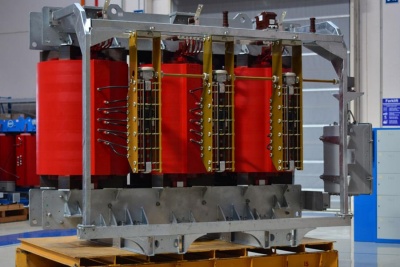
Cast resin transformers use epoxy resin encapsulation through vacuum casting processes.
Key advantages:
- High dielectric strength
- Excellent moisture resistance
- Strong short-circuit withstand capability
- Ideal for harsh environments (underground substations, humid regions)
Technology trend:
- Advanced resin formulations
- Vacuum Pressure Impregnation (VPI) improvements
- Compact and lightweight designs
Non-Encapsulated (VPI / NOMEX Insulation)
This approach uses NOMEX insulation + air cooling, without full encapsulation.
Key advantages:
- Better heat dissipation
- Easier maintenance
- Environmentally friendly
- Higher recyclability
Engineering Decision Logic
This is not a “which is better” question — it depends on:
| Scenario | Recommended Type |
|---|---|
| Alta umidità / underground | Cast Resin |
| Centri dati / green projects | VPI / NOMEX |
| Heavy industry | Cast Resin |
| Sustainability-focused projects | VPI |
👉 Trend: Competition is shifting from insulation alone → multi-dimensional optimization (raffreddamento, noise, digitalizzazione, lifecycle cost)
2. Green Material Revolution
The Hidden Problem: End-of-Life Disposal
Traditional epoxy resin:
- Difficult to recycle
- Typically incinerated or landfilled
- Creates environmental pressure
Breakthrough: Degradable Epoxy Systems
Recent innovations include:
- Ester-exchange catalyst modification
- Chemical degradation within 24 ore
- Reusable resin materials
👉 This enables:
“Manufacture → Use → Regenerate” closed-loop lifecycle
Alternative Material: Silicone Rubber
Vantaggi:
- High temperature resistance
- Better environmental performance
- Potential recyclability
Challenge:
- Long-term reliability still under validation
Future Material Direction
- High dielectric strength
- Low cost
- Thermal conductivity
- Full lifecycle sustainability
3. Digital & Intelligent Transformation
From Equipment → Smart Node
Modern dry type transformers adopt a 3-layer architecture:
1. Sensing Layer
- Winding temperature
- Core temperature
- Scarico parziale
- Humidity
👉 Example:
- Fiber optic temperature sensing inside windings
2. Network Layer
- RS485
- Ethernet
- 4G / LoRa
3. Application Layer
- Fault alarms
- Manutenzione predittiva
- Remote control
Key Upgrade: Predictive Maintenance
Using:
- Data filtering (sliding window, anomaly detection)
- AI-based diagnostics
👉 Result:
- Reduced downtime
- Lower O&M cost
- Extended transformer life
Manufacturing Intelligence
- 100% equipment online rate
- Reduced labor (5 → 2 operators)
- Higher production efficiency
4. Market & Application Expansion
Industry Distribution
| Sector | Share |
|---|---|
| Industriale | 46% |
| Power sector | 23% |
| Infrastructure | 14% |
Fastest Growing Segment: Data Centers
- 2024 market: USD 888 million
- 2031 forecast: USD 2.46 billion
- CAGR: 14.5%
Key Technology: Amorphous Alloy Transformers
Vantaggi:
- 60–70% lower no-load losses
- High efficiency (IE4–IE5 level)
- Ideale per 24/7 operazioni
Emerging Applications
- Centri dati
- Renewable energy (solar & vento)
- EV charging infrastructure
- Rail transit systems
5. Policy & Energy Efficiency Impact
- EU Ecodesign (Tier 3)
- China GB 20052-2020
👉 Result:
- Low-efficiency products being phased out
- High-efficiency transformers becoming mandatory
6. Competitive Landscape
Market Structure
| Tier | Characteristics |
|---|---|
| Tier 1 | Full product range + global service |
| Tier 2 | Regional leaders |
| Tier 3 | Price-driven SMEs |
China’s Rising Advantage
- Cost-performance → Technology leadership
- IE5 efficiency level achieved
- Extreme environment adaptability
- Strong export growth
Conclusion: The Next Decade of Dry Type Transformers
Dry type transformer technology is moving toward:
✔ Green materials (recyclable insulation)
✔ Intelligent systems (AI + IoT)
✔ High-efficiency cores (amorphous alloy)
✔ Integrated energy ecosystems
🔥 Call to Action
If you are sourcing dry type transformers for:
- Centri dati
- Solare / wind projects
- Sistemi energetici industriali
👉 We can provide:
- Customized technical solutions
- CEI / ANSI compliant products
- Competitive factory pricing
- Global export experience
Contact us today for a quotation or technical consultation.
Luoyang Datang Energy Technology Co., Ltd. è un'impresa high-tech che integra R&D, produzione e fornitura di apparecchiature elettriche come trasformatori, nuove componenti energetiche, armadi di distribuzione e inverter. Con l’innovazione tecnologica al centro, ci concentriamo sulla creazione di soluzioni energetiche ad alta affidabilità e ad alte prestazioni per servire clienti globali. Con un rigoroso sistema di controllo qualità e certificazione standard internazionale, continuiamo a produrre prodotti eccellenti e consentiamo ai clienti di costruire sistemi di alimentazione sicuri e stabili.
POST CORRELATI
Discrete Phase Controlled Thyristors: Innovation in Power Electronics Leading to the Future

La battaglia degli inverter: Le industrie del fotovoltaico e dello stoccaggio dell’energia crescono fino a creare un mercato da miliardi di dollari

Decifrare la cella solare dell'inverter: Il segreto principale della conversione dell’energia solare

What role does SCR electronics play in the field of power control?
Thermoelectric Heat Sink: Innovative Cooling Technology