전자 부품 공급업체 | 트랜스포머, 인덕터, 인버터


방대하고 복잡한 전력 송배전 생태계에서, 안전과 신뢰성은 단순한 목표가 아니라 절대적인 목표입니다.. At the heart of ensuring these critical parameters lies a seemingly simple yet indispensable device: 그만큼 HV 단로기 스위치. Often visible in substations as a pivotal part of the electrical landscape, these switches perform a fundamental role that is crucial for both operational flexibility and personnel safety. As the global demand for electricity surges and grids become smarter and more interconnected, understanding the function, 종류, and evolving technology of HV disconnector switches has never been more important for industry professionals and stakeholders.
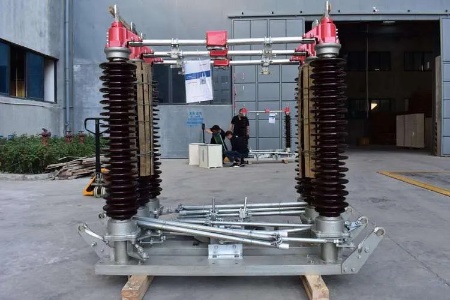
High voltage isolation switch
This comprehensive guide delves deep into the world of high-voltage disconnector switches, exploring their critical function, various types, 선택 기준, and the latest trends shaping their future.
1.1 What is an HV Disconnector Switch?
안HV 단로기 스위치, also known as an isolator switch, is a mechanical switching device used in high-voltage electrical circuits to provide a visible, physical isolation point. Its primary purpose is to completely de-energize a section of a circuit for safe maintenance, repair, or inspection. 차단기와 달리, HV disconnector switches are not designed to interrupt load current or fault current. They operate only when the circuit has been de-energized by an upstream breaker, ensuring no current is flowing during opening or closing.
The key characteristic of anHV 단로기 스위치 is that it provides a visible air gap between contacts, offering a clear, unambiguous indication that a circuit is isolated and safe for workers to approach. This visible break is a critical safety feature, mandated by electrical safety standards worldwide.
1.2 The Critical Functions and Importance of HV Disconnector Switches
Why is this device so non-negotiable in substation design? Its functions extend beyond simple isolation.
1.2.1 Primary Function: Visible Isolation for Safety
The foremost job of anHV 단로기 스위치 is to ensure the safety of maintenance personnel. By creating a visible air gap, it guarantees that the downstream section is physically disconnected from any live high-voltage potential, preventing fatal electrocution accidents.
1.2.2 Secondary Functions: Circuit Configuration and Control
- Sectionalizing: HV disconnector switches allow operators to reconfigure the power flow within a substation. They can isolate specific equipment like transformers, capacitor banks, or transmission lines without needing to shut down the entire substation, enhancing grid reliability.
- Switching of Instrument Transformers: Specialized types are used for switching current transformers (CT) 및 전압 변압기 (VT) in and out of circuit.
- 접지: 많은 HV disconnector switches can be equipped with an integrated earthing (접지) blade. Once the main circuit is isolated, this blade can be closed to connect the isolated section to the earth, providing an additional layer of safety by discharging any trapped residual charge.
1.3 Different Types of HV Disconnector Switches
To suit various substation layouts and voltage level requirements, HV disconnector switches come in several design configurations.
1.3.1 Center-Break Disconnector
This common type features two moving arms that pivot open from the center, creating a horizontal break. They are robust, offer excellent visibility of the air gap, and are typically mounted on high support structures.
1.3.2 Double-Break Disconnector
Similar to the center-break type but with three posts. The central post holds the moving contact which breaks the circuit in two places simultaneously, providing two series air gaps. This design is often used for very high voltages.
1.3.3 Pantograph (Semi-Pantograph) Disconnector
This space-saving design uses a folding, scissor-like mechanism. It opens vertically, making it ideal for areas with width constraints. Its compact design is a significant advantage in GIS (Gas-Insulated Switchgear) or retrofitting projects.
1.3.4 Vertical-Break Disconnector
Designed for applications where space is limited horizontally. The moving arm rotates upward to create a vertical air break. They are commonly used for lower high-voltage ratings.
1.4 Key Selection Criteria for HV Disconnector Switches
옳은 선택HV 단로기 스위치 is vital for project success. Engineers must consider several factors:
- Rated Voltage and Current: The switch must be rated for the system’s maximum operating voltage and the normal and short-time withstand currents.
- Short-Circuit Withstand Capacity: It must withstand the immense electromagnetic forces generated during a short-circuit event on the adjacent live busbar without damage.
- Mechanical Endurance: Utilities require switches that can operate reliably for thousands of operational cycles over decades of service.
- 환경 조건: Design must account for wind load, ice formation, seismic activity, and pollution levels (which can require longer creepage distances).
- Type of Substation (AIS vs. GIS): Air-Insulated Substations (AIS) use the types described above. Gas-Insulated Substations (GIS) incorporate HV disconnector switches within sealed enclosures filled with SF6 or alternative gases for insulation.
1.5 Future Trends and Innovations in HV Disconnector Technology
The world ofHV disconnector switches is not static. It is evolving to meet the demands of the modern smart grid.
- Motorization and Digitalization: The shift from manual to motor-operated HV disconnector switches 가속하고 있다. Integrated with IoT sensors, these smart switches can provide real-time data on their status, contact wear, operating time, and temperature, enabling predictive maintenance.
- Condition-Based Monitoring: Sensors monitor parameters like motor torque and operating speed. Deviations from the norm can signal the need for maintenance before a failure occurs, drastically improving reliability.
- Alternative Insulating Gases: With the focus on reducing SF6 emissions (a potent greenhouse gas), manufacturers are developing HV disconnector switches that use environmentally friendly gas mixtures or vacuum interrupters for specific switching duties.
- Enhanced Safety Interlocks: Advanced electronic interlocking systems prevent incorrect switching sequences, virtually eliminating the risk of human error during operation.
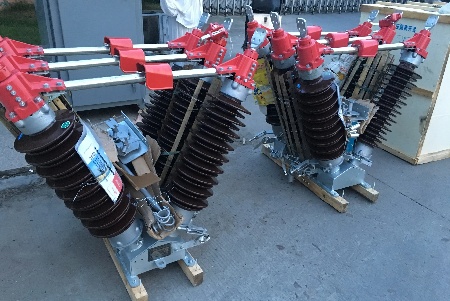
Outdoor high-voltage isolation switch
결론
그만큼HV 단로기 스위치 remains a cornerstone of electrical safety and operational control in power systems. From ensuring the safety of line workers to enabling flexible grid management, its role is both fundamental and irreplaceable. As we push towards more resilient, digitalized, and sustainable energy infrastructure, the humbleHV 단로기 스위치 will continue to adapt and innovate, solidifying its position as a true guardian of the grid. For any utility, contractor, or engineer, investing in the rightHV 단로기 스위치 technology is an investment in safety, 신뢰할 수 있음, and the future of power.
낙양대당에너지기술유한회사, 주식회사. R을 통합하는 하이테크 기업입니다.&디, 변압기 등 전력기기 제조 및 공급, 새로운 에너지 성분, 배전 캐비닛 및 인버터. 기술혁신을 핵심으로, 우리는 글로벌 고객에게 서비스를 제공하기 위해 높은 신뢰성과 고성능 전력 솔루션을 만드는 데 중점을 두고 있습니다.. 엄격한 품질관리 시스템과 국제표준 인증으로, 앞으로도 우수한 제품을 생산하여 고객이 안전하고 안정적인 전력시스템을 구축할 수 있도록 하겠습니다..