Elektronesch Komponente Fournisseur | Transformers, Induktoren, Inverters


Aféierung
DéiCT Transformator is an emerging AI-powered innovation transformingmedical imaging, méi séier ubitt, more accurateComputertomographie (CT) scannt. Combiningdeep learning mattransformer architectures, this technology enhancesimage reconstruction, reduzéiert Stralungsbeliichtung, and improvesdiagnostic accuracy. An dësem Guide, we explore howCT Transformers schaffen, hir Virdeeler, and why they’re ahot topic in 2024.
1. What Is a CT Transformer?
ACT Transformator ass adeep learning model that appliestransformer neural networks zuCT scan data. Unlike traditionalconvolutional neural networks (CNNs), it usesSelf-Opmierksamkeet Mechanismen to analyze3D medical images with higher precision.
Schlëssel Fonctiounen:
✔Faster image reconstruction
✔Lower radiation dose
✔Improved tumor detection
✔Enhanced resolution
2. How Does a CT Transformer Work?
2.1. Self-Attention for Medical Imaging
TraditionellCT scans rely onfiltered back projection (FBP), which can produce noise.CT Transformers benotzenattention mechanisms zu:
- Focus on critical anatomical structures
- Reduce artifacts
- Reconstruct high-quality images from limited data
2.2. Deep Learning Integration
By training onlarge CT datasets, CT Transformers learn to:
- Predict missing scan data (for low-dose imaging)
- Segment tumors & lesions automatically
- Enhance early disease detection
3. Benefits of CT Transformers in Healthcare
3.1. Faster & More Accurate Diagnoses
- Detects early-stage cancers (z.B., lung, liver)
- Improves stroke assessment
- Reduces false positives
3.2. Safer Scans with Lower Radiation
- Cuts radiation exposure by 30-50%
- Ideal for pediatric & frequent scanning
3.3. Käschten & Workflow Efficiency
- Reduces manual analysis time
- Integrates with PACS & EHR systems
4. Current Applications (2024 Trends)
4.1. Oncology & Tumor Tracking
- Identifies small metastases
- Monitors treatment response
4.2. Cardiovascular Imaging
- Detects coronary artery disease earlier
- Improves plaque analysis
4.3. Emergency Medicine
- Speeds up trauma assessments
- Enhances intracranial hemorrhage detection
5. Erausfuerderungen & Future of CT Transformers
5.1. Current Limitations
- Requires large training datasets
- High computational power needed
- Regulatory approvals still evolving
5.2. Future Developments
- Federated learning for privacy-safe AI
- Edge computing for real-time analysis
- Multimodal fusion (CT + MRI + PET)
Conclusioun
DéiCT Transformator is revolutionizingmedical imaging, offeringfaster, méi sécher, and smarter diagnostics. WéiAI in radiology advances, expect wider adoption inSpideeler, Fuerschung, and telemedicine.
RELATED POSTS

Bengaluru huet hiren éischten ënnerierdesche Transformator gestart fir d'Schéinheet an d'Effizienz vun der Stad ze verbesseren

Kleng Transformers: Kompakt Powerhouses an Modern Elektronik
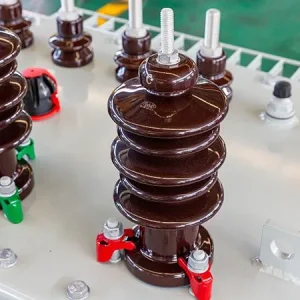
Transformator Bushings Guide: Zorte, Auswiel Critèren, a Kaf Tipps fir Power Projeten

Wat sinn déi eenzegaarteg Virdeeler vun thyristor Moduler a verschiddenen Uwendungen?
Diskret Phase Kontroll Thyristor - en neie Stär am Beräich vun der Muecht Kontroll