


Поставщик электронных компонентов | Трансформеры, Индукторы, Инверторы


Среди множества устройств защиты, используемых в силовых трансформаторах, тот Реле Бухгольца широко рассматривается как одна из наиболее важных мер защиты для масляных трансформаторов.. Выступая в роли молчаливого стража, он может обнаружить самые ранние признаки внутренних неисправностей и отреагировать на них до того, как незначительные проблемы перерастут в дорогостоящие сбои., повреждение оборудования, или массовые отключения электроэнергии.
Но что такое реле Бухгольца?? Как это работает? И почему его считают незаменимым в больших маслонаполненных трансформаторах по всему миру?
Давайте посмотрим поближе.
Что такое реле Бухгольца?
Реле Бухгольца — это газовое защитное устройство, установленное в трубе, соединяющей бак главного трансформатора и расширительный бак масляного трансформатора..
Изобретён немецким инженером Макс Бухгольц в 1921, это реле специально разработано для обнаружения внутренних неисправностей трансформатора.. Он постоянно контролирует наличие газов, образующихся при пробое изоляции., частичные разряды, неисправности обмотки, перегрев, и другие аномальные условия, возникающие внутри трансформатора..
Раннее выявление этих предупреждающих знаков, Реле Бухгольца помогает предотвратить серьезные повреждения и повышает общую надежность трансформатора..
Место установки: Почему позиция имеет значение
Реле Бухгольца устанавливается между баком расширительного бака и баком главного трансформатора., как показано ниже:
Conservator Tank
       │
       │  Connecting Pipe
 ┌──────────┐
 │ Buchholz │
 │  Relay   │
 └──────────┘
       │
       │
Main Transformer Tank
Это расположение имеет решающее значение, поскольку газы, образующиеся в результате внутренних неисправностей, естественным образом поднимаются через масло и направляются к расширительному баку.. Разместив реле непосредственно на этом пути, он может эффективно обнаруживать скопление газа и движение нефти, связанные с неисправностями..
Как работает реле Бухгольца?
Принцип работы реле Бухгольца основан на двух различных состояниях неисправности.: скопление газа и нефтяной всплеск.
1. Накопление газа: Раннее предупреждение о незначительных неисправностях
Когда у трансформатора возникают незначительные внутренние проблемы, такие как:
- Старение изоляции
- Частичный разряд
- Перегрев ядра
- Ослабленные электрические соединения
изоляционное масло начинает медленно разлагаться, производство небольшого количества газа.
Поскольку эти газы поднимаются и накапливаются внутри релейной камеры, уровень масла в реле падает. Это приводит к тому, что верхний поплавок опускается и активирует контакт сигнализации..
На этом этапе:
✅ Сигнал тревоги отправляется в диспетчерскую.
❌ Трансформатор продолжает работать в обычном режиме..
Это раннее предупреждение позволяет обслуживающему персоналу изучить и устранить проблему до того, как она перерастет в серьезный сбой..
2. Нефтяной всплеск: Немедленное реагирование на серьезные неисправности
При возникновении серьезных внутренних неисправностей, такой как:
- Межвитковые замыкания обмоток
- Межфазные замыкания
- Замыкания на землю
- Сильное искрение
давление внутри трансформатора быстро возрастает.
This sudden pressure increase creates a high-velocity oil flow toward the conservator tank. The oil surge pushes a flap or vane inside the Buchholz Relay, triggering the trip contact.
На этом этапе:
✅ A trip signal is generated immediately.
✅ The circuit breaker disconnects the transformer.
✅ Further damage is prevented.
The entire process typically takes only milliseconds to a few seconds, significantly reducing the risk of catastrophic transformer failure.
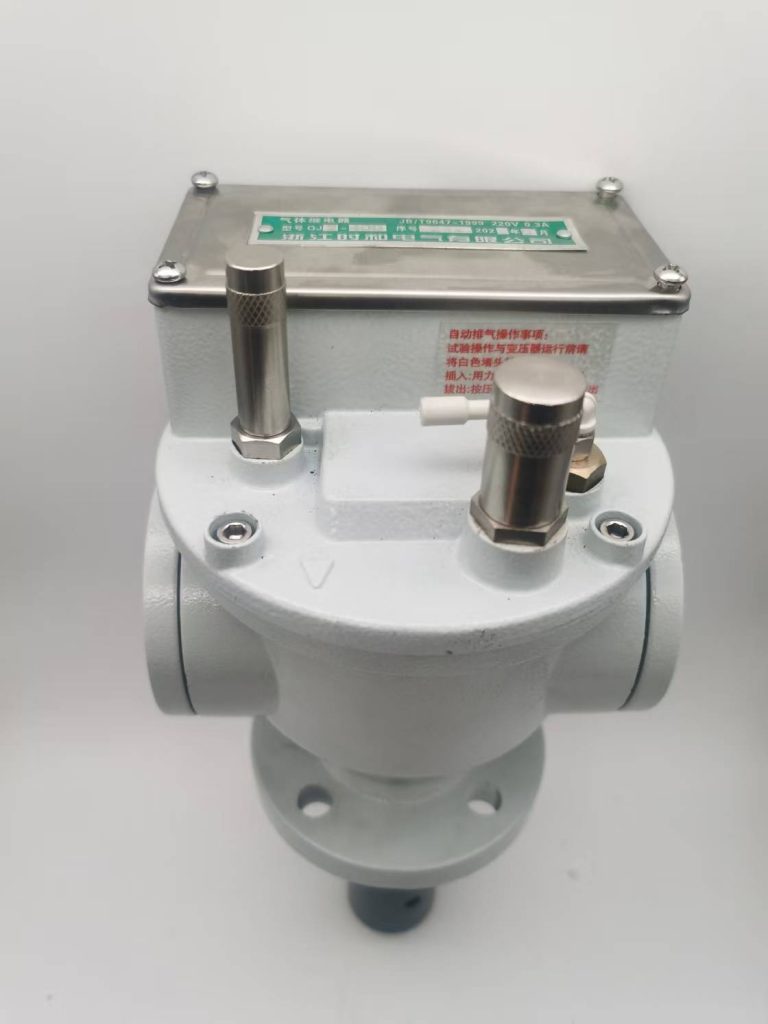
Main Components of a Buchholz Relay
Although relatively simple in design, the Buchholz Relay contains several essential components:
Float System
Monitors oil level changes caused by gas accumulation.
Flap or Vane Mechanism
Detects sudden oil movement caused by severe faults.
Alarm Contacts
Operate during minor faults and send warning signals.
Trip Contacts
Работайте при серьезных неисправностях и инициируйте отключение трансформатора..
Клапан отбора проб газа
Позволяет обслуживающему персоналу собирать пробы газа для диагностического анализа..
Почему реле Бухгольца так важно?
1. Раннее обнаружение неисправностей
Многие отказы трансформаторов начинаются с небольших внутренних дефектов, которые трудно обнаружить с помощью внешнего контроля..
Такие условия, как:
- Частичные разряды
- Локальный перегрев
- Ухудшение изоляции
часто выделяют газы задолго до того, как они станут критическими.
Реле Бухгольца действует как система раннего предупреждения., помогает операторам выявлять и решать проблемы до того, как произойдет серьезный ущерб.
2. Защита ценных активов
Силовые трансформаторы представляют собой крупную инвестицию. Большие трансформаторы могут стоить сотни тысяч или даже миллионы долларов..
Без быстрого обнаружения и изоляции неисправностей, внутренние неисправности могут привести к:
- Сгоревшие обмотки
- Разрыв резервуара
- Опасность пожара
- Длительные отключения электроэнергии
Функция быстрого срабатывания реле Бухгольца помогает минимизировать эти риски и защитить ценное оборудование..
3. Повышенная надежность источника питания
Современные энергосистемы требуют бесперебойной работы..
Путем обнаружения внутренних отклонений на ранней стадии, Реле Бухгольца позволяет проводить плановое техническое обслуживание, а не аварийный ремонт., сокращение непредвиденных отключений и повышение надежности сети.
4. Поддерживает анализ растворенных газов (ДГА)
Клапан отбора проб газа на реле позволяет операторам собирать неисправные газы для Анализ растворенных газов (ДГА).
Разные газы указывают на разные типы неисправностей.:
| Тип газа | Возможная неисправность |
|---|---|
| Водород (Н₂) | Частичный разряд |
| Метан (CH₄) | Низкотемпературный перегрев |
| Этилен (С₂H₄) | Высокотемпературный перегрев |
| Ацетилен (C₂H₂) | Дуговая неисправность |
| Окись углерода (СО) | Деградация бумажной изоляции |
Эта информация помогает инженерам определить характер и серьезность неисправностей трансформатора..
Ограничения реле Бухгольца
Несмотря на свою эффективность, Реле Бухгольца не является комплексным решением защиты..
Применимо только к трансформаторам консервационного типа.
Герметичные трансформаторы без расширительных баков не могут использовать реле Бухгольца..
Невозможно обнаружить внешние неисправности
Реле не реагирует на:
- Внешние короткие замыкания
- Молнии
- Перегрузки системы
Требуются дополнительные системы защиты, такие как дифференциальная защита и реле максимального тока..
Требует правильной установки и обслуживания.
Неправильная установка или ненадлежащее обслуживание могут поставить под угрозу его производительность..
Рекомендации по техническому обслуживанию
Чтобы обеспечить надежную работу, регулярные проверки должны включать:
- Визуальная проверка состояния
- Проверка утечки масла
- Тестирование цепи сигнализации
- Тестирование цепи отключения
- Проверка работы поплавка и закрылков
- Отбор проб газа и оценка DGA
Комплексную проверку обычно рекомендуется проводить не реже одного раза в год..
Автор
ПДН – Распределение электроэнергии & Новые энергетические решения
ПДДН специализируется на трансформаторах, подстанции, оборудование распределения электроэнергии, солнечные энергетические системы, решения для хранения энергии, и проекты комплексной энергетической инфраструктуры. Наша команда инженеров стремится предоставить надежное электрооборудование и техническую экспертизу для коммунальных предприятий., промышленный, и возобновляемые источники энергии по всему миру.
ПОХОЖИЕ ПОСТЫ
Адаптер напряжения 110 к 220: Ваш незаменимый спутник в путешествиях
Органический светоизлучающий диод (OLED): Будущее технологий отображения
Трансформатор Wi-Fi низкого напряжения: Интеллектуальное энергетическое решение для современных домов

Как избежать отказа трансформатора, вызванного насыщением силикагеля

Керамические изоляторы помогают электронной промышленности: стабильная работа высоковольтных и мощных электронных устройств
