مورد المكونات الإلكترونية | محولات, المحاثات, العاكسون


في العالم المعقد لتوزيع الطاقة الكهربائية, البطل المجهول يضمن السلامة, مصداقية, والكفاءة غالبا ما تكون قاطع الدائرة. من بين التقنيات المختلفة المتاحة, ال Vacuum Circuit Breaker, commonly known as a VCB breaker أو VCB circuit breaker, has emerged as the dominant force for medium-voltage applications. From powering skyscrapers and hospitals to safeguarding manufacturing plants and renewable energy farms, ال vacuum ckt breaker is the critical guardian of the electrical grid. Its superior performance, الود البيئي, and low maintenance requirements have made it the technology of choice, overshadowing older air and oil circuit breakers.
As industries worldwide push towards electrification, الرقمنة, والاستدامة, understanding theVCB circuit breaker is crucial for engineers, مديري المرافق, and procurement specialists. This comprehensive guide will delve into the inner workings, المزايا, التطبيقات, and future trends ofvacuum ckt breaker تكنولوجيا, providing you with the knowledge to make informed decisions for your electrical infrastructure.
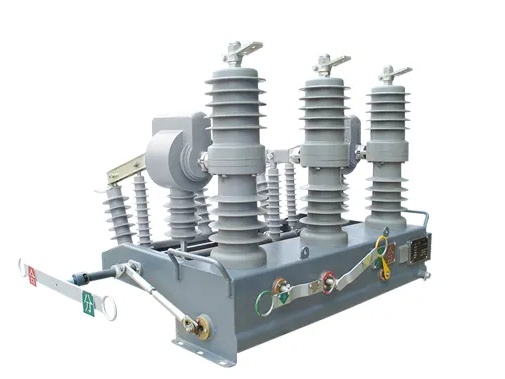
Outdoor high-voltage vacuum circuit breaker
1.1 What is a Vacuum Circuit Breaker (VCB)?
أVacuum Circuit Breaker is a type of circuit breaker where the arc quenching medium is a high-vacuum environment. Unlike its predecessors that used oil, هواء, or SF6 gas to extinguish the electrical arc that forms when contacts separate, أVCB breaker utilizes the exceptional dielectric properties of a vacuum. When the contacts open under fault conditions, the arc is quickly extinguished because the vacuum prevents the ionization necessary to sustain it. This results in incredibly fast interruption of the current, protecting downstream equipment from damage.
The core components of aVCB circuit breaker نكون:
- Vacuum Interrupter Bottle (VIB): The heart of the device. This is a sealed, evacuated glass or ceramic cylinder housing the fixed and moving contacts.
- Contacts: Made from special low-erosion, high-conductivity alloys like copper-chromium or copper-bismuth.
- Actuating Mechanism: Typically a spring-charged mechanism that provides the energy for rapid opening and closing.
- Supporting Insulation: Provides structural integrity and electrical insulation between live parts and the grounded frame.
1.2 Why Choose a VCB? Key Advantages and Benefits
The shift towardsvacuum ckt breaker technology is driven by a compelling set of advantages over alternative technologies.
1.2.1 Superior Arc Quenching and Performance
The vacuum provides the highest insulating strength known. This allows for extremely rapid arc extinction (within the first current zero), high dielectric recovery, and excellent interruption performance for a wide range of currents, from small inductive loads to heavy short-circuit faults.
1.2.2 Minimal Maintenance and Long Life
The vacuum interrupter is hermetically sealed, protecting the contacts from dust, رُطُوبَة, and chemical contamination. This eliminates the need for regular maintenance of the quenching medium, a significant cost driver for oil and gas breakers. نموذجيVCB breaker can perform thousands of operations without needing contact maintenance.
1.2.3 Environmental and Safety Benefits
This is a major hot topic.VCB circuit breakers contain no oil (eliminating fire risk and soil contamination) and no SF6 gas. SF6 is an extremely potent greenhouse gas, and global regulations are increasingly phasing out its use. الvacuum ckt breaker is a clean, environmentally safe alternative, future-proofing your investments against tightening environmental regulations.
1.2.4 Compact Size and Operational Efficiency
The excellent dielectric properties of a vacuum allow for a much more compact interrupter design compared to other technologies. هذا يعنىVCB breakers have a smaller footprint, saving valuable space in switchgear rooms and substations. They also operate quietly and with high electrical efficiency.
1.3 Common Applications of VCB Circuit Breakers
الVCB breaker is incredibly versatile and is the standard solution for a vast range of medium-voltage applications.
- Industrial Power Distribution: Protecting transformers, مراكز التحكم في المحركات, and capacitor banks in manufacturing facilities, النباتات الكيميائية, and mining operations.
- Commercial Buildings: Providing primary protection and switching for high-rise offices, مراكز البيانات, المستشفيات, ومراكز التسوق.
- Public Infrastructure: Used in railway electrification, airport power systems, ومحطات معالجة المياه.
- الطاقة المتجددة: A critical component in solar farms and wind turbine substations for connecting renewable generation to the grid.
- محطات التوزيع الأولية: Used by utilities for feeder protection and control on distribution networks (typically 11kV to 33kV).
1.4 Selecting the Right VCB Breaker: A Buyer’s Checklist
Choosing the correctVCB circuit breaker is paramount for system safety and performance. Consider these key factors:
- الجهد المقنن (كيلو فولت): Must match or exceed your system’s maximum operating voltage.
- التصنيف الحالي (أ): The continuous current the VCB breaker can carry without overheating.
- Rated Short-Circuit Breaking Current (كا): The maximum fault current the breaker can safely interrupt. This is a critical safety parameter.
- Standards and Certifications: Ensure the breaker complies with relevant international standards like IEC 62271-100 or IEEE C37.04.
- Type of Operating Mechanism: Spring-operated mechanisms are most common for their reliability. Pneumatic or electrical motor-driven options are also available.
- Condition Monitoring: حديث VCB breakers can be equipped with sensors to monitor contact wear, operation count, and travel time, enabling predictive maintenance.
1.5 The Future of VCB Technology: Trends and Innovations
The evolution of thevacuum ckt breaker continues, aligning with the trends of digitalization and smart grids.
- Digitalization and IoT Integration: الجيل القادم من VCB circuit breakers are smart devices. Integrated sensors provide real-time data on electrical and mechanical parameters, feeding into centralized monitoring systems for asset health management and predictive analytics.
- Solid-State Hybrid Breakers: Research is ongoing into combining VCB breakers with solid-state (semiconductor) technology to achieve even faster breaking speeds and manage complex fault conditions like DC faults.
- Enhanced Eco-Design: The drive to eliminate SF6 entirely is accelerating the adoption of VCB breakers into higher voltage ranges traditionally dominated by SF6 technology.
- Advanced Contact Materials: Development continues on new contact alloys that further reduce electrical resistance, minimize chopping current (important for protecting motors), and extend the electrical life even further.

Indoor high-voltage vacuum circuit breaker
خاتمة
الVacuum Circuit Breaker has firmly established itself as the gold standard for medium-voltage protection. Its unmatched combination of reliability, أمان, صيانة منخفضة, and environmental sustainability makes theVCB circuit breaker the intelligent choice for modern electrical systems. As technology advances towards smarter, greener grids, الvacuum ckt breaker will remain at the forefront, evolving to meet the challenges of tomorrow’s energy demands. Investing in VCB technology is not just an operational decision; it’s a strategic move towards a more resilient and sustainable electrical infrastructure.
شركة لويانغ داتانغ لتكنولوجيا الطاقة., المحدودة. هي مؤسسة التكنولوجيا الفائقة دمج R&د, تصنيع وتوريد معدات الطاقة مثل المحولات, مكونات الطاقة الجديدة, خزائن التوزيع والعاكسات. مع الابتكار التكنولوجي باعتبارها جوهر, نحن نركز على إنشاء حلول طاقة عالية الموثوقية والأداء لخدمة العملاء العالميين. مع نظام صارم لمراقبة الجودة وشهادة المعايير الدولية, نواصل إنتاج منتجات ممتازة وتمكين العملاء من بناء أنظمة طاقة آمنة ومستقرة.
المشاركات ذات الصلة

ثورة في نقل الطاقة الشمسية: الدليل النهائي لمحولات الألواح الشمسية
يتم استخدام المفاتيح الكهربائية ذات الجهد العالي والمنخفض على نطاق واسع في مختلف المجالات, دعم تطوير صناعة الطاقة
المستقبل ذكي: دمج الطاقة المتجددة في الشبكة الحديثة
محول حي, محول دي تي آر, ومستقبل توزيع الطاقة: ثورة مدعومة بالذكاء الاصطناعي
أنظمة الطاقة الشمسية المعتمدة على الذكاء الاصطناعي: كيف تعيد الطاقة الذكية تشكيل مستقبل البنية التحتية المتجددة