Fournisseur de composants électroniques | Transformateurs, Inducteurs, Onduleurs


1. Pourquoi les pompes à chaleur à air mènent la transition énergétique mondiale
Alors que les pays accélèrent vers la neutralité carbone, le Pompe à chaleur à air (ASHP) s’impose comme une solution clé pour remplacer les systèmes de chauffage aux combustibles fossiles.
Contrairement aux systèmes traditionnels, ASHP:
- Extraire la chaleur de l’air ambiant
- Fournit 3 à 5 fois plus d’énergie qu’ils n’en consomment
- Fournir chauffage, refroidissement, et eau chaude dans un seul système
👉 Cela les rend très attractifs en Europe, Amérique du Nord, et le Moyen-Orient.
2. Comment fonctionne une pompe à chaleur à air (Panne technique)
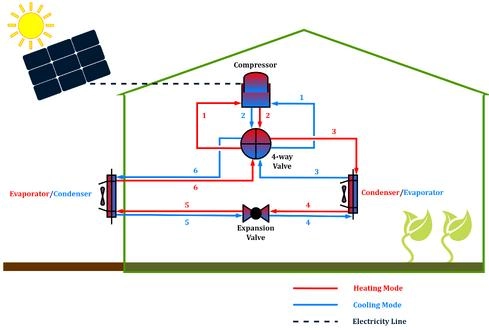
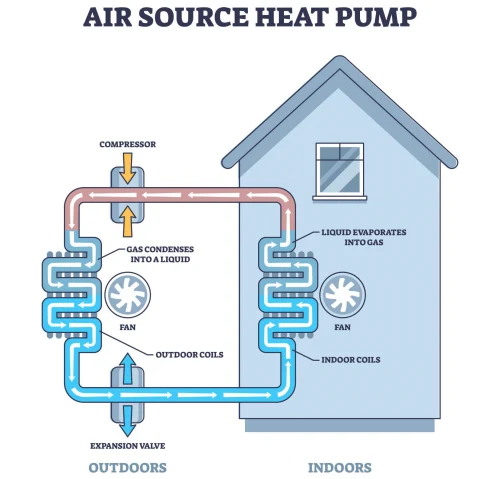
Les pompes à chaleur aérothermiques fonctionnent selon cycle de Carnot inversé utilisant un système de compression de vapeur.
Composants clés:
| Composant | Fonction |
|---|---|
| Compresseur | Augmente la pression et la température du réfrigérant |
| Évaporateur | Absorbe la chaleur de l'air extérieur |
| Condenseur | Libère de la chaleur à l’intérieur |
| Détendeur | Contrôle le débit et la pression du réfrigérant |
Processus de travail:
- La chaleur est absorbée de l'air extérieur via l'évaporateur
- Le réfrigérant s'évapore et entre dans le compresseur
- La température augmente après compression
- La chaleur est libérée à l'intérieur par le condenseur
👉 Aperçu clé: Les pompes à chaleur transfèrent la chaleur au lieu de la générer.
3. Indicateurs clés de performance (KPI) Vous devez comprendre
3.1 FLIC (Coefficient de performance)
| Condition | COP Range |
|---|---|
| Standard (7°C) | 3.5 – 5.0 |
| Basse température (-15°C) | 2.0 – 3.0 |
3.2 SCOP (Efficacité saisonnière)
Plus précis pour les performances annuelles, largement utilisé en Europe.
3.3 ERE (Efficacité de refroidissement)
Utilisé pour évaluer les performances de refroidissement.
4. Pompe à chaleur vs systèmes de chauffage traditionnels
| Facteur | Pompe à chaleur | Chaudière à gaz | Chauffage électrique |
|---|---|---|---|
| Efficacité | ⭐⭐⭐⭐⭐ | ⭐⭐⭐ | ⭐ |
| Émissions de carbone | Faible | Moyen | Haut |
| Coût d'exploitation | Faible | Moyen | Haut |
| Sécurité | Haut | Moyen | Haut |
👉 Conclusion: Les pompes à chaleur offrent le meilleur retour sur investissement à long terme.
5. 2026 Tendances technologiques dans les pompes à chaleur à air
5.1 Fonctionnement à très basse température (-30°C)
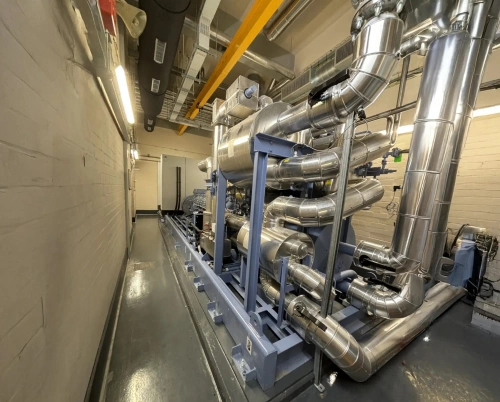
Les technologies avancées incluent:
- Injection de vapeur améliorée (EVI)
- Compresseurs inverseurs
- Systèmes de dégivrage intelligents
👉 Permettre un fonctionnement stable dans des climats extrêmes.
5.2 Réfrigérant R290 (Future norme)
| Réfrigérant | PRG | S'orienter |
|---|---|---|
| R410A | Haut | Suppression progressive |
| R32 | Moyen | De transition |
| R290 | Ultra-faible | Futur grand public |
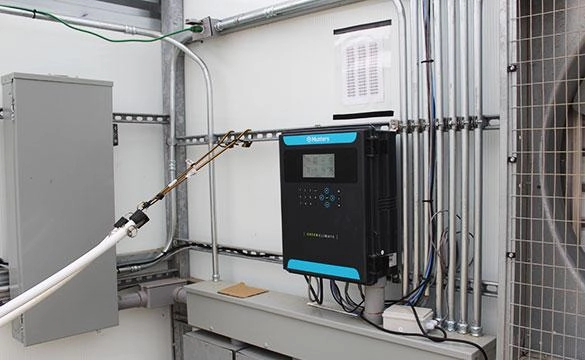
5.3 Contrôle intelligent & Optimisation de l'IA
- Surveillance basée sur l'IoT
- Optimisation énergétique basée sur l'IA
- Maintenance prédictive
6. Scénarios d'application
✔ Chauffage résidentiel (UE & Amérique du Nord)
✔ Bâtiments commerciaux (hôtels, bureaux)
✔ Eau chaude industrielle
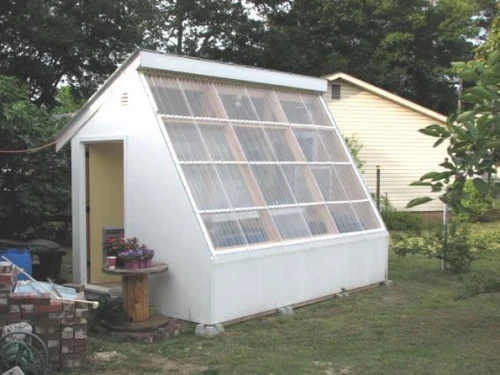
✔ Serres agricoles
👉 Particulièrement efficace pour systèmes de contrôle de la température des serres
7. Sélection & Conseils d'approvisionnement (Pour les importateurs & Distributeurs)
| Paramètre | Recommandation |
|---|---|
| Température ambiante | Vérifier les performances à basse température |
| Charge de chauffage | Calcul précis requis |
| Alimentation | Préférez les systèmes triphasés |
| Marque du compresseur | Panasonic / Mitsubishi recommandé |
| Attestation | CE, ERP, MARQUE-CLÉ |
8. Conclusion: Pourquoi devriez-vous investir dans des pompes à chaleur maintenant
Les pompes à chaleur à air ne sont pas seulement des équipements CVC : elles font partie d'un futur écosystème énergétique:
- Intégré au solaire photovoltaïque
- Compatible avec les systèmes de stockage d'énergie
- Connecté aux réseaux intelligents
👉 Les 3 à 5 prochaines années connaîtront une croissance explosive de la demande mondiale.
ARTICLES CONNEXES

Les températures élevées continuent, et les employés du réseau électrique prennent une douche pour refroidir les transformateurs
Transformateurs intelligents et à haut rendement pour les stations de recharge de véhicules électriques
CRRC a reçu des investissements étrangers à vendre 1,008,500 actions en décembre 27
L’industrie électrique connaît une innovation technologique, avec 100kVA, 11kV, et des transformateurs 33 kV contribuant à moderniser le réseau électrique

Les principaux fabricants de transformateurs de distribution alimentant le monde (2024 Guide)