


Fournisseur de composants électroniques | Transformateurs, Inducteurs, Onduleurs


Régulateur de tension triphasé

200Chine Régulateur de tension compensé triphasé KW Fabricants

Chine Régulateur de tension stabilisateur triphasé 100KVA Fabricants

Régulateur de tension / Stabilisateur (SBW-50KVA) Fabricant chinois

150Chine Stabilisateur de régulateur de tension KVA / 380V Fabricants

3 Chine Régulateur de tension automatique de phase 30kVA Fabricant

Chine régulateur de tension triphasé 380v 80KVA Fabricants

250Chine Régulateur de tension kva Contrôleur 380v Fabricants

400Chine Régulateur de tension KVA 380V 220V Fabricants

500Chine Régulateur de tension KVA Contrôleur 380v Fabricants

Chine Régulateur de tension automatique triphasé 380 V Fabricants

3Chine Régulateur de tension 380 V haute puissance de phase Fabricants

Chine Régulateur haute tension triphasé offre spéciale Fabricants
Présentation du régulateur de tension triphasé
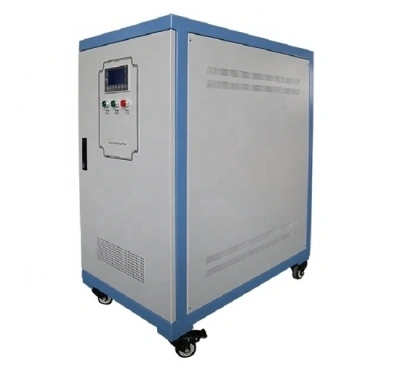
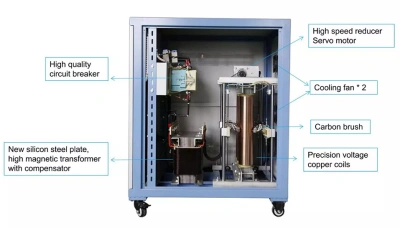
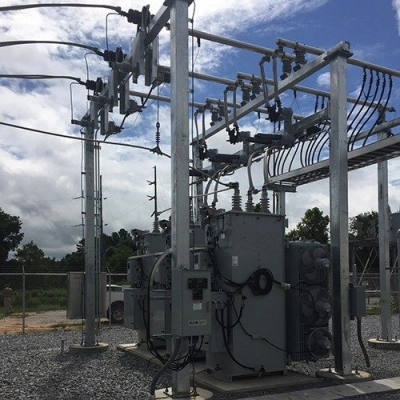
Les régulateurs de tension triphasés sont conçus pour stabiliser et réguler les niveaux de tension dans les systèmes électriques triphasés. Ils assurent une alimentation en tension constante, protéger les équipements électriques contre fluctuations de tension, surtensions, et des gouttes.
Ces régulateurs sont largement utilisés dans installations industrielles, usines, centres de données, et systèmes de distribution d'énergie, surtout là où une tension stable est critique.
Comment fonctionnent les régulateurs de tension triphasés
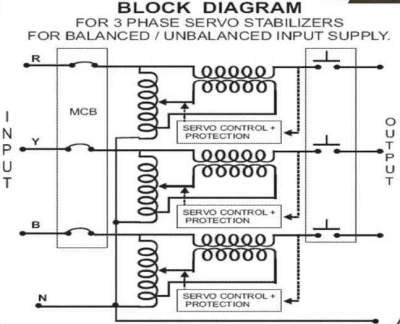
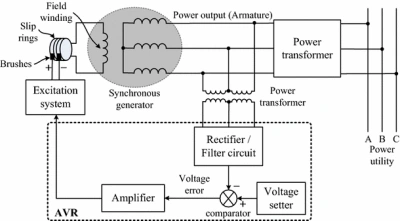
Les régulateurs de tension ajustent automatiquement la tension de sortie.
| Composant | Fonction |
|---|---|
| Transformateur | Adjusts voltage levels according to system requirements |
| Système de contrôle | Detects voltage fluctuations and controls the regulation process |
| Servomoteur / AVR | Automatically regulates output voltage |
| Voltage Sensing Unit | Measures the input and output voltage continuously |
| Panneau de contrôle | Displays operating parameters and allows system settings |
| Changeur de robinet | Changes transformer turns ratio to maintain the required voltage |
| Système de protection | Prevents overvoltage, sous-tension, surcharge, et autres conditions anormales |
| Circuit Breaker | Disconnects the circuit during faults or abnormal operation |
| Bypass System | Allows the load to continue operating during maintenance or regulator failure |
| Circuit de refroidissement | Controls operating temperature and helps prevent overheating |
| Surge Protection | Protects the regulator and connected equipment from voltage surges |
| Enceinte | Protects internal components from dust, humidité, and environmental conditions |
Types de régulateurs de tension triphasés
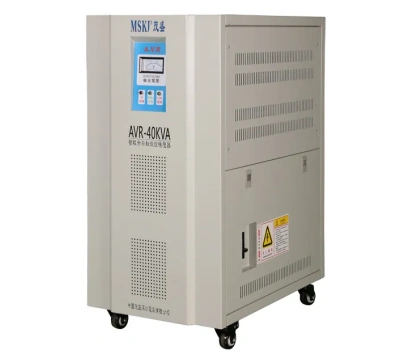
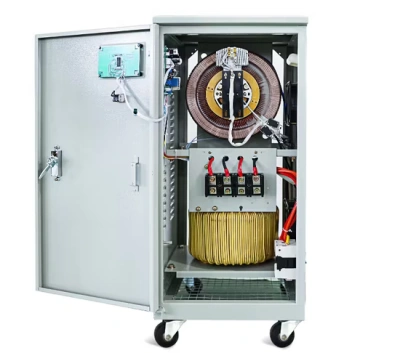
- Régulateur de tension servo – Régulation de haute précision
- Régulateur de tension statique (AVR) – Commande électronique à réponse rapide
- Stabilisateur de tension automatique – Largement utilisé dans les systèmes industriels
- Régulateur de tension de distribution – Contrôle de tension côté réseau
Avantages des régulateurs de tension
- Fonctionnement industriel fiable
- Tension de sortie stable
- Protection des équipements électriques
- Qualité d'alimentation améliorée
- Efficacité énergétique
Profil de l'entreprise
Luoyang Datang Energy Technology Co., Ltée. est une entreprise de haute technologie intégrant R&D, fabrication, et fourniture d'équipements électriques et de solutions d'énergies renouvelables. Spécialisé dans les transformateurs, nouveaux composants énergétiques, armoires de distribution, et onduleurs, nous avons élargi notre portefeuille pour inclure des systèmes d'énergie solaire, solutions de stockage d'énergie, et pompes à chaleur à air. Avec l’innovation technologique comme notre cœur, nous nous concentrons sur la création de solutions d'alimentation et d'efficacité énergétique de haute fiabilité et hautes performances pour servir les clients du monde entier. Grâce à un système de contrôle de qualité strict et à une certification standard internationale, nous fournissons continuellement d'excellents produits qui permettent à nos clients de construire en toute sécurité, écurie, et systèmes électriques durables.
Si vous voulez une qualitéTrois P.Régulateur de tension hase fournisseur, nous vous invitons à nous contacter ou à vous renseigner sur les produits connexes.
Modes de paiement pourTrois-P.Régulateur de tension hase
L/C, T/T, Western union, Paypal, Carte de crédit, etc..
Expédition deTrois-P.Régulateur de tension hase
Une fois le paiement reçu, par la mer, air, ou exprimer dans les plus brefs délais.
FAQ sur le régulateur de tension triphasé
1. Qu'est-ce qu'un régulateur de tension triphasé?
A three phase voltage regulator is an electrical device designed to automatically stabilize and regulate voltage in three-phase power systems. It compensates for voltage fluctuations and maintains a more consistent output voltage for connected electrical equipment.
2. Pourquoi la régulation de tension est-elle importante?
Stable voltage is important for the safe and reliable operation of electrical equipment. Excessive voltage fluctuations can cause overheating, reduced equipment life, malfunction, or unexpected shutdowns. A voltage regulator helps maintain the voltage within the required operating range.
3. How does a three phase voltage regulator work?
The regulator continuously monitors the input voltage through a voltage sensing system. When the voltage rises or falls outside the preset range, the control system adjusts the regulating mechanism to increase or decrease the output voltage. This process helps provide a stable voltage to the connected load.
4. What industries use three phase voltage regulators?
Three phase voltage regulators are commonly used in manufacturing plants, usines, centres de données, bâtiments commerciaux, telecommunications facilities, hôpitaux, laboratoires, et systèmes de distribution d'énergie. They are particularly useful where sensitive equipment requires a stable power supply.
5. What is the difference between servo and static voltage regulators?
Servo voltage regulators use a motor-driven mechanical mechanism to adjust the voltage, while static voltage regulators use electronic components to regulate voltage without moving mechanical parts. Servo regulators are commonly selected for applications requiring reliable voltage stabilization, while static regulators can provide very fast voltage correction.
6. Can a three phase voltage regulator improve energy efficiency?
A voltage regulator can help improve the operating conditions of electrical equipment by maintaining a stable supply voltage. It may reduce unnecessary energy consumption and equipment stress caused by excessive or unstable voltage. Cependant, the actual energy savings depend on the characteristics of the electrical system and connected loads.
7. What is the difference between a voltage regulator and a transformer?
A transformer primarily changes the voltage level between the input and output sides, while a voltage regulator automatically adjusts the output voltage to compensate for fluctuations. Some voltage regulation systems combine transformer technology with automatic voltage control to provide both voltage transformation and stabilization.
8. Can a three phase voltage regulator protect electrical equipment?
Oui. By maintaining a stable output voltage, a regulator can help reduce the risk of equipment problems caused by overvoltage and undervoltage. Many systems can also be equipped with protection functions such as overload, short-circuit, surtension, and undervoltage protection.
9. What voltage range can a three phase voltage regulator handle?
The applicable voltage range depends on the regulator model and system requirements. Common specifications include different input and output voltage levels, comme 380V, 400V, 415V, or other customized ratings. The required input range, tension de sortie, capacité, and frequency should be confirmed before selection.
10. How do I choose the right three phase voltage regulator?
The selection should be based on several factors, including rated power, input voltage range, required output voltage, fréquence, load type, regulation accuracy, response time, installation environment, and protection requirements. For industrial applications, the maximum load and starting current of equipment should also be considered.
11. Can a three phase voltage regulator be used for industrial equipment?
Oui. Three phase voltage regulators are widely used for industrial equipment such as CNC machines, moteurs, pompes, compresseurs, lignes de production, matériel de soudage, and other electrical systems. The regulator capacity should be selected according to the actual load and operating conditions.
12. Does a three phase voltage regulator require maintenance?
Regular inspection is recommended to ensure reliable operation. Maintenance may include checking electrical connections, systèmes de refroidissement, control components, protection devices, and the operating condition of the regulator. For servo-type regulators, the mechanical components should also be inspected periodically.
13. Can the voltage regulator be customized?
Oui. Three phase voltage regulators can often be customized according to project requirements, including input and output voltage, capacité, regulation range, accuracy, fréquence, enclosure type, protection functions, and installation method. Customers should provide the electrical system parameters so the appropriate model can be selected.
14. What information should I provide when requesting a quotation?
For an accurate quotation, it is recommended to provide the input voltage, required output voltage, rated capacity (kVA/kW), fréquence, number of phases, voltage regulation range, regulation accuracy, load type, installation environment, and quantity. If available, a technical specification or electrical system diagram can also help the supplier recommend a suitable model.