Soláthraí Comhpháirteanna Leictreonacha | Claochladáin, Ionduchtóirí, Inverters


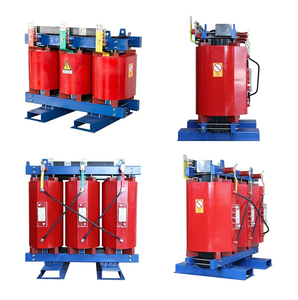
Leis an aird dhomhanda atá ag dul i méid ar chosaint an chomhshaoil, tá go leor tionscal ag athrú i dtreo treo atá níos neamhdhíobhálaí don chomhshaol, agus ní haon eisceacht é tionscal an claochladáin. Traditional claochladáin tumtha ola may experience oil leakage during use, causing soil and water pollution, and having an undeniable impact on the ecological environment. To address this issue, an increasing number of transformer manufacturers are adopting dry-type or oil-free designs to reduce environmental pollution and improve energy efficiency. This article will delve into the advantages, technical challenges, and future development trends of oil-free transformers.
1.Technical advantages of oil-free transformers
1.1 Environmental friendliness:
The biggest advantage of oil-free transformer is their environmental friendliness. Compared to traditional oil immersed transformers, dry-type or oil-free transformers do not contain petroleum liquids, thus avoiding the risk of oil leakage and reducing the occurrence of pollution. Especially in urban and densely populated areas, reducing the risk of oil spills is crucial for environmental protection.
1.2 Reduce fire risk:
If an oil immersed transformer malfunctions during operation, the high temperature of the oil may cause a fire. The insulation material used in oil-free transformers can withstand higher temperatures, significantly reducing the risk of fire.
1.3 Costas cothabhála íseal:
Traditional oil immersed transformers require regular checks on oil level, oil quality, srl., while oil-free transformers do not require these maintenance tasks, thereby reducing long-term operating costs and maintenance workload.
1.4 Improving Energy Efficiency:
Oil free transformers use solid insulation materials, which have good thermal conductivity and can dissipate heat more efficiently. Compared to oil immersed transformers, dry-type transformers can better maintain stability and efficiency during high load operation.
2.Technical challenges of oil-free transformers
Although oil-free transformers have significant advantages in environmental protection, they still face some technical challenges in their widespread application.
2.1 Thermal management issues:
Although the insulation material of dry-type transformers has good thermal conductivity, their heat dissipation effect still lags behind that of oil immersed transformers. In order to improve the heat dissipation efficiency of dry-type transformers, many manufacturers are developing more efficient thermal management technologies, including strengthening cooling systems and adopting new types of heat conduction materials.
2.2 Load capacity:
Oil free transformers may experience overheating when subjected to high loads, which can affect their normal operation. Dá bhrí sin, how to enhance its load capacity and maintain stable operation under high loads remains an important direction for research and development.
2.3 Cost issue:
The manufacturing cost of oil-free transformers is relatively high, especially requiring more investment in materials and design. This makes it difficult for many small and medium-sized enterprises to accept the product in the early stages, limiting its market popularity.
3.Treochtaí Forbartha sa Todhchaí
The future development of oil-free transformers will focus on the following aspects:
3.1 Technological Innovation:
With the emergence of new materials, the insulation performance, heat dissipation performance, and load capacity of future oil-free transformers are expected to be further improved. R&D personnel will be committed to creating more efficient, environmentally friendly, and economical oil-free transformer products.
3.2 Market demand growth:
With the increasingly strict environmental regulations and the growing demand for green energy in the market, the market demand for oil-free transformers will continue to grow in the future. Especially in large-scale infrastructure construction and renewable energy projects, oil-free transformers will become the mainstream choice.
3.3 Green Certification and Policy Promotion:
The support policies of governments and international organizations for green and environmentally friendly products will further promote the popularization of oil-free transformers. The introduction of policies such as green certification and carbon emission standards will encourage more enterprises to invest in the research and production of oil-free transformers.
Oil free transformers are not only a technological innovation in the transformer industry, but also an important part of environmental protection. With the continuous development of technology, oil-free transformers will play an increasingly important role in reducing environmental pollution and improving energy efficiency. Sa todhchaí, with the maturity of technology and the growth of market demand, it is expected that oil-free transformers will be widely used in more fields, contributing more to the global environmental protection cause.
Luoyang Datang Energy Technology Co., Teo. Is fiontar ardteicneolaíochta é R&D, déantúsaíocht agus soláthar trealaimh chumhachta amhail claochladáin, comhpháirteanna fuinnimh nua, caibinéid dáileacháin agus inverters. Le nuálaíocht teicneolaíochta mar chroílár, dírímid ar réitigh chumhachta ard-iontaofachta agus ardfheidhmíochta a chruthú chun freastal ar chustaiméirí domhanda. Le córas rialaithe cáilíochta dian agus deimhniú caighdeánach idirnáisiúnta, leanaimid ar aghaidh ag aschur táirgí den scoth agus cuirimid ar chumas custaiméirí córais chumhachta atá sábháilte agus cobhsaí a thógáil.
POSTAÍ GAOLMHARA
Thermalloy Heat Sink: Sainmhíniú, Characteristics, and Application Fields
Conas a roghnú idir claochladáin de chineál tirim agus claochladáin tumtha ola? 5 breithnithe chun cabhrú leat cinntí a dhéanamh

Taobh amuigh de theorainneacha tiomáint leictreach: Turas fionnachtana le Modúl Cumhacht Thyristor
Feidhm agus buntáistí a bhaineann le SCR Switch in uathoibriú tionsclaíoch

The Ultimate Guide to 15kV Transformers: Costais, Foirceannadh, and Key Selection Criteria