


Pemasok Komponen Elektronik | transformator, Induktor, Inverter


Poin-poin penting
- Bushing OIP menggunakan insulasi kertas yang diresapi oli dan memerlukan perawatan oli berkala, sedangkan bushing RIP menggunakan kertas padat yang diresapi resin dan bebas perawatan.
- Bushing OIP unggul dalam tegangan tinggi, aplikasi beban termal tinggi tetapi memiliki risiko kebocoran; Bushing RIP ideal untuk kompak, dalam, atau instalasi yang sensitif terhadap lingkungan.
- Total biaya kepemilikan bushing RIP bisa lebih rendah karena berkurangnya perawatan, meskipun biaya awal berpotensi lebih tinggi.
- Pilihannya tergantung pada level tegangan, kondisi lingkungan, kemampuan pemeliharaan, dan kendala instalasi.
Memahami Bushing Trafo OIP dan RIP
Saat memilih busing transformator, baik desain OIP maupun RIP secara universal lebih baik; pilihan optimal bergantung pada level tegangan aplikasi Anda, kondisi lingkungan, kemampuan pemeliharaan, dan tujuan operasional jangka panjang. Perbedaan utama dibandingkan di bawah ini untuk membantu Anda membuat keputusan yang tepat.
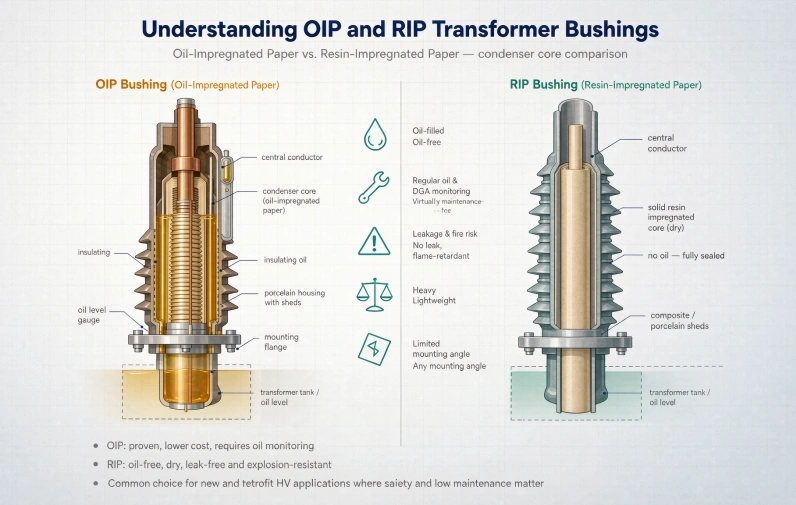
Bushing OIP telah digunakan selama beberapa dekade pada transformator tegangan tinggi dan tegangan ekstra tinggi. Mereka terdiri dari insulasi kertas yang diresapi dengan minyak transformator, menawarkan kekuatan dielektrik dan kinerja termal yang tinggi. Minyak bertindak sebagai isolator dan pendingin. Busing RIP, sebaliknya, gunakan inti kertas yang diresapi resin yang diawetkan hingga membentuk padatan, sistem isolasi kering. Desain ini menghilangkan kebutuhan akan minyak, membuat mereka kompak, ringan, dan bebas perawatan.
Kedua jenis ini memiliki tujuan dasar yang sama: untuk mengalirkan arus tegangan tinggi dengan aman melalui dinding tangki transformator. Prinsip konstruksi dan pengoperasiannya menghasilkan karakteristik kinerja yang berbeda.
Perbedaan Konstruksi dan Desain
Perbedaan inti antara bushing OIP dan RIP adalah media insulasinya dan cara pemeliharaannya. Busing OIP mengandalkan gulungan kertas yang diresapi oli secara terus menerus yang harus tetap terisi oli di bawah tekanan positif. Biasanya mencakup reservoir minyak, alat pengukur tekanan, pelabuhan pengambilan sampel, dan sebuah pernafasan gel silika untuk mengontrol kelembaban di ruang ekspansi. Minyak berfungsi sebagai isolasi dan media perpindahan panas. Sebaliknya, Bushing RIP menggunakan inti kertas yang diresapi resin dan diawetkan sepenuhnya, menciptakan benda padat, isolasi homogen. Tidak diperlukan cairan atau gas tambahan.
Busing RIP umumnya lebih kompak dan lebih ringan dibandingkan busing OIP untuk peringkat tegangan yang sama. Insulasi padat memungkinkan orientasi pemasangan yang fleksibel, sedangkan bushing OIP seringkali memerlukan pemasangan vertikal atau hampir vertikal untuk menjaga sirkulasi oli yang baik. Desain RIP menghilangkan risiko kebocoran oli, kekhawatiran dalam bushing OIP, terutama di zona seismik atau daerah dengan fluktuasi suhu yang ekstrim.
Tabel berikut merangkum perbedaan struktural dan desain utama antara kedua jenis bushing.
| Dimensi Perbandingan | OIP Bushing | Busing RIP |
|---|---|---|
| Media isolasi | Kertas yang diresapi minyak | Kertas yang diresapi resin (padat) |
| Metode pendinginan | Sirkulasi minyak | Konduksi panas melalui isolasi padat |
| Persyaratan pemeliharaan | Pengambilan sampel minyak secara berkala, penyaringan, penggantian oli potensial | Minimal; tidak diperlukan penanganan oli |
| Aplikasi yang umum | Transformator daya tegangan tinggi, gardu luar ruangan | Gardu induk dalam ruangan, GIS, di lepas pantai, transformator kompak |
| Jangka hidup | Panjang dengan perawatan yang tepat; degradasi minyak adalah salah satu faktornya | Panjang; isolasi disegel dan stabil |
| Biaya | Biaya awal yang moderat; biaya pemeliharaan berkelanjutan yang lebih tinggi | Biaya awal sedikit lebih tinggi; total biaya kepemilikan yang lebih rendah |
| Sensitivitas lingkungan | Resiko kebocoran oli; memerlukan pengendalian tumpahan | Bebas minyak; cocok untuk lingkungan sensitif |
| Orientasi instalasi | Biasanya vertikal atau hampir vertikal | Orientasi fleksibel dimungkinkan |
Perbandingan Kinerja dan Aplikasi
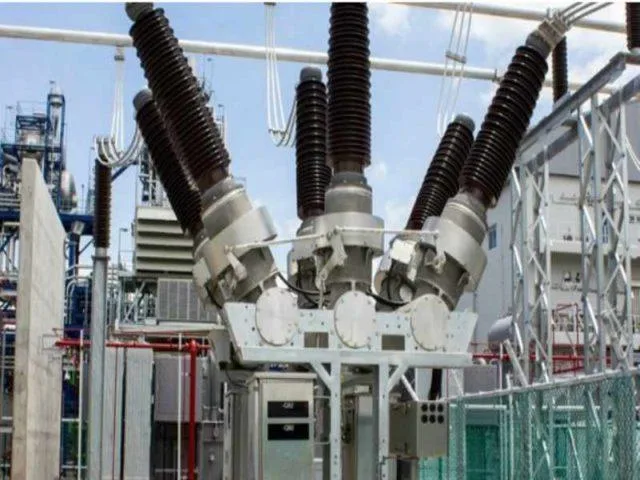
Bushing OIP menawarkan kekuatan dielektrik yang tinggi dan dapat menangani beban termal yang tinggi. Minyak memberikan pembuangan panas yang sangat baik, membuatnya cocok untuk beban berat terus menerus dan arus hubung singkat yang tinggi. Mereka banyak digunakan dalam transformator daya, terutama pada level tegangan di atas 110 persegi panjang, di mana rekam jejak keandalan mereka yang panjang dihargai, dan sering dipasangkan dengan a Relai Buchholz untuk deteksi akumulasi gas. Namun, Bushing OIP memerlukan pengujian oli berkala, penyaringan, dan mungkin penggantian oli. Mereka juga lebih rentan terhadap masuknya uap air jika segelnya rusak.
Bushing RIP memberikan tingkat pelepasan sebagian yang rendah dan stabilitas dielektrik yang tinggi sepanjang masa pakainya. Karena insulasinya kokoh dan tertutup rapat, mereka hampir bebas perawatan. Mereka cocok untuk gardu induk dalam ruangan, platform lepas pantai, dan lingkungan lain di mana risiko tumpahan minyak atau akses pemeliharaan terbatas. Bushing RIP semakin banyak digunakan dalam aplikasi tegangan menengah hingga tegangan tinggi, termasuk gardu induk berinsulasi gas (GIS) dan desain transformator kompak. Bobotnya yang lebih rendah dan tapak yang lebih kecil menyederhanakan persyaratan pemasangan dan struktural.
Kedua tipe ini dapat dirancang dengan lapisan penilaian kapasitif untuk mengontrol distribusi medan listrik. Pilihannya seringkali bergantung pada biaya siklus hidup, kebijakan lingkungan hidup, dan preferensi operasional. Perusahaan utilitas dengan infrastruktur penanganan minyak yang mapan mungkin lebih memilih OIP, sementara mereka yang menginginkan pemeliharaan minimal dan risiko lingkungan mungkin lebih memilih RIP.
Pertimbangan Biaya dan Pemeliharaan
Biaya pembelian awal untuk bushing OIP dan RIP sebanding, dengan perbedaan tergantung pada kelas tegangan dan penyesuaian. Bushing OIP mungkin memiliki biaya dimuka yang sedikit lebih rendah, namun mereka mengeluarkan biaya berkelanjutan untuk pengujian minyak, pemantauan, dan potensi penggantian oli. Peralatan pengambilan sampel dan penanganan oli yang diperlukan, termasuk indikator level minyak, meningkatkan total biaya kepemilikan. Selain itu, kebocoran atau kontaminasi oli dapat menyebabkan waktu henti transformator dan biaya perbaikan.
Bushing RIP mungkin memiliki biaya awal yang lebih tinggi dalam beberapa kasus namun menawarkan total biaya kepemilikan yang lebih rendah karena berkurangnya kebutuhan pemeliharaan. Insulasi padat tidak memerlukan pengambilan sampel minyak, dan desain yang disegel mengurangi risiko kegagalan yang tidak terduga. Masa pakainya yang lebih lama dan keandalannya dalam kondisi sulit dapat mengimbangi investasi awal. Untuk aplikasi yang akses pemeliharaannya sulit atau mahal, Bushing RIP seringkali merupakan pilihan yang lebih ekonomis sepanjang umur trafo.
Membuat Pilihan Tepat untuk Aplikasi Anda
Untuk memilih antara bushing OIP dan RIP, pertimbangkan level tegangan aplikasi Anda, kondisi lingkungan, kemampuan pemeliharaan, dan sasaran biaya jangka panjang. Bushing OIP tetap terbukti, pilihan kinerja tinggi untuk trafo tegangan tinggi tradisional, terutama jika terdapat infrastruktur penanganan minyak. Mereka cocok untuk instalasi luar ruangan dengan jadwal perawatan rutin.
Bushing RIP sangat cocok untuk modern, kompak, dan instalasi yang sensitif terhadap lingkungan. Mereka sangat cocok untuk gardu induk dalam ruangan, proyek lepas pantai, dan daerah dengan iklim ekstrim atau aktivitas seismik. Their dry, maintenance-free design reduces operational risk and simplifies compliance with environmental regulations. Both technologies can deliver reliable performance when matched to the right application. Consulting with a transformer bushing manufacturer can help you evaluate specific design parameters and ensure the best fit for your project.
Pertanyaan yang sering diajukan
Can OIP bushings be used indoors?
Ya, but they require proper oil containment and ventilation to manage leakage risk and oil vapor. Many indoor installations use RIP bushings to avoid these concerns.
Are RIP bushings suitable for extra-high voltage (EHV) aplikasi?
Ya, Bushing RIP tersedia untuk kelas EHV dan semakin banyak digunakan di gardu induk modern. Namun, Bushing OIP memiliki sejarah penggunaan yang lebih panjang pada voltase tertinggi. Peringkat dan desain tegangan spesifik harus dievaluasi untuk setiap proyek.
Bagaimana cara memilih antara OIP dan RIP untuk trafo baru?
Pertimbangkan kelas tegangan transformator, lokasi (dalam/luar ruangan, zona seismik, iklim), akses pemeliharaan, peraturan lingkungan hidup, dan biaya siklus hidup. Berkonsultasi dengan produsen dapat memberikan panduan khusus desain.
Luoyang Datang Energi Technology Co., Ltd. adalah perusahaan teknologi tinggi yang mengintegrasikan R&D, manufaktur dan penyediaan peralatan listrik seperti trafo, komponen energi baru, lemari distribusi dan inverter. Dengan inovasi teknologi sebagai intinya, kami fokus pada penciptaan solusi kelistrikan dengan keandalan dan kinerja tinggi untuk melayani pelanggan global. Dengan sistem kendali mutu yang ketat dan sertifikasi berstandar internasional, kami terus menghasilkan produk unggulan dan memungkinkan pelanggan membangun sistem tenaga listrik yang aman dan stabil.
POSTINGAN TERKAIT

Mendekripsi Sel Surya Inverter: Rahasia inti konversi energi matahari

Trafo terendam minyak: sumber listrik yang stabil di bidang industri

Kabel Listrik Bawah Laut: Kabel Listrik Memimpin Masa Depan Transportasi Energi Global – Terobosan dan Keunggulan Teknologi

Trafo tipe kering epoksi: 11Kelas KV 30KVA memimpin tren baru konservasi energi industri
Produsen Transformator Daya Terendam Minyak | Tegangan Tinggi & Solusi Khusus
