


Fornitore di componenti elettronici | Trasformatori, Induttori, Invertitori


UN transformer oil level gauge may seem like a small component compared with the transformer itself, but it plays a critical role in monitoring the condition of the insulating oil and protecting valuable power assets.
For transformer manufacturers, utilità, Appaltatori EPC, and maintenance companies, selecting the right oil level gauge is not simply a matter of choosing a size or price. Factors such as conservator design, alarm requirements, environmental conditions, and long-term reliability must all be considered.
This guide explains everything buyers need to know before purchasing a transformer oil level gauge, including types, specifiche, common purchasing mistakes, and project considerations.
What Is a Transformer Oil Level Gauge?
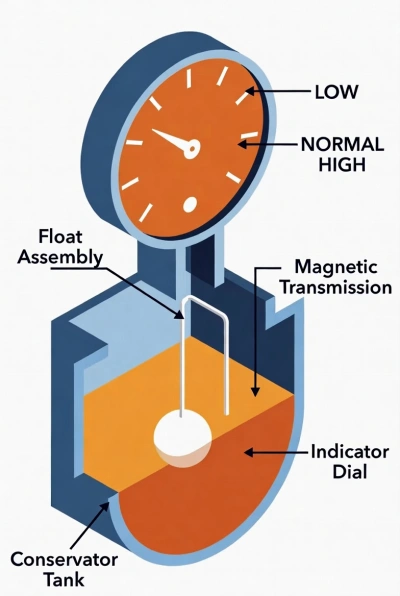
A transformer oil level gauge, also known as a transformer oil level indicator or conservator oil level gauge, is installed on the conservator tank of an oil-immersed transformer to indicate the oil level.
Its primary functions include:
- Monitoring oil volume inside the conservator
- Detecting abnormal oil loss
- Supporting preventive maintenance
- Providing high and low oil level alarms
- Enabling remote monitoring in substations
Because transformer oil serves both insulation and cooling functions, maintaining the correct oil level is essential for safe operation.
Why Is Oil Level Monitoring Important?
A drop in transformer oil level may indicate:
- Perdita di olio
- Guasto alla tenuta
- Conservator problems
- Temperature-related abnormalities
- Internal transformer faults
If left undetected, low oil levels can result in:
- Reduced insulation performance
- Surriscaldamento
- Accelerated insulation aging
- Increased maintenance costs
- Unexpected transformer outages
Per questo motivo, utilities and transformer manufacturers consider oil level gauges an essential monitoring device rather than a simple accessory.
Types of Transformer Oil Level Gauges
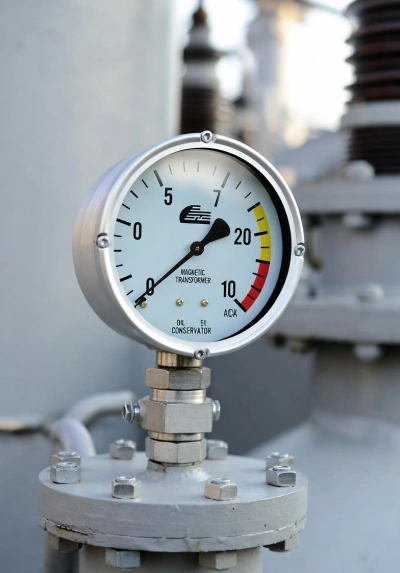
Magnetic Oil Level Gauge
The most common solution used in modern transformers.
Vantaggi:
- Reliable operation
- Excellent sealing
- Lunga durata
- Low maintenance
Typical applications:
- Trasformatori di potenza
- Trasformatori di distribuzione
- Renewable energy substations
Oil Level Gauge with Alarm Contacts
Suitable for projects requiring automatic monitoring.
Features:
- High-level alarm
- Low-level alarm
- Remote indication
- SCADA compatibility
Typical applications:
- Sottostazioni di servizio
- Sistemi energetici industriali
- Smart grid projects
Customized Oil Level Gauge
Designed for special conservator configurations.
Common customization options:
- Dial markings
- Float arm length
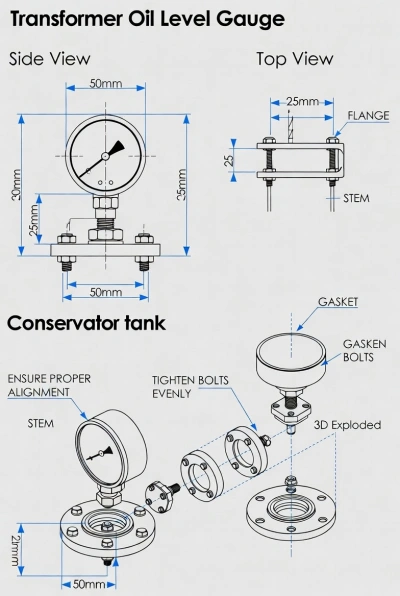
- Flange dimensions
- Contact configurations
- Customer branding
Key Specifications Buyers Should Confirm Before Ordering
Many quotation delays occur because critical technical information is missing.
Before sending an RFQ, prepare the following details:
| Parametro | Requirement |
|---|---|
| Conservator Diameter | Required |
| Mounting Position | Required |
| Float Arm Length | Required |
| Alarm Contacts | Opzionale |
| Contact Rating | Recommended |
| Operating Temperature | Recommended |
| Protection Class | Recommended |
| Quantity | Required |
| Technical Drawing | Highly Recommended |
Providing these details helps suppliers recommend the correct model quickly and accurately.
How to Choose the Right Transformer Oil Level Gauge
1. Match the Conservator Design
The gauge must be compatible with the conservator dimensions and mounting arrangement.
Incorrect matching may result in inaccurate readings.
2. Determine Alarm Requirements
Many substations require:
- High oil level alarm
- Low oil level alarm
- Remote monitoring capability
Selecting these options during procurement is more economical than upgrading later.
3. Consider Environmental Conditions
For outdoor installations, buyers should evaluate:
- Ambient temperature
- Humidity
- Esposizione ai raggi UV
- Dust levels
- Corrosive environments
Products with higher protection ratings generally offer better long-term reliability.
4. Evaluate Supplier Experience
When comparing suppliers, ask:
- How many years have they produced transformer accessories?
- Do they export internationally?
- Can they provide drawings?
- Do they offer OEM services?
- Can they provide testing reports?
Technical support is often as important as the product itself.
5 Common Mistakes When Purchasing Transformer Oil Level Gauges
Mistake #1: Selecting Based on Price Alone
The lowest-priced option may not provide the best value.
Inferior products often suffer from:
- Weak magnetic coupling
- Scarsa tenuta
- Contact failures
- Short service life
The cost of replacing a failed gauge is usually much higher than the initial price difference.
Mistake #2: Providing Incomplete Technical Information
Many buyers only provide the conservator diameter.
Tuttavia, suppliers also need information such as:
- Mounting location
- Float travel distance
- Alarm requirements
Incomplete specifications can lead to incorrect quotations and delivery delays.
Mistake #3: Ignoring Alarm Contact Requirements
Projects increasingly require integration with monitoring systems.
Purchasing a standard gauge without alarm contacts may create additional modification costs later.
Mistake #4: Overlooking Environmental Conditions
A gauge that performs well indoors may not withstand:
- Coastal environments
- Desert climates
- Alta umidità
- Extreme temperatures
Material selection is critical for long-term performance.
Mistake #5: Choosing a Supplier Without Transformer Industry Experience
General instrument manufacturers may not fully understand transformer conservator requirements.
Working with a specialized transformer accessory supplier typically reduces technical risks.
Project Example
Substation Upgrade Project in Southeast Asia
A contractor involved in a transmission substation upgrade required customized magnetic oil level gauges for multiple power transformers.
Project requirements included:
- Dual alarm contacts
- Outdoor installation
- IP65 protection
- Customized dial scales
The gauges were manufactured according to project specifications and delivered within the agreed schedule.
The project demonstrated the importance of confirming technical requirements early in the procurement process to avoid installation issues.
Domande frequenti
What is the normal oil level in a transformer conservator?
The normal oil level varies depending on transformer design and operating temperature. Manufacturers usually indicate the acceptable range on the conservator gauge dial.
What causes transformer oil level to decrease?
Common causes include oil leakage, gasket failure, temperature changes, maintenance activities, and conservator-related issues.
Can a transformer operate with a low oil level?
Operating with insufficient oil may reduce cooling efficiency and insulation performance, potentially leading to equipment damage.
How often should oil level gauges be inspected?
Visual inspections are typically performed during routine transformer maintenance schedules, while alarm contacts should be tested periodically.
Can oil level gauges be customized?
SÌ. Many manufacturers offer customized dimensions, contact configurations, dial markings, and OEM branding.
Why Choose a Professional Transformer Oil Level Gauge Supplier?
A reliable supplier provides more than just a product.
Key advantages include:
- Technical consultation
- Engineering support
- Drawing confirmation
- Quality control
- OEM customization
- Export documentation assistance
These services help ensure smooth procurement and successful project execution.
About Luoyang Datang Energy Technology Co., Ltd.
Luoyang Datang Energy Technology Co., Ltd. specializes in transformer accessories for power transmission and distribution projects worldwide.
La nostra gamma di prodotti comprende:
- Transformer oil level gauges
- Magnetic oil level indicators
- Relè Buchholz
- Silica gel breathers
- Pressure relief devices
- Transformer valves and accessories
With extensive export experience and flexible OEM manufacturing capabilities, we support transformer manufacturers, Appaltatori EPC, distributors, and utility companies across global markets.
Contact our team today for technical drawings, specifiche, and competitive quotations.
POST CORRELATI
AI, Veicoli elettrici, and Renewable Energy Are Exploding: Why the World Is Suddenly “Rushing to Buy” Transformers
Opening a new era of high efficiency —— to explore the infinite possibilities of high-power thyristor
2000 Trasformatori in olio kVA: I giganti del potere che devi conoscere (2024 Guida)

Regolatore dell'angolo di fase controllato da tiristori (TCPAR): la soluzione innovativa per la regolazione della potenza
Quali sono i vantaggi dell'inverter solare intelligente
