Leverancier van elektronische componenten | Transformatoren, Inductoren, Omvormers


1.Basic concepts of relay
Relais is an automatic control component.
It controls high current or high voltage circuits through small currents.
Daarom, het is erg belangrijk op het gebied van elektriciteit, industrie, and automation.
Simpel gezegd, a relay acts as an electrical switch.
Bovendien, it is a controlled switch.
1.1 Working principle of relay
The core principle of a relay is not complicated.
When the control terminal is powered on, a magnetic field will be generated.
Subsequently, the contacts move and the circuit is connected or disconnected.
The common process is as follows:
- Coil energized
- Generate electromagnetic force
- Contact suction or release
- Controlled circuit changes
Daarom, relays can achieve automatic control and isolation protection.
1.2 The core function of relay
The role of relays is mainly reflected in the following aspects:
- Circuit isolation to improve safety
- Amplify control signal
- Implement automatic control logic
- Protect equipment and extend its lifespan
- Daarom, relays are widely used.
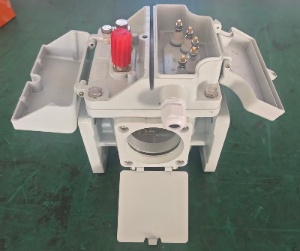
relaisprincipe
2.The main types of relay
According to different standards, relays can be classified into various types.
Different types are suitable for different scenarios.
2.1 Electromagnetic Relay
This is the most common type.
The characteristics are simple structure, low price, en hoge betrouwbaarheid.
Widely used in distribution cabinets and power systems.
2.2 Solid State Relay
Solid state relay do not have mechanical contacts.
Daarom, the response speed is fast and the lifespan is longer.
Suitable for automation equipment with frequent movements.
2.3 Time Relay
Time relay can achieve delay control.
It is very common in industrial control and motor starting.
2.4 Protection Relay
Protective relay are mainly used in power systems.
Bijvoorbeeld, overstroom, overspanning, differential protection, enz.
Especially critical in transformers and distribution systems.
3.Typical application scenarios of 3 relay
3.1 Power and Distribution System
In high and low voltage distribution systems, relay are used for:
- bescherming tegen overbelasting
- kortsluitbeveiliging
- fault isolation
Daarom, it is the foundation for the safe operation of the system.
3.2 Industriële automatisering
In PLC control systems, relays are almost essential.
It can achieve logical control and signal conversion.
3.3 New Energy and Energy Storage Systems
With the development of new energy, the demand for relays continues to grow.
It can be seen in photovoltaics, energie opslag, en elektrische voertuigen.
4.How to choose the appropriate relay
4.1 Key selection parameters
When selecting, it is recommended to focus on:
- rated voltage
- nominale stroom
- contact form
- service life
4.2 Common selection misconceptions
Many people only look at the price.
But it ignores reliability and application environment.
This often brings hidden dangers.
Although the relay is small, its function is enormous.
Both traditional power systems and new energy fields cannot do without it.
Reasonable selection is necessary to ensure the safe and stable operation of the system.
GERELATEERDE POSTEN

Vermogensweerstand koellichaam: Biedt stabiele en efficiënte oplossingen voor warmtebeheer voor elektrische apparatuur
Generac PWRcell zonne-omvormer batterijopslagsysteem
Voordelen en toepassingen van koperen wikkeltransformatoren: Sleuteltechnologieën voor het verbeteren van de efficiëntie en stabiliteit
Waarom transformatorbussen falen: Veel voorkomende oorzaken en hoe u kostbare schade kunt voorkomen

De Transformator: De spanningsalchemist van Power Grid