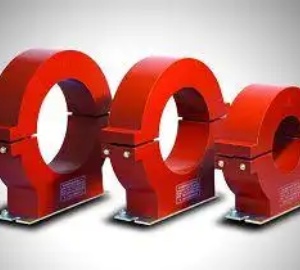
Leverancier van elektronische componenten | Transformatoren, Inductoren, Omvormers


De Transformator: Power Grid’s Voltage Alchemist
Invoering: The Silent Voltage Translator
Every time you charge your phone or switch on a light, a technological marvel works behind the scenes – the transformer. This unsung hero converts power plant electricity (often 10,000V+) to household 220V with 99% efficiëntie. Let’s decode its electromagnetic wizardry.
I. Anatomy of a Transformer
Core Components
1. Iron Core
O Stacked silicon steel laminations (0.35mm thick)
O Silicon increases resistivity, reducing eddy current losses by 80%
O Insulated coatings create "magnetic highways"
2. Wikkelingen
O Primary coil: AC input creates rotating magnetic field
O Secondary coil: Output voltage induced via electromagnetic coupling
3. Isolatiesysteem
O Ondergedompeld in olie: Mineral oil acts as coolant and dielectric (flash point >300°C)
O Droog type: Epoxy resin encapsulation for fire-safe environments
Material Evolution
Era | Kernmateriaal | Breakthrough | Efficiëntie |
1885 | Wrought iron | First practical transformer | 85% |
1950S | Cold-rolled silicon steel | Losses ↓60% | 95% |
2000S | Amorphous metal | 0.025mm thickness, losses ↓70% | 98.5% |
Future | Superconductors | Zero-resistance (lab stage) | >99% |
II. Werkingsprincipe: Electromagnetic Ballet
Two-Stage Energy Conversion
1. Electric→Magnetic (Input Side)
O AC current generates a 50/60Hz rotating magnetic field
O Silicon steel core confines flux like a "magnetic tornado"
2. Magnetic→Electric (Output Side)
O Faraday’s Law induces voltage:
VoutVin=NsecondaryNprimaryVinVout=NprimaryNsecondary
O Current inversely proportional to turns ratio:
Iprimary=NsecondaryNprimary×IsecondaryIprimary=NprimaryNsecondary×Isecondary
Key Performance Metrics
Voltage Conversion:
Step-up (energiecentrales): 1:100 ratio for 110kV→220kV
Aftreden (huizen): 20:1 ratio for 10kV→220V
Efficiëntie: 97-99% in modern units
Load Capacity: 500kVA+ for urban substations
III. Cutting-Edge Innovations
Current Challenges
Energy Loss: Distribution transformers waste ~3% of global electricity
Noise Pollution: 100Hz hum from magnetostriction
Duurzaamheid: Mineral oil disposal risks
Next-Gen Solutions
1. Slimme Transformers
O Real-time voltage regulation via IGBT switches
O Predictive maintenance using IoT sensors
2. Superconducting Transformers
O YBCO tape windings (liquid nitrogen cooled)
O Shanghai pilot: 60% size reduction, 0.1% verliezen
3. Eco-Designs
O Biodegradable ester fluids (from plant oils)
O 3D-printed nanocrystalline cores
Conclusie: The Invisible Backbone
From early 20th-century grid expansion to today’s ultra-high-voltage transmission, transformers remain the cornerstone of electrification. As renewable energy demands grow, these electromagnetic workhorses continue evolving – perhaps soon leveraging quantum materials for lossless power transfer.
Tech Trivia: The world’s largest transformer (1,200MVA) weighs 400 tons – equivalent to 300 sedans!
GERELATEERDE POSTEN
De rol van relais in energiesystemen: selectiepunten en analyse van branchetrends
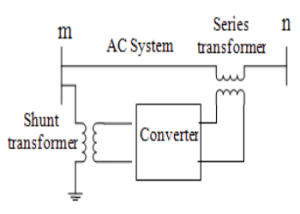
Wat is het doel van een thyristorgestuurde faseverschuivende transformator??
Gelijkrichter met volledige golf: Werkingsprincipe, Soorten, en toepassingen
Speciale isolator voor laagspanningstransformator zorgt voor een revolutie in de veiligheid en prestaties in de stroomdistributie
Hybride omvormers: De ultieme oplossing voor de moderne energiebehoeften