


Fornecedor de componentes eletrônicos | Transformadores, Indutores, Inversores


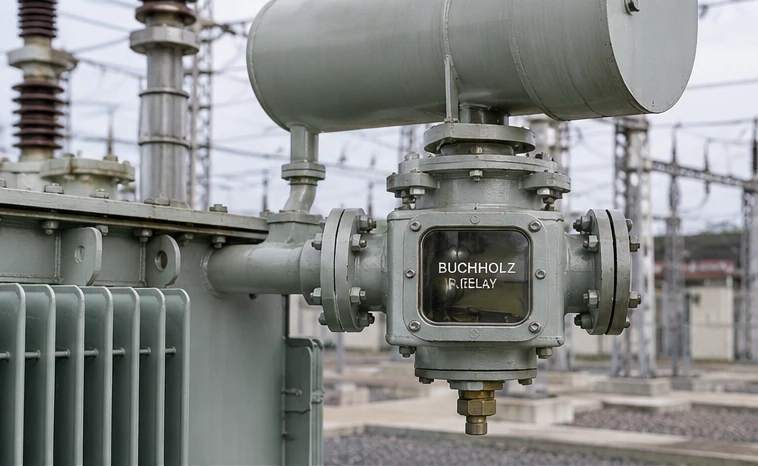
Em transformadores de potência imersos em óleo, o relé Buchholz é um dos dispositivos de proteção mais importantes usados para detectar falhas internas do transformador em um estágio inicial. Instalado entre o tanque principal do transformador e o conservador, este relé operado a gás monitora continuamente o acúmulo de gás e o fluxo anormal de óleo causado por falhas de isolamento, superaquecimento, ou falhas elétricas.
Um relé Buchholz funcionando corretamente pode fornecer um aviso antecipado antes que ocorram danos graves, ajudando utilitários, subestações, e instalações industriais evitam falhas dispendiosas em transformadores e interrupções não planejadas.
No entanto, mesmo o relé de proteção de transformador mais confiável pode enfrentar problemas operacionais. Compreendendo o comum Falhas no relé Buchholz e métodos de solução de problemas são essenciais para engenheiros de manutenção de transformadores e gerentes de ativos.
Neste guia, examinamos as sete falhas mais comuns do relé Buchholz, suas causas, sinais de alerta, e soluções práticas.
O que é um relé Buchholz e como funciona?
Um relé Buchholz é um dispositivo de proteção acionado por gás usado exclusivamente em transformadores a óleo equipados com tanques conservadores..
Suas principais funções incluem:
- Detecção de gás gerado por falhas internas do transformador
- Monitoramento do movimento repentino do óleo causado por falhas graves
- Disparando sinais de alarme para problemas em desenvolvimento
- Iniciando sinais de trip durante faltas internas graves
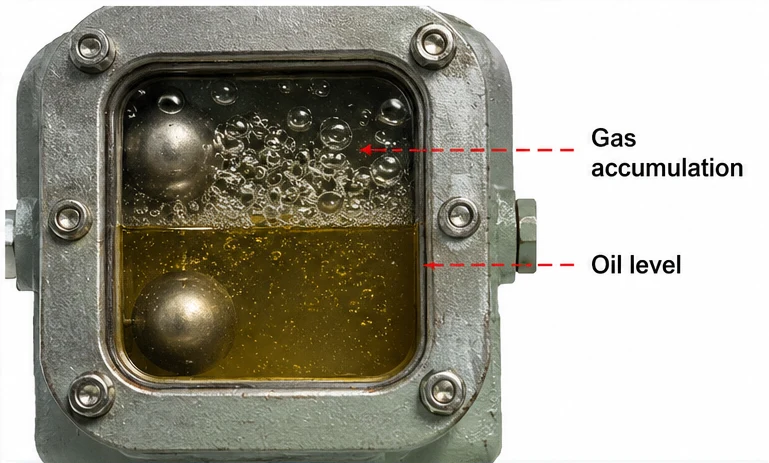
Quando os materiais de isolamento ou o óleo do transformador se decompõem devido ao superaquecimento, descarga parcial, ou arco, bolhas de gás se formam e se acumulam dentro da câmara do relé. O relé então ativa um circuito de alarme ou desarme dependendo da gravidade da falha.
Devido à sua capacidade de detectar falhas em desenvolvimento muito antes de ocorrerem falhas catastróficas, o relé Buchholz continua sendo um dos dispositivos de proteção de transformadores mais eficazes usados atualmente.
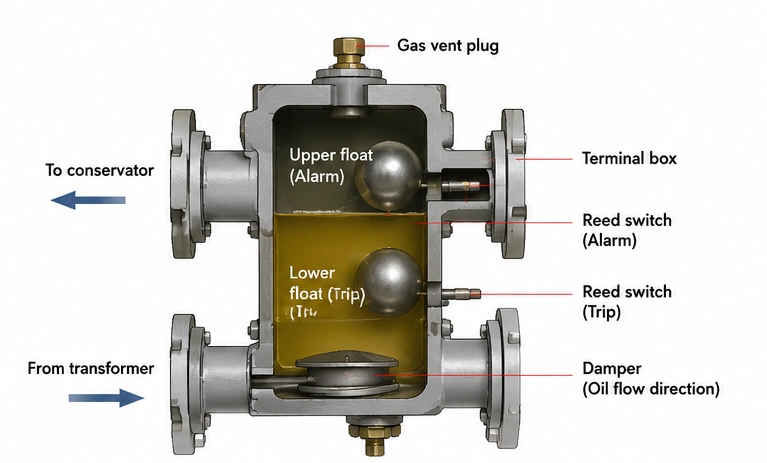
Principal 7 Falhas comuns do relé Buchholz
1. Sinais de alarme falsos frequentes
Sintomas
- O alarme do relé Buchholz é ativado inesperadamente
- Não existe nenhuma falha confirmada no transformador
- Volume mínimo de gás detectado
Possíveis causas
- Ar preso durante o comissionamento do transformador
- Procedimentos inadequados de enchimento de óleo
- Conexões de flange soltas
- Baixo nível de óleo do conservador
- Entrada de ar relacionada à manutenção
Solução de problemas
- Verifique o nível de óleo do transformador.
- Inspecione todas as conexões de tubos e flanges.
- Libere o ar preso usando a válvula de ventilação do relé.
- Confirme os procedimentos adequados de enchimento de óleo.
- Monitore a recorrência do alarme após ação corretiva.
Prevenção
As práticas adequadas de enchimento e comissionamento de óleo a vácuo reduzem significativamente os falsos alarmes do relé Buchholz.
2. Acúmulo excessivo de gás
Sintomas
- Operação repetida de alarme de relé Buchholz
- Coleta de gás visível dentro do relé
- Aumento da temperatura do transformador
Possíveis causas
- Insulation overheating
- Localized hot spots
- Core insulation defects
- Conexões elétricas soltas
- Minor winding faults
Solução de problemas
- Collect gas samples from the relay.
- Perform Dissolved Gas Analysis (DGA).
- Compare gas data with historical trends.
- Conduct infrared thermal inspections.
- Investigate internal overheating sources.
Why It Matters
Persistent gas accumulation is often the earliest warning sign of an internal transformer fault.
3. Sudden Buchholz Relay Trip
Sintomas
- Immediate transformer shutdown
- No previous alarm indication
- Protection system records trip event
Possíveis causas
- Internal short circuits
- Winding-to-winding faults
- Severe insulation failure
- Internal flashover
Solução de problemas
- Keep transformer isolated.
- Review relay event records.
- Perform insulation resistance testing.
- Check winding resistance values.
- Conduct comprehensive transformer diagnostics.
Important
Never reset a Buchholz relay trip without identifying the root cause.
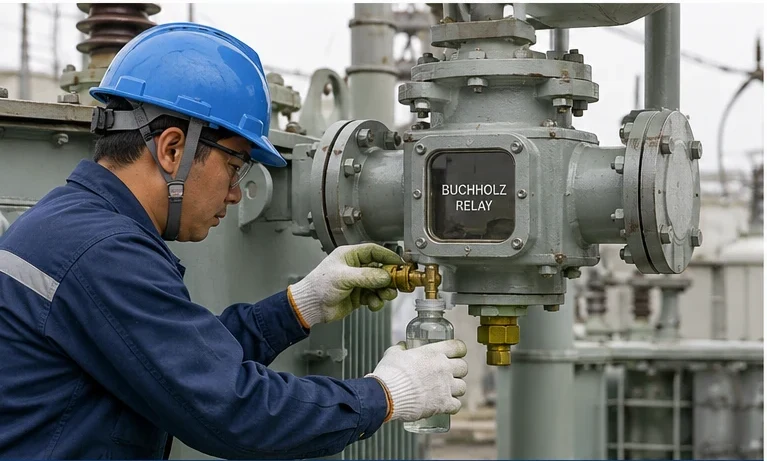
4. Vazamento de óleo ao redor do relé Buchholz
Sintomas
- Vazamento de óleo visível
- Queda do nível de óleo do conservador
- Manchas de óleo perto dos flanges do relé
Possíveis causas
- Juntas danificadas
- Parafusos soltos
- Corrosão
- Danos mecânicos durante a manutenção
Solução de problemas
- Localize o ponto exato de vazamento.
- Aperte as conexões do flange.
- Substitua vedações e juntas desgastadas.
- Inspecione a caixa do relé quanto a rachaduras.
- Restaure o nível de óleo do transformador, se necessário.
Risco
Vazamento de óleo pode permitir contaminação por umidade e ar, acelerando o envelhecimento do isolamento do transformador.
5. Mecanismo de flutuação preso
Sintomas
- O relé não responde durante o teste
- Nenhum alarme apesar do acúmulo de gás
- Operação inconsistente
Possíveis causas
- Acúmulo de lama
- Depósitos de óleo oxidado
- Desgaste mecânico
- Corrosão interna
Solução de problemas
- Remova o relé de serviço com segurança.
- Inspecione o movimento do flutuador manualmente.
- Limpe os componentes internos.
- Substitua as peças desgastadas.
- Execute testes operacionais antes da reinstalação.
Dica de manutenção
A inspeção anual ajuda a evitar que falhas mecânicas comprometam a proteção do transformador.
6. Interruptor Reed ou conjunto de contato com defeito
Sintomas
- Falha no circuito de alarme
- Falsas indicações
- Operação intermitente
Possíveis causas
- Envelhecimento elétrico
- Deterioração de contato
- Entrada de umidade
- Danos por vibração
Solução de problemas
- Verifique a continuidade elétrica.
- Verifique a operação do interruptor.
- Inspecione as conexões dos terminais.
- Substitua componentes defeituosos.
- Teste circuitos de alarme e desarme.
Prática Moderna
Muitos relés Buchholz modernos usam tecnologia reed-switch para maior confiabilidade e conformidade ambiental.
7. Operação do relé durante distúrbios externos
Sintomas
- Alarme ou desarme ocorre durante:
- Transporte
- Terremotos
- Troca de sistema
- Eventos de curto-circuito próximos
Possíveis causas
- Surtos repentinos de petróleo
- Vibração excessiva
- Configurações incorretas de sensibilidade do relé
Solução de problemas
- Revise os registros de distúrbios do sistema.
- Verifique a calibração do relé.
- Verifique a estabilidade da instalação.
- Inspecione o hardware de montagem.
- Avalie se a operação foi genuína ou desencadeadora de incômodo.
Sinais de alerta que nunca devem ser ignorados
As seguintes condições geralmente indicam o desenvolvimento de problemas no transformador:
- Alarmes repetidos de relé Buchholz
- Acúmulo rápido de gás
- Aumento da temperatura do óleo
- Resultados anormais de DGA
- Viagens repentinas de revezamento
- Eventos frequentes do sistema de proteção
Ignorar esses sinais de alerta pode causar danos graves ao transformador e tempo de inatividade dispendioso..
Lista de verificação de manutenção preventiva para relés Buchholz
| Item de inspeção | Freqüência |
|---|---|
| Inspeção visual | Mensal |
| Verificação do nível de óleo | Mensal |
| Inspeção de vazamento | Mensal |
| Teste de circuito de alarme | Todo 6 meses |
| Teste de circuito de disparo | Todo 6 meses |
| Teste de relé funcional | Anualmente |
| Teste DGA | Anualmente ou com base na condição |
Um programa de manutenção proativo melhora significativamente a confiabilidade do transformador e prolonga a vida útil.
Perguntas frequentes (Perguntas frequentes)
Por que um relé Buchholz emite um alarme?
Um alarme de relé Buchholz é normalmente causado pelo acúmulo de gás dentro da câmara do relé. As causas comuns incluem superaquecimento do isolamento, decomposição de óleo, conexões elétricas soltas, ou ar preso introduzido durante a manutenção.
Quais gases são comumente encontrados em um relé Buchholz?
Gases típicos incluem:
- Hidrogênio (H₂)
- Metano (CH₄)
- Etileno (C₂H₄)
- Etano (C₂H₆)
- Acetileno (C₂H₂)
A composição do gás pode ajudar a identificar o tipo de falha do transformador através da Análise de Gás Dissolvido (DGA).
O que causa um disparo do relé Buchholz?
Um disparo do relé Buchholz geralmente ocorre quando uma falha interna grave cria um rápido aumento de óleo entre o tanque do transformador e o conservador.. As causas comuns incluem curtos-circuitos nos enrolamentos, quebra de isolamento, e arco interno.
Um transformador pode continuar operando após um alarme Buchholz??
Em alguns casos, sim. No entanto, a causa do alarme deve ser investigada imediatamente. A análise de gás e o teste de diagnóstico do transformador devem ser realizados antes de determinar se a operação contínua é segura.
Com que frequência um relé Buchholz deve ser testado?
A maioria das concessionárias recomenda testes funcionais pelo menos uma vez por ano, juntamente com inspeções visuais de rotina e verificação do circuito de alarme/disparo a cada seis meses.
Procurando componentes confiáveis de proteção de transformadores?
A proteção eficaz do transformador depende da qualidade de cada componente do sistema.
No PDDN, fornecemos uma ampla gama de acessórios para transformadores e dispositivos de proteção, incluindo:
- Relés Buchholz
- Buchas do transformador
- Indicadores de nível de óleo
- Dispositivos de alívio de pressão
- Indicadores de temperatura do enrolamento
- Acessórios para conservadores
Nossa equipe de engenharia pode ajudá-lo a selecionar os componentes certos para transformadores de potência, transformadores de distribuição, subestações, projetos de energia renovável, e aplicações industriais.
Contate-nos hoje para suporte técnico, especificações do produto, e cotações competitivas.
Artigos relacionados recomendados
O que é um relé Buchholz e por que ele é tão importante para a proteção de transformadores?
Autor
PDDN – Distribuição de Energia & Novas Soluções Energéticas
PDDN especializada em transformadores, subestações, equipamento de distribuição de energia, sistemas de energia solar, soluções de armazenamento de energia, e projetos integrados de infraestrutura de energia. Nossa equipe de engenharia está comprometida em fornecer equipamentos elétricos confiáveis e conhecimento técnico para serviços públicos, industrial, e aplicações de energia renovável em todo o mundo.
POSTS RELACIONADOS
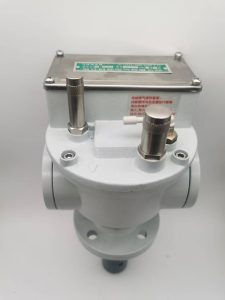
Como selecionar o relé Buchholz: Um guia prático do comprador
Qual é a diferença entre um tiristor bidirecional e um tiristor monofásico?

Fabricantes chineses lançam transformadores de isolamento multifuncionais, amplamente utilizado em diferentes campos

2Tiristor N6509G – o dispositivo multifuncional para aplicações em eletrônica de potência

Tiristor C106: Dominando o futuro dos switches semicondutores
