Fournisseur de composants électroniques | Transformateurs, Inducteurs, Onduleurs


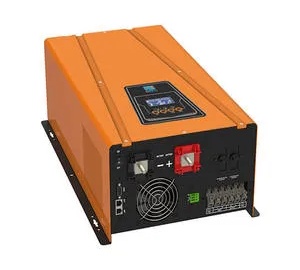
Photovoltaic inverters are essential equipment in photovoltaic systems, principalement utilisé pour transformer le courant continu généré par les modules photovoltaïques en courant alternatif. En outre, inverters also undertake crucial functions such as detecting the operating status of modules, réseaux électriques, and cables, communicating with the outside world, and managing system safety. In the photovoltaic industry-standard NB32004-2013, inverters have over 100 strict technical parameters, and each parameter must be qualified to obtain a certificate. By conducting annual spot checks on nine photovoltaic grid-connected inverter products, including protection connection, contact current, power frequency withstand voltage of solid insulation, rated input and output, conversion efficiency, harmonic and waveform distortion, power factor, DC component, and AC output side overvoltage/Undervoltage protection. A brand new inverter, from development to mass production, takes more than two years to come out. In addition to functions such as overvoltage and undervoltage protection, the inverter also has many little-known black technologies, such as leakage current control, heat dissipation design, electromagnetic compatibility, harmonic suppression, efficiency control, etc..
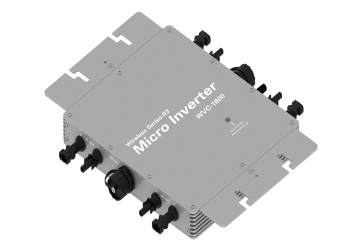
Why do photovoltaic inverters need to be designed for electromagnetic compatibility?
A photovoltaic system consists of photovoltaic modules, brackets, DC cables, onduleurs, AC cables, armoires de distribution, transformateurs, etc.. The brackets are not charged and naturally do not generate electromagnetic interference. Photovoltaic modules and DC cables contain DC inside, with no change in direction, and can only generate electric fields, not magnetic fields. Although the output transformer is AC power, its frequency is shallow, only 50Hz, and the induced magnetic field is very low.
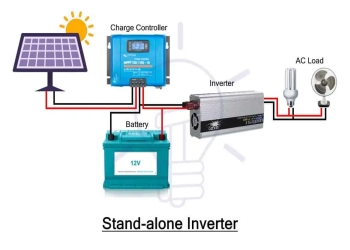
As a power electronic device, photovoltaic inverters have a high switching frequency. Series inverters usually reach around 20K and have a relatively high current. If no measures are taken, there will be significant electromagnetic interference, which can cause unstable operation. Some instruments or equipment around the inverter may need to be fixed.

Inverter eliminates internal interference
Internal attention should be paid to two electromagnetic interference issues in the inverter: the electromagnetic compatibility of the PCB board and the electromagnetic compatibility of the primary circuit. The commonly used electromagnetic compatibility design methods for PCB boards include selecting a reasonable wire width, minimizing the length of the wire, adopting the correct wiring strategy, and preferably using a grid-like wiring structure with one side horizontal and the other side vertical. The cross holes are connected with metalized holes, and decoupling capacitance is configured. In terms of weak current, the detection circuit control circuit adopts an RC filtering design. In terms of solid electricity, the main circuit methods include using appropriate buffer circuits or soft switching circuits and using stacked busbar technology to reduce distributed capacitors. In terms of software, digital filtering technology can be used.
Fournisseur de haute qualité
PDDN Photoélectronique Technology Co., Ltée. se concentre sur la recherche, développement, et l'application de la technologie de l'électronique de puissance et se consacre à fournir aux clients des transformateurs de haute qualité, thyristors, et autres produits électriques. Notre entreprise dispose principalement d'onduleurs solaires, transformateurs, régulateurs de tension, armoires de distribution, thyristors, modules, diodes, radiateurs, et autres appareils électroniques ou semi-conducteurs. Les appareils électroniques et produits semi-conducteurs fournis par PDDN Photoelectron Technology Co., Ltée. ont les caractéristiques de haute efficacité, sécurité, et fiabilité. Ils sont largement utilisés dans les systèmes électriques, contrôle industriel, gestion de l'énergie, et d'autres domaines.
Il accepte les paiements par carte de crédit, T/T, Union occidentale, et Paypal. PDDN expédiera les marchandises aux clients à l'étranger via FedEx, DHL, par la mer, ou par avion. Veuillez vous renseigner si vous souhaitez de la haute qualité appareils électroniques ou produits semi-conducteurs; nous allons aider.
ARTICLES CONNEXES

Les isolateurs en céramique aident l'industrie électronique: fonctionnement stable des appareils électroniques haute tension et haute puissance

Module de diode à récupération rapide et module de diode ordinaire: analyse complète des différences et des caractéristiques
Comment le pilote de contrôle de phase à thyristor monophasé réalise-t-il le contrôle de puissance?
Onduleur toroïdal: L’avenir de la conversion efficace de l’énergie
Pourquoi 80% des pannes de transformateur commencent par les accessoires, et non par le transformateur lui-même