Fournisseur de composants électroniques | Transformateurs, Inducteurs, Onduleurs


Points clés à retenir
- Magnetic indicators use non-contact magnetic coupling for higher accuracy and lower maintenance.
- Les indicateurs de type flotteur sont plus simples et moins chers mais nécessitent un entretien plus fréquent.
- Choisissez magnétique pour les environnements exigeants (haute température, pression, vibration); float-type for budget-friendly, non-critical applications.
- Consider total lifecycle cost, not just initial price, when selecting an indicator.
Comment choisir: Direct Answer
When selecting between magnetic and float-type oil level indicators, the key factors are accuracy requirements, conditions environnementales, capacités de maintenance, et budget. Magnetic indicators (par ex., magnetostrictive or magnetic flap types) are suited for high-precision monitoring, environnements difficiles, and low-maintenance setups, while float-type indicators provide a cost-effective, simpler solution for less demanding applications where regular inspection is feasible.
The choice comes down to prioritizing long-term reliability and minimal upkeep (magnetic) versus upfront economy and straightforward mechanical operation (float-type). Température, vibration, pression, and oil type also influence the decision. This article provides a detailed comparison to help you evaluate both technologies against your specific needs.
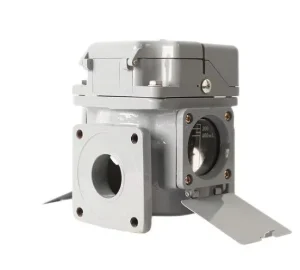
How Magnetic Oil Level Indicators Work
Magnetic oil level indicators use a magnetic coupling mechanism to transmit the float position to an external indicator without direct contact with the oil. A float containing a permanent magnet moves with the liquid level, and its magnetic field drives a follower magnet or a series of magnetic flaps on the outside of the chamber. This design eliminates mechanical seals and moving parts inside the tank, reducing leakage risks and wear.
Common configurations are magnetostrictive sensors (which measure the time of flight of a magnetic pulse) and magnetic flap indicators (which display a visible color change as flaps flip). Both types offer high accuracy, typically within ±1 mm, and can operate under high pressure and temperature extremes. They are widely used in transformers, oil storage tanks, and industrial process vessels, alongside accessoires de protection des transformateurs, where precise level monitoring is critical.
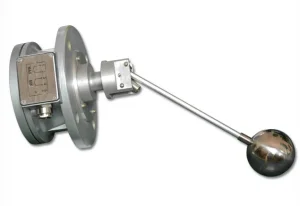
How Float-Type Oil Level Indicators Work
Float-type oil level indicators operate by a direct mechanical principle: a buoyant float rides on the liquid surface, and its movement is transferred via a lever, rod, or rotary shaft to a visual indicator or transmitter. The float is often made of corrosion-resistant materials such as stainless steel or plastic, and the linkage is sealed to prevent oil leakage. Simpler designs show level through a sight glass or a pointer on a scale.
These indicators are generally less expensive than magnetic types and are straightforward to install and maintain. Cependant, they are more susceptible to wear from moving parts, vibration, and fouling, requiring periodic calibration and inspection. Accuracy is moderate, typically within ±5–10 mm, and they may not be suitable for very high temperatures or pressures unless specially designed. They remain common in applications where cost is a primary concern and the environment is relatively benign.
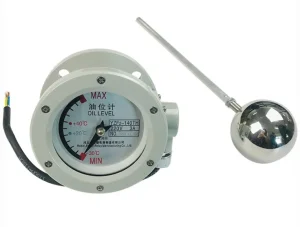
Key Differences Between Magnetic and Float-Type Indicators
The fundamental distinction is in the operating principle: magnetic indicators use non-contact magnetic coupling, while float-type indicators rely on direct mechanical linkage. This difference affects accuracy, durabilité, entretien, et le coût. The table below summarizes the main comparison dimensions.
Magnetic indicators generally offer superior accuracy, longer service life, and lower maintenance because they have no moving parts inside the tank. Float-type indicators are simpler and cheaper upfront but require more frequent attention and are less tolerant of harsh conditions. Both types can be adapted for different tank geometries and output signals, but the choice should align with the specific operational demands.
| Fonctionnalité | Magnetic Indicator | Float-Type Indicator |
|---|---|---|
| Measurement Principle | Non-contact magnetic coupling | Direct mechanical float linkage |
| Accuracy | Haut (typically ±1 mm) | Modéré (typically ±5–10 mm) |
| Entretien | Faible (no moving parts inside tank) | Periodic inspection and calibration |
| Suitable for High Temperature | Oui (up to 400°C with proper design) | Limité (depends on materials) |
| Suitable for High Pressure | Oui (can exceed 100 bar) | Limité (typically below 10 bar) |
| Vibration Resistance | Excellent | Modéré |
| Leakage Risk | Very low | Higher due to seals |
| Coût | Coût initial plus élevé | Coût initial inférieur |
| Lifecycle Cost | Lower over time | Higher due to maintenance |
| Output Options | Analog (4-20 mA), numérique, visual | Visual, switch, limited analog |
Selection Criteria Based on Application Conditions
For transformer oil level monitoring, magnetic indicators are often preferred because of their high reliability and ability to withstand the thermal and electrical stresses inside a transformer, which also houses other protection devices such as Relais Buchholz. They are also better suited for pressurized systems and volatile environments where leakage must be minimized. Float-type indicators may be sufficient for simple oil storage tanks or non-critical level indication where periodic manual checks are acceptable.
Consider the following conditions when choosing: operating temperature and pressure range, presence of vibration or shock, required measurement accuracy, exposure to corrosive or viscous fluids, the need for remote monitoring, and the relevance of Buchholz relay vs pressure relief for protection. Magnetic indicators can be fitted with 4-20 mA transmitters or digital outputs, while float-type indicators can also be equipped with switches or transmitters, but often with lower precision. Evaluate the total cost of ownership, including installation, entretien, and replacement frequency, to make an informed decision.
Conclusion and Recommendations
En résumé, magnetic oil level indicators are the superior choice when high accuracy, peu d'entretien, and long-term reliability are required, especially in demanding environments like transformers and high-pressure vessels. Float-type indicators remain a viable option for budget-constrained, non-critical applications where simplicity and ease of repair are valued. The decision should be based on a thorough assessment of your specific process conditions, safety requirements, et les coûts du cycle de vie.
For most industrial oil level monitoring tasks, the magnetic type offers a better return on investment despite higher initial cost. Cependant, if your system already uses float-type indicators and the environment is stable, upgrading may not be necessary. Always consult with a qualified instrumentation engineer to evaluate the compatibility of the selected indicator with your oil type, tank design, and regulatory standards.

Questions fréquemment posées
What is the main advantage of magnetic oil level indicators?
The main advantage is high accuracy and reliability with minimal maintenance. The non-contact magnetic coupling eliminates moving parts inside the tank, reducing wear and leakage risks, and allowing operation under extreme temperatures and pressures.
When should I choose a float-type indicator over a magnetic one?
Float-type indicators are suitable for applications where cost is a primary concern, accuracy requirements are moderate, and the environment is not harsh (par ex., low pressure, low vibration). They are also easier to repair and replace, making them practical for non-critical level monitoring.
Are magnetic indicators more expensive than float-type indicators?
Oui, magnetic indicators generally have a higher initial purchase price. Cependant, their longer service life and lower maintenance needs often result in a lower total cost of ownership over time, especially in demanding industrial environments.
Luoyang Datang Energy Technology Co., Ltée. est une entreprise de haute technologie intégrant R&D, fabrication et fourniture d'équipements électriques tels que des transformateurs, nouveaux composants énergétiques, armoires de distribution et onduleurs. Avec l’innovation technologique au cœur, nous nous concentrons sur la création de solutions d'alimentation haute fiabilité et hautes performances pour servir les clients du monde entier. Avec un système de contrôle de qualité strict et une certification standard internationale, nous continuons à produire d'excellents produits et permettons aux clients de construire des systèmes électriques sûrs et stables.
ARTICLES CONNEXES

Pourquoi l'énergie solaire commerciale + Le stockage sur batterie explose 2026

Fluctuations de prix du BT151: une analyse approfondie des facteurs d’influence

Le marché des transformateurs de puissance principaux à haute tension devrait atteindre $36.9 milliards par 2032, avec un taux de croissance annuel composé de 6.9%
La combinaison et les perspectives de marché des transformateurs immergés dans l’huile et de la technologie de l’intelligence artificielle
Pourquoi les indicateurs de niveau d'huile sont importants dans la protection des transformateurs