Pemasok Komponen Elektronik | transformator, Induktor, Inverter


Perkenalan
APenyearah Gelombang Penuh is an essential electronic circuit that convertsarus bolak-balik (AC) intoarus searah (DC). Berbeda dengan penyearah setengah gelombang, yang hanya memanfaatkan setengah dari bentuk gelombang AC, a full-wave rectifier uses both halves, improving efficiency and reducing ripple voltage. This makes it a critical component in power supplies, battery chargers, and various electronic devices.
With the growing demand for efficient power conversion in renewable energy systems, kendaraan listrik (EV), and consumer electronics, understanding full-wave rectifiers has become more relevant than ever. Artikel ini mengeksplorasiprinsip kerja, jenis, keuntungan, and real-world applications of full-wave rectifiers while optimizing forSEO and readability.
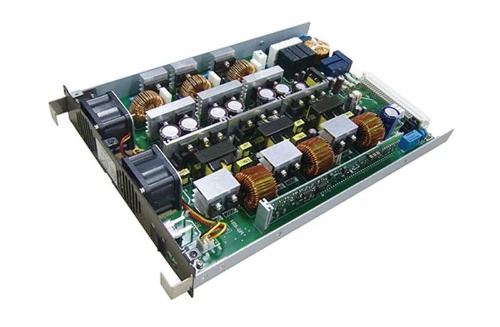
How Does a Full Wave Rectifier Work?
Afull-wave rectifier can be constructed usingtwo diodes (center-tapped transformer) ataufour diodes (bridge rectifier). Both configurations ensure that current flows in the same direction during both positive and negative half-cycles of the AC input.
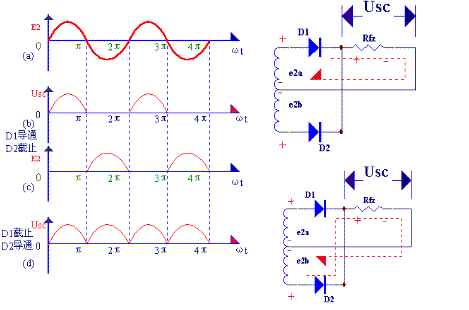
1. Center-Tapped Full Wave Rectifier
- Uses two diodes dan sebuah center-tapped transformer.
- During the positive half-cycle, dioda D1 conducts, ketika D2 remains reverse-biased.
- During the negative half-cycle, dioda D2 conducts, ketika D1 is reverse-biased.
- Output is a pulsating DC with less ripple compared to a half-wave rectifier.
2. Bridge Rectifier (Paling Umum)
- Uses four diodes arranged in a bridge configuration.
- No need for a center-tapped transformer, making it more cost-effective.
- Dioda D1 & D2 conduct during the positive half-cycle, ketika D3 & D4 conduct during the negative half-cycle.
- Provides efisiensi yang lebih tinggi and is widely used in power adapters and industrial power supplies.
Advantages of Full Wave Rectifiers
- Higher Efficiency – Utilizes both halves of the AC waveform, delivering more DC output.
- Lower Ripple Factor – Smoother DC output compared to half-wave rectifiers.
- Better Transformer Utilization – No wasted cycles, improving power conversion efficiency.
- Wider Applications – Used in pasokan listrik, battery chargers, dan sistem energi terbarukan.
Kekurangan & Solusi
- More Components Required – A bridge rectifier uses four diodes instead of one.
- Higher Heat Dissipation – Diodes may require heat sinks in high-power applications.
- Voltage Drop – Each diode causes a ~0.7V drop, reducing output voltage.
Larutan: ModernSchottky diodes Dansynchronous rectifiers minimize voltage drops and improve efficiency.
Applications of Full Wave Rectifiers
- Power Supplies – Used in AC-to-DC adapters for laptops, ponsel pintar, and TVs.
- Battery Chargers – Converts AC mains to DC for charging EV, baterai surya, dan sistem UPS.
- Sistem Energi Terbarukan – Essential in solar inverters and wind power converters.
- Industrial Electronics – Used in penggerak motor, mesin las, and CNC controllers.
Tren Masa Depan & Inovasi
Dengan kemajuan diwide-bandgap semiconductors (SiC & GaN), full-wave rectifiers are becoming more efficient, kompak, and suitable forhigh-frequency applications. Munculnya5G, IoT, dan kendaraan listrik is further driving demand forhigh-efficiency power conversion.
Kesimpulan
Itufull wave rectifier is a cornerstone of modern electronics, enabling efficient AC-to-DC conversion. Whether inelektronik konsumen, industrial systems, or renewable energy, its role is indispensable. Seiring berkembangnya teknologi, more efficient and compact rectifier designs will continue to shape the future of power electronics.
POSTINGAN TERKAIT

Panduan Utama Pemasangan Panel Fotovoltaik di 2024

Inverter Pengikat Jaringan Matahari: Peralatan inti sistem pembangkit listrik tenaga surya
Pentingnya dan Keunggulan Modul Dioda SIC
Panduan Utama untuk Trafo Distribusi Terendam Minyak
Transformator Jarak Jauh, Transformator DTR, dan Masa Depan Distribusi Energi: Sebuah Revolusi yang Didukung oleh AI