Elektronesch Komponente Fournisseur | Transformers, Induktoren, Inverters


Aféierung
AVoll Wave Rectifier is an essential electronic circuit that convertsofwiesselnd aktuell (AC) intodirekt Stroum (DC). Am Géigesaz zu engem Hallefwelle-Griichter, déi nëmmen eng Halschent vun der AC Welleform benotzt, a full-wave rectifier uses both halves, improving efficiency and reducing ripple voltage. This makes it a critical component in power supplies, battery chargers, and various electronic devices.
With the growing demand for efficient power conversion in renewable energy systems, elektresch Gefierer (EVs), and consumer electronics, understanding full-wave rectifiers has become more relevant than ever. Dësen Artikel entdeckt d'schaffen Prinzip, Zorte, Virdeeler, and real-world applications of full-wave rectifiers while optimizing forSEO a Liesbarkeet.
How Does a Full Wave Rectifier Work?
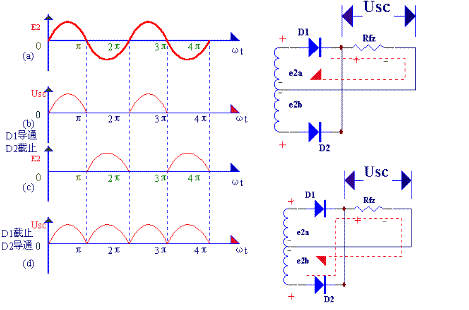
Afull-wave rectifier can be constructed usingtwo diodes (center-tapped transformer) oderfour diodes (bridge rectifier). Both configurations ensure that current flows in the same direction during both positive and negative half-cycles of the AC input.
1. Center-Tapped Full Wave Rectifier
- Uses two diodes and a center-tapped transformer.
- During the positive half-cycle, diode D1 conducts, während D2 remains reverse-biased.
- During the negative half-cycle, diode D2 conducts, während D1 is reverse-biased.
- Output is a pulsating DC with less ripple compared to a half-wave rectifier.
2. Bréck Rectifier (Most Common)
- Uses four diodes arranged in a bridge configuration.
- No need for a center-tapped transformer, making it more cost-effective.
- Diodes D1 & D2 conduct during the positive half-cycle, während D3 & D4 conduct during the negative half-cycle.
- Bitt higher efficiency and is widely used in power adapters and industrial power supplies.
Advantages of Full Wave Rectifiers
- Higher Efficiency – Utilizes both halves of the AC waveform, delivering more DC output.
- Lower Ripple Factor – Smoother DC output compared to half-wave rectifiers.
- Better Transformer Utilization – No wasted cycles, improving power conversion efficiency.
- Wider Applications – Used in Muecht Ëmgeréits, battery chargers, an erneierbar Energiesystemer.
Nodeeler & Léisungen
- More Components Required – A bridge rectifier uses four diodes instead of one.
- Higher Heat Dissipation – Diodes may require heat sinks in high-power applications.
- Voltage Drop – Each diode causes a ~0.7V drop, reducing output voltage.
Léisung: ModernSchottky diodes ansynchronous rectifiers minimize voltage drops and improve efficiency.
Applications of Full Wave Rectifiers
- Energieversuergung – Used in AC-to-DC adapters for laptops, Smartphones, and TVs.
- Battery Chargers – Converts AC mains to DC for charging EVs, solar batteries, an UPS Systemer.
- Erneierbar Energie Systemer – Essential in solar inverters and wind power converters.
- Industrial Electronics – Used in Motor fiert, Schweess Maschinnen, and CNC controllers.
Zukunft Trends & Innovatiounen
Mat Fortschrëtter anwide-bandgap semiconductors (SiC & GaN), full-wave rectifiers are becoming more efficient, kompakt, and suitable forhigh-frequency applications. Den Opstig vun5G, IoT, an elektresch Gefierer is further driving demand forhigh-efficiency power conversion.
Conclusioun
Déifull wave rectifier is a cornerstone of modern electronics, enabling efficient AC-to-DC conversion. Whether inconsumer electronics, industrial systems, or renewable energy, its role is indispensable. As technology evolves, more efficient and compact rectifier designs will continue to shape the future of power electronics.
RELATED POSTS

Transformator
Transformator amorph Legierung
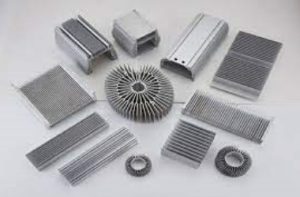
Thermalloy Heizkierper: Definitioun, Charakteristiken, an Applikatioun Felder

Iwwergräifend Tester fir d'Performance an d'Zouverlässegkeet vum Thyristormodul ze garantéieren

D'Roll an d'Virdeeler vu Photodiode Moduler am Beräich vun der optescher Detektioun a Messung