Proveedor de componentes electrónicos | Transformadores, Inductores, Inversores


Introducción
ARectificador de onda completa is an essential electronic circuit that convertscorriente alterna (C.A.) encorriente continua (corriente continua). A diferencia de un rectificador de media onda, que sólo utiliza la mitad de la forma de onda de CA, a full-wave rectifier uses both halves, improving efficiency and reducing ripple voltage. This makes it a critical component in power supplies, cargadores de bateria, and various electronic devices.
With the growing demand for efficient power conversion in renewable energy systems, vehículos eléctricos (vehículos eléctricos), and consumer electronics, understanding full-wave rectifiers has become more relevant than ever. Este artículo explora laprincipio de funcionamiento, tipos, ventajas, and real-world applications of full-wave rectifiers while optimizing forSEO y legibilidad.
How Does a Full Wave Rectifier Work?
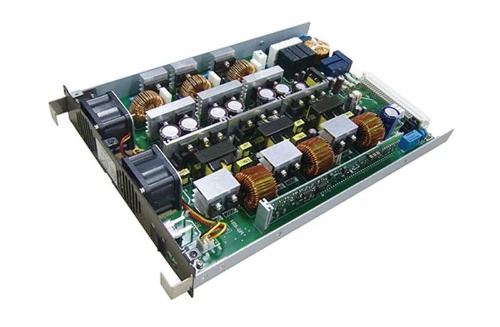
Afull-wave rectifier can be constructed usingtwo diodes (center-tapped transformer) ofour diodes (bridge rectifier). Both configurations ensure that current flows in the same direction during both positive and negative half-cycles of the AC input.
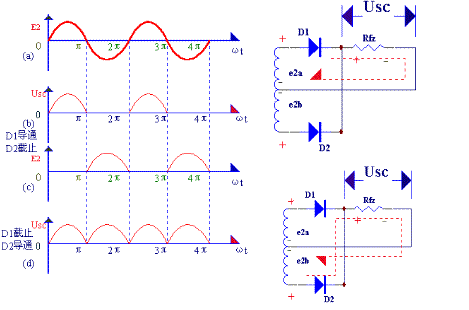
1. Center-Tapped Full Wave Rectifier
- Uses two diodes and a center-tapped transformer.
- During the positive half-cycle, diode D1 conducts, while D2 remains reverse-biased.
- During the negative half-cycle, diode D2 conducts, while D1 is reverse-biased.
- Output is a pulsating DC with less ripple compared to a half-wave rectifier.
2. Puente rectificador (Most Common)
- Uses four diodes arranged in a bridge configuration.
- No need for a center-tapped transformer, making it more cost-effective.
- Diodes D1 & D2 conduct during the positive half-cycle, while D3 & D4 conduct during the negative half-cycle.
- Provides higher efficiency and is widely used in power adapters and industrial power supplies.
Advantages of Full Wave Rectifiers
- Higher Efficiency – Utilizes both halves of the AC waveform, delivering more DC output.
- Lower Ripple Factor – Smoother DC output compared to half-wave rectifiers.
- Better Transformer Utilization – No wasted cycles, improving power conversion efficiency.
- Wider Applications – Used in fuentes de alimentación, cargadores de bateria, y sistemas de energía renovable.
Desventajas & Soluciones
- More Components Required – A bridge rectifier uses four diodes instead of one.
- Higher Heat Dissipation – Diodes may require heat sinks in high-power applications.
- Voltage Drop – Each diode causes a ~0.7V drop, reducing output voltage.
Solución: ModernoSchottky diodes ysynchronous rectifiers minimize voltage drops and improve efficiency.
Applications of Full Wave Rectifiers
- Power Supplies – Used in AC-to-DC adapters for laptops, teléfonos inteligentes, and TVs.
- Battery Chargers – Converts AC mains to DC for charging vehículos eléctricos, solar batteries, and UPS systems.
- Sistemas de energía renovable – Essential in solar inverters and wind power converters.
- Industrial Electronics – Used in unidades de motor, máquinas de soldar, and CNC controllers.
Tendencias futuras & Innovaciones
With advancements inwide-bandgap semiconductors (Sic & GaN), full-wave rectifiers are becoming more efficient, compacto, and suitable forhigh-frequency applications. The rise of5GRAMO, IoT, and electric vehicles is further driving demand forhigh-efficiency power conversion.
Conclusión
Elfull wave rectifier is a cornerstone of modern electronics, enabling efficient AC-to-DC conversion. Whether inelectrónica de consumo, industrial systems, or renewable energy, its role is indispensable. As technology evolves, more efficient and compact rectifier designs will continue to shape the future of power electronics.
PUBLICACIONES RELACIONADAS

Los transformadores sumergidos en aceite inyectan nueva energía en proyectos de energía verde

El tamaño y la selección de la capacidad y potencia del transformador son de gran importancia para garantizar el funcionamiento estable y la transmisión eficiente del sistema eléctrico..

Los aisladores cerámicos ayudan a la industria electrónica: funcionamiento estable de dispositivos electrónicos de alto voltaje y alta potencia
Transformador sellado sumergido en aceite 1000kVA: ¿Por qué se ha convertido en el corazón fiable de las redes eléctricas modernas?? Análisis en profundidad
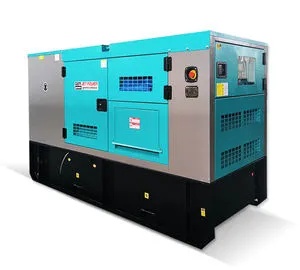
La guía definitiva para elegir un generador diésel confiable: Köhler vs.. Duromax