Fornitore di componenti elettronici | Trasformatori, Induttori, Invertitori


Con il rapido sviluppo di nuova energia, veicoli elettrici, centri dati, e sistemi di distribuzione elettrica urbana, Trasformatori a secco are experiencing a new round of growth worldwide.
Compared with traditional oil immersed transformers, dry-type transformers have obvious advantages in safety, protezione dell'ambiente, and maintenance costs, especially in high fire protection requirements, densely populated or indoor installation scenarios, and are accelerating the replacement of oil immersed solutions.
This article will systematically analyze the technical value and market logic of dry-type transformer from five dimensions: principi strutturali, core technologies, scenari applicativi, standard internazionali, e le tendenze future.
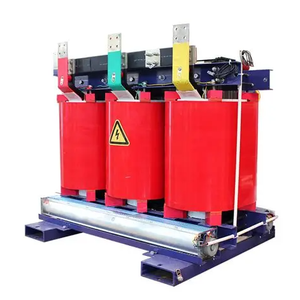
1.Basic principles and structure of trasformatori a secco
1.1 Working principle of dry-type transformers
Dry-type transformers essentially still follow the principle of electromagnetic induction, completing voltage conversion through magnetic flux coupling between the primary and secondary windings.
The biggest difference from oil immersed transformers is that:
Not using insulating oil as a cooling and insulating medium
Mainly relying on air convection or forced air cooling for heat dissipation
This has led to fundamental changes in its structure and operational characteristics.
1.2 Principali componenti strutturali
Dry-type transformers typically consist of the following core components:
iron core
- Stacking of cold-rolled silicon steel sheets
- Bassa perdita, high magnetic permeability design
avvolgimento
- High voltage winding: mostly made of copper or aluminum conductors
- Low voltage winding: foil winding or wire winding structure
Sistema di isolamento
- Colata di resina epossidica
- Insulation paper+glass fiber composite
sistema di raffreddamento
- UN (natural air cooling)
- DI (raffreddamento ad aria forzata)
2.The mainstream technical route of dry-type transformers
2.1 Epoxy resin cast dry-type transformers
This is currently the most widely used and technologically mature type, characterized by:
- The winding is cast as a whole, with strong short-circuit resistance
- Excellent moisture and dust resistance
- Suitable for harsh environments
Ma allo stesso tempo, there are also:
- Relatively high cost
- Difficulty in maintenance
2.2 Non encapsulated (VPI) trasformatori a secco
The dry-type transformers with VPI (Impregnazione sotto vuoto) vacuum pressure impregnation process has seen a significant increase in demand in overseas markets in recent years.
Caratteristiche principali:
- Better heat dissipation performance
- Low operating noise
- Suitable for high-capacity and continuous load conditions
2.3 High temperature insulated dry-type transformers
With the development of new material technology, H-class and C-class insulation systems are gradually being applied to dry-type transformers:
- Allow for higher operating temperatures
- Enhance power density
- Suitable for the fields of new energy and rail transit
3.Dry-type transformers vs oil immersed transformers
3.1 Safety Comparison
| Articolo | Trasformatore di tipo secco | Oil-Filled Transformer |
|---|---|---|
| Rischio incendio | Very low | Più alto |
| Perdita di olio | None | Possible |
| Indoor installation | Highly suitable | Restricted |
3.2 Operations and Life Cycle Costs
Although the initial procurement cost of dry-type transformer is higher than that of oil immersed transformers, throughout their entire lifecycle:
- No need to change the oil
- Low frequency of operation and maintenance
- Low shutdown risk
TCO (Costo totale di proprietà) is actually lower.
4.Core application scenarios of dry-type transformers
4.1 New Energy System
- Photovoltaic power station box transformer
- Wind power grid connected system
- Energy storage converter system
4.2 Data Center and Communication Base Station
Data centers have extremely high requirements for fire prevention, stabilità, and low noise, and dry-type transformers have almost become standard.
4.3 Urban Public Buildings
- hospital
- subway
- complesso commerciale
- High rise office building
5.International Standards and Export Focus
Common international standards for dry-type transformers include:
- CEI 60076-11
- IEEE C57.12
- EN 50541
When exporting, special attention should be paid to:
- insulation class
- noise level
- Partial discharge level
- Livello di protezione (IP)
6.Future Trends and Technological Development Directions
6.1 High energy efficiency and low loss
The tightening of energy efficiency regulations in various countries is promoting the development of dry-type transformers towards lower no-load losses.
6.2 Digitization and Intelligent Monitoring
- Temperature online monitoring
- Partial discharge online detection
- Remote operation and maintenance system
6.3 New Materials and Lightweight Design
- New composite insulation materials
- Higher permeability iron core
Against the backdrop of the global power system evolving towards safety, greenness, and digitization, dry-type transformers are no longer just an “alternative solution”, but are becoming the mainstream choice.
For manufacturers and exporters, whoever can lead in technology, standard, and application understanding will have an advantage in the global market.
Luoyang Datang Energy Technology Co., Ltd. è un'impresa high-tech che integra R&D, produzione e fornitura di apparecchiature elettriche come trasformatori, nuove componenti energetiche, armadi di distribuzione e inverter. Con l’innovazione tecnologica al centro, ci concentriamo sulla creazione di soluzioni energetiche ad alta affidabilità e ad alte prestazioni per servire clienti globali. Con un rigoroso sistema di controllo qualità e certificazione standard internazionale, continuiamo a produrre prodotti eccellenti e consentiamo ai clienti di costruire sistemi di alimentazione sicuri e stabili.
POST CORRELATI

Trasformatori di distribuzione affidabili in olio per un'efficiente erogazione di energia
La guida definitiva al trasformatore a bagno d'olio ermeticamente sigillato da 1000 kVA
250 Prezzo del trasformatore kVA: Una guida completa ai trasformatori Kirloskar

Rivoluzionare la trasmissione dell’energia solare: La guida definitiva ai trasformatori per pannelli solari
Trasformatori elettrici: Principi di funzionamento, Tipi, e applicazioni moderne