Leverancier van elektronische componenten | Transformatoren, Inductoren, Omvormers


Met de snelle ontwikkeling van nieuwe energie, elektrische voertuigen, datacentra, en stedelijke energiedistributiesystemen, Droge transformatoren are experiencing a new round of growth worldwide.
Vergeleken met traditionele olie-ondergedompelde transformatoren, dry-type transformers have obvious advantages in safety, bescherming van het milieu, en onderhoudskosten, especially in high fire protection requirements, densely populated or indoor installation scenarios, and are accelerating the replacement of oil immersed solutions.
This article will systematically analyze the technical value and market logic of dry-type transformer from five dimensions: structurele principes, core technologies, toepassingsscenario's, internationale normen, en toekomstige trends.
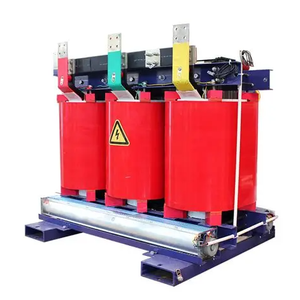
1.Basic principles and structure of droge transformatoren
1.1 Working principle of dry-type transformers
Dry-type transformers essentially still follow the principle of electromagnetic induction, completing voltage conversion through magnetic flux coupling between the primary and secondary windings.
The biggest difference from oil immersed transformers is that:
Not using insulating oil as a cooling and insulating medium
Mainly relying on air convection or forced air cooling for heat dissipation
This has led to fundamental changes in its structure and operational characteristics.
1.2 Belangrijkste structurele componenten
Dry-type transformers typically consist of the following core components:
ijzeren kern
- Stacking of cold-rolled silicon steel sheets
- Low loss, high magnetic permeability design
kronkelend
- High voltage winding: mostly made of copper or aluminum conductors
- Low voltage winding: foil winding or wire winding structure
Isolatie systeem
- Epoxy resin casting
- Insulation paper+glass fiber composite
cooling system
- EEN (natural air cooling)
- VAN (forced air cooling)
2.The mainstream technical route of dry-type transformers
2.1 Epoxyhars gegoten droge transformatoren
This is currently the most widely used and technologically mature type, characterized by:
- The winding is cast as a whole, with strong short-circuit resistance
- Excellent moisture and dust resistance
- Suitable for harsh environments
But at the same time, there are also:
- Relatively high cost
- Difficulty in maintenance
2.2 Niet ingekapseld (VPI) droge transformatoren
The dry-type transformers with VPI (Vacuümdrukimpregnatie) vacuum pressure impregnation process has seen a significant increase in demand in overseas markets in recent years.
Belangrijkste kenmerken:
- Better heat dissipation performance
- Low operating noise
- Suitable for high-capacity and continuous load conditions
2.3 High temperature insulated dry-type transformers
With the development of new material technology, H-class and C-class insulation systems are gradually being applied to dry-type transformers:
- Allow for higher operating temperatures
- Enhance power density
- Suitable for the fields of new energy and rail transit
3.Dry-type transformers vs oil immersed transformers
3.1 Safety Comparison
| Item | Droge transformator | Met olie gevulde transformator |
|---|---|---|
| Brandrisico | Very low | Hoger |
| Olie lekkage | None | Possible |
| Binneninstallatie | Highly suitable | Restricted |
3.2 Operations and Life Cycle Costs
Although the initial procurement cost of dry-type transformer is higher than that of oil immersed transformers, throughout their entire lifecycle:
- No need to change the oil
- Low frequency of operation and maintenance
- Low shutdown risk
Totale eigendomskosten (Total Cost of Ownership) is actually lower.
4.Core application scenarios of dry-type transformers
4.1 New Energy System
- Photovoltaic power station box transformer
- Wind power grid connected system
- Energy storage converter system
4.2 Data Center and Communication Base Station
Data centers have extremely high requirements for fire prevention, stabiliteit, and low noise, and dry-type transformers have almost become standard.
4.3 Urban Public Buildings
- hospital
- subway
- commercieel complex
- High rise office building
5.International Standards and Export Focus
Common international standards for dry-type transformers include:
- IEC 60076-11
- IEEE C57.12
- EN 50541
When exporting, special attention should be paid to:
- insulation class
- noise level
- Partial discharge level
- Beschermingsniveau (IP)
6.Future Trends and Technological Development Directions
6.1 High energy efficiency and low loss
The tightening of energy efficiency regulations in various countries is promoting the development of dry-type transformers towards lower no-load losses.
6.2 Digitization and Intelligent Monitoring
- Online temperatuurbewaking
- Partial discharge online detection
- Remote operation and maintenance system
6.3 New Materials and Lightweight Design
- New composite insulation materials
- Higher permeability iron core
Against the backdrop of the global power system evolving towards safety, greenness, and digitization, dry-type transformers are no longer just an “alternative solution”, but are becoming the mainstream choice.
Voor fabrikanten en exporteurs, whoever can lead in technology, normen, and application understanding will have an advantage in the global market.
Luoyang Datang Energietechnologie Co., Ltd. is een hightech onderneming die R&D, productie en levering van stroomapparatuur zoals transformatoren, nieuwe energiecomponenten, verdeelkasten en omvormers. Met technologische innovatie als kern, we richten ons op het creëren van zeer betrouwbare en krachtige energieoplossingen om wereldwijde klanten te bedienen. Met een strikt kwaliteitscontrolesysteem en internationale standaardcertificering, we blijven uitstekende producten produceren en stellen klanten in staat veilige en stabiele energiesystemen te bouwen.
GERELATEERDE POSTEN
Het raster in transitie: Beheersing van de integratie van variabele hernieuwbare energiebronnen
Hoe de driefasige thyristorcontroller werkt
Fasegestuurde thyristor: de intelligente regelaar van vermogenselektronica

Het onthullen van de geheimen van de Power Diode Module: definitie, kenmerken, toepassingen en toeleveringsketen
Invoering: Een klein apparaat dat een transformator van een miljoen dollar beschermt