Fournisseur de composants électroniques | Transformateurs, Inducteurs, Onduleurs


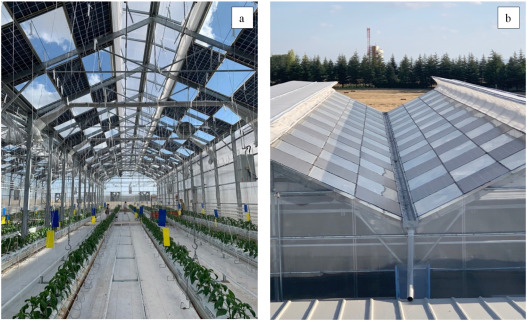
1. Qu'est-ce que l'agrivoltaïque et pourquoi se développe-t-il rapidement?
Agrivoltaïque—also known as agrivoltaic systems or dual-use solar farming—refers to the simultaneous use of land for photovoltaic power generation and agricultural production.
Unlike conventional ground-mounted solar plants, agrivoltaics integrates:
- Elevated PV structures
- Controlled shading strategies
- Crop-specific light management
- Agricultural compatibility engineering
Dans 2026, agrivoltaics is becoming one of the fastest-growing distributed energy segments due to:
- Increasing land-use conflicts
- Climate change adaptation needs
- Water scarcity pressures
- Government decarbonization policies
2. Core Engineering Structure of Agrivoltaic Systems
Agrivoltaics is not simply “solar panels above crops.” It requires structural and agricultural coordination.
2.1 Composants du système
| Composant | Technical Role | Paramètres clés |
|---|---|---|
| Elevated Mounting Structure | Allows machinery access | Height 2.5m–4.5m |
| PV Modules | Production d'énergie + shading control | 30–50% light transmittance (facultatif) |
| Onduleurs | Grid integration | IP65+ |
| Monitoring System | Sol & microclimate tracking | IoT-enabled |
| Optional Energy Storage | Farm load balancing | Lithium or flow battery |
2.2 Elevated Design Logic
Key design principles:
- Maintain tractor accessibility
- Optimize row spacing (6–12m typical)
- Control shading ratio (20–40%)
- Ensure wind load resistance (≥35 m/s in many regions)
Compared with traditional ground-mounted systems, agrivoltaics structures are 15–25% more expensive but significantly increase land productivity.
3. Crop Performance Under Partial Shading
One common misconception is that shading reduces yield. In hot and arid regions, moderate shading can improve productivity.
Microclimate Effects
- Surface temperature reduction: 2–4°C
- Evaporation reduction: 15–25%
- Improved soil moisture retention
Crop Compatibility Overview
| Crop Type | Recommended Shading | Yield Impact | Ideal Regions |
|---|---|---|---|
| Leafy Greens | 30–40% | +5–15% | Arid climates |
| Grapes | 20–30% | Quality improvement | Mediterranean |
| Wheat | <20% | Slight impact | Temperate |
| Pasture | 30% | Stable | Semi-arid |
Crop selection and shading control are critical engineering decisions.
4. Financial Model & ROI Considerations
Agrivoltaic revenue typically combines:
- Electricity sales
- Agricultural income
- Carbon credits (in some regions)
- Government incentives
Exemple: 1 MW Agrivoltaic Project
- Annual generation: ~1.5 million kWh
- Electricity price: $0.08/kWh
- Annual power revenue: ~$120,000
If crop yield improves by 10–20%, total land revenue can exceed conventional solar projects by 25–60% depending on market conditions.
5. Tendances du marché mondial (2026 Perspectives)
Europe
Policy-driven growth under climate and land-use regulations.
United States
Tax incentives under the Inflation Reduction framework accelerate dual-use systems.
Moyen-Orient
Agrivoltaics combined with greenhouse farming addresses water scarcity.
Asia-Pacific
Rural electrification and land optimization drive distributed projects.
Agrivoltaics is evolving from pilot projects to scalable infrastructure.
6. Technical Challenges & Solutions
| Challenge | Engineering Solution |
|---|---|
| Higher structural cost | Lightweight steel optimization |
| Complex O&M | Remote monitoring systems |
| Crop-light balance | Adjustable tilt systems |
| Résistance au vent | Reinforced foundations |
Conclusion
Agrivoltaics represents a structural shift in how land, énergie, and agriculture interact. It is no longer just a renewable energy concept but an integrated land productivity strategy.
In the coming decade, dual-use solar systems are expected to become a key component of sustainable farming and distributed energy infrastructure worldwide.
Luoyang Datang Energy Technology Co., Ltd. est une entreprise de haute technologie intégrant R&D, fabrication et fourniture d'équipements électriques tels que des transformateurs, nouveaux composants énergétiques, armoires de distribution et onduleurs. Avec l’innovation technologique au cœur, nous nous concentrons sur la création de solutions d'alimentation haute fiabilité et hautes performances pour servir les clients du monde entier. Avec un système de contrôle de qualité strict et une certification standard internationale, nous continuons à produire d'excellents produits et permettons aux clients de construire des systèmes électriques sûrs et stables.
ARTICLES CONNEXES
Comment les pompes à chaleur à air peuvent-elles réduire les coûts de chauffage des ménages en 50% -75%?
Transformateurs de distribution triphasés: Le 2024 Guide d'achat ultime
Pourquoi le stockage d’énergie industriel et commercial devient-il de plus en plus populaire? Analyse de la nouvelle tendance de réduction des coûts des entreprises 2025
La puissance de calcul de l’IA augmente, réseau électrique en crise: pénurie mondiale de transformateurs 30%, Musk peut-il’ l'empire de l'énergie doit être levé?
Comment la pénurie de transformateurs tient-elle le cou de l’IA et de Musk?