


Proveedor de componentes electrónicos | Transformadores, Inductores, Inversores


Regulador de voltaje trifásico

200China Regulador de voltaje compensado trifásico KW Fabricantes

China Regulador de voltaje estabilizador trifásico 100KVA Fabricantes

Regulador de voltaje / Estabilizador (SBW-50KVA) Fabricante chino

150China Estabilizador regulador de voltaje KVA / 380V Fabricantes

3 China Regulador de voltaje automático de fase 30kVA Fabricantes

China regulador de voltaje trifásico 380v 80KVA Fabricantes

250China Regulador de voltaje kva controlador 380v Fabricantes

400China Regulador de voltaje KVA 380V 220V Fabricantes

500China Regulador de voltaje KVA Controlador 380v Fabricantes

China Regulador de voltaje automático trifásico 380v Fabricantes

3China Regulador de voltaje de fase de alta potencia de 380 V Fabricantes

China Regulador de alto voltaje de venta caliente trifásico Fabricantes
Descripción general del regulador de voltaje trifásico
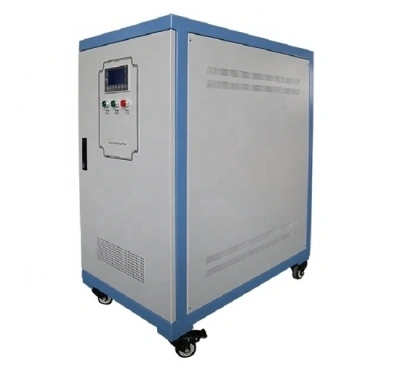
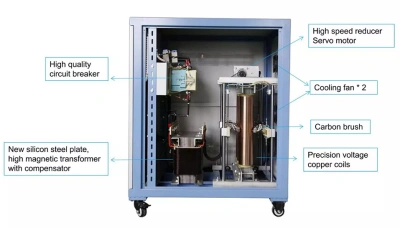
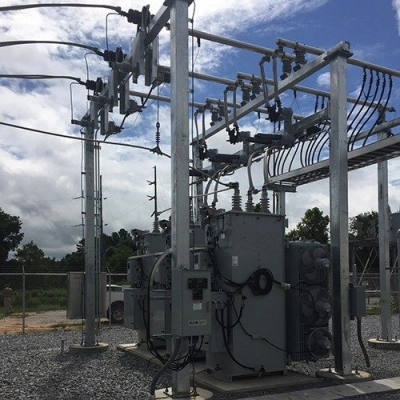
Los reguladores de voltaje trifásicos están diseñados para estabilizar y regular los niveles de voltaje en sistemas de energía trifásicos. Garantizan un suministro de tensión constante, proteger los equipos eléctricos de fluctuaciones de voltaje, sobretensiones, y gotas.
Estos reguladores son ampliamente utilizados en plantas industriales, fábricas, centros de datos, y sistemas de distribución de energía, especialmente donde el voltaje estable es crítico.
Cómo funcionan los reguladores de voltaje trifásicos
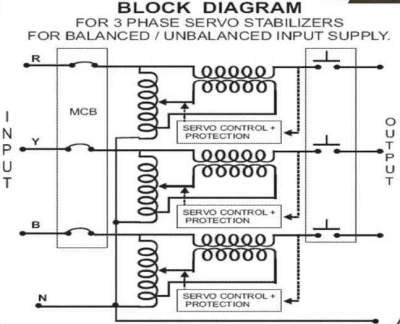
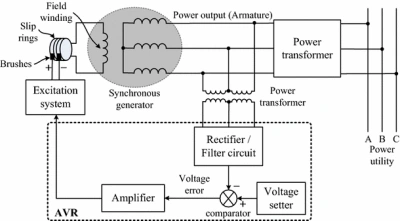
Los reguladores de voltaje ajustan el voltaje de salida automáticamente.
| Componente | Función |
|---|---|
| Transformador | Adjusts voltage levels according to system requirements |
| Sistema de control | Detects voltage fluctuations and controls the regulation process |
| servomotor / AVR | Automatically regulates output voltage |
| Voltage Sensing Unit | Measures the input and output voltage continuously |
| Panel de control | Displays operating parameters and allows system settings |
| Cambiador de toques | Changes transformer turns ratio to maintain the required voltage |
| Sistema de protección | Prevents overvoltage, subtensión, sobrecarga, and other abnormal conditions |
| Circuit Breaker | Disconnects the circuit during faults or abnormal operation |
| Bypass System | Allows the load to continue operating during maintenance or regulator failure |
| Sistema de enfriamiento | Controls operating temperature and helps prevent overheating |
| Surge Protection | Protects the regulator and connected equipment from voltage surges |
| Recinto | Protects internal components from dust, humedad, and environmental conditions |
Tipos de reguladores de voltaje trifásicos
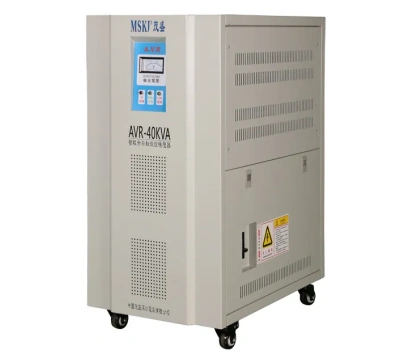
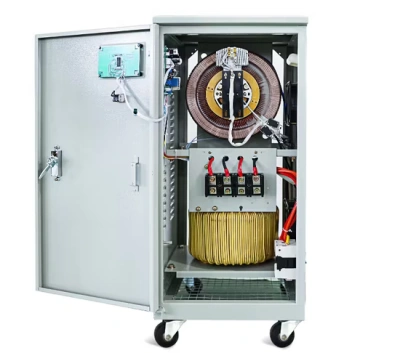
- Servoregulador de voltaje – Regulación de alta precisión
- Regulador de voltaje estático (AVR) – Control electrónico de respuesta rápida
- Estabilizador de voltaje automático – Ampliamente utilizado en sistemas industriales.
- Regulador de voltaje de distribución – Control de tensión del lado de la red
Ventajas de los reguladores de voltaje
- Operación industrial confiable
- Voltaje de salida estable
- Protección para equipos eléctricos
- Calidad de energía mejorada
- Eficiencia Energética
Perfil de la empresa
Tecnología de energía Co. de Luoyang Datang., Limitado. es una empresa de alta tecnología que integra R&D, fabricación, y suministro de equipos eléctricos y soluciones de energía renovable.. Especializados en transformadores, nuevos componentes energéticos, gabinetes de distribución, e inversores, Hemos ampliado nuestro portafolio para incluir sistemas de energía solar., soluciones de almacenamiento de energía, y bombas de calor de fuente de aire. Con la innovación tecnológica como eje, Nos enfocamos en crear soluciones de energía y eficiencia energética de alta confiabilidad y alto rendimiento para servir a clientes globales.. A través de un estricto sistema de control de calidad y certificación de estándares internacionales., Ofrecemos continuamente productos excelentes que permiten a nuestros clientes construir de forma segura., estable, y sistemas de energía sostenibles.
Si quieres una alta calidadTres PAGregulador de voltaje hase proveedor, Lo invitamos a contactarnos o consultar sobre productos relacionados..
Métodos de pago paraTres-PAGregulador de voltaje hase
carta de crédito, T/T, Western Union, PayPal, Tarjeta de crédito, etc..
Envío deTres-PAGregulador de voltaje hase
Una vez recibido el pago, por mar, aire, o expresar lo antes posible.
Preguntas frecuentes sobre el regulador de voltaje trifásico
1. ¿Qué es un regulador de voltaje trifásico??
A three phase voltage regulator is an electrical device designed to automatically stabilize and regulate voltage in three-phase power systems. It compensates for voltage fluctuations and maintains a more consistent output voltage for connected electrical equipment.
2. ¿Por qué es importante la regulación de voltaje??
Stable voltage is important for the safe and reliable operation of electrical equipment. Excessive voltage fluctuations can cause overheating, reduced equipment life, malfunction, or unexpected shutdowns. A voltage regulator helps maintain the voltage within the required operating range.
3. How does a three phase voltage regulator work?
The regulator continuously monitors the input voltage through a voltage sensing system. When the voltage rises or falls outside the preset range, the control system adjusts the regulating mechanism to increase or decrease the output voltage. This process helps provide a stable voltage to the connected load.
4. What industries use three phase voltage regulators?
Three phase voltage regulators are commonly used in manufacturing plants, fábricas, centros de datos, edificios comerciales, telecommunications facilities, hospitales, laboratorios, y sistemas de distribución de energía. They are particularly useful where sensitive equipment requires a stable power supply.
5. What is the difference between servo and static voltage regulators?
Servo voltage regulators use a motor-driven mechanical mechanism to adjust the voltage, while static voltage regulators use electronic components to regulate voltage without moving mechanical parts. Servo regulators are commonly selected for applications requiring reliable voltage stabilization, while static regulators can provide very fast voltage correction.
6. Can a three phase voltage regulator improve energy efficiency?
A voltage regulator can help improve the operating conditions of electrical equipment by maintaining a stable supply voltage. It may reduce unnecessary energy consumption and equipment stress caused by excessive or unstable voltage. Sin embargo, the actual energy savings depend on the characteristics of the electrical system and connected loads.
7. What is the difference between a voltage regulator and a transformer?
A transformer primarily changes the voltage level between the input and output sides, while a voltage regulator automatically adjusts the output voltage to compensate for fluctuations. Some voltage regulation systems combine transformer technology with automatic voltage control to provide both voltage transformation and stabilization.
8. Can a three phase voltage regulator protect electrical equipment?
Sí. By maintaining a stable output voltage, a regulator can help reduce the risk of equipment problems caused by overvoltage and undervoltage. Many systems can also be equipped with protection functions such as overload, cortocircuito, sobretensión, y protección contra subtensión.
9. What voltage range can a three phase voltage regulator handle?
The applicable voltage range depends on the regulator model and system requirements. Common specifications include different input and output voltage levels, como 380V, 400V, 415V, or other customized ratings. The required input range, output voltage, capacidad, and frequency should be confirmed before selection.
10. How do I choose the right three phase voltage regulator?
The selection should be based on several factors, including rated power, input voltage range, required output voltage, frecuencia, load type, regulation accuracy, tiempo de respuesta, installation environment, and protection requirements. For industrial applications, the maximum load and starting current of equipment should also be considered.
11. Can a three phase voltage regulator be used for industrial equipment?
Sí. Three phase voltage regulators are widely used for industrial equipment such as CNC machines, motores, zapatillas, compresores, líneas de producción, equipo de soldadura, and other electrical systems. The regulator capacity should be selected according to the actual load and operating conditions.
12. Does a three phase voltage regulator require maintenance?
Regular inspection is recommended to ensure reliable operation. Maintenance may include checking electrical connections, sistemas de enfriamiento, control components, protection devices, and the operating condition of the regulator. For servo-type regulators, the mechanical components should also be inspected periodically.
13. Can the voltage regulator be customized?
Sí. Three phase voltage regulators can often be customized according to project requirements, including input and output voltage, capacidad, regulation range, exactitud, frecuencia, enclosure type, protection functions, and installation method. Customers should provide the electrical system parameters so the appropriate model can be selected.
14. What information should I provide when requesting a quotation?
For an accurate quotation, it is recommended to provide the input voltage, required output voltage, rated capacity (kVA/kW), frecuencia, number of phases, voltage regulation range, regulation accuracy, load type, installation environment, and quantity. If available, a technical specification or electrical system diagram can also help the supplier recommend a suitable model.