


Leverandør av elektroniske komponenter | Transformatorer, Induktorer, Invertere


Trefase spenningsregulator

200KW tre-fase kompensert spenningsregulator Kina produsent

Trefase stabilisator spenningsregulator 100KVA Kina Produsent

Spenningsregulator / Stabilisator (SBW-50KVA) Kina produsent

150KVA/380V spenningsregulator Stabilisator Kina produsent

3 Fase 30kVA automatisk spenningsregulator Kina produsent

trefase spenningsregulator 380v 80KVA Kina Produsent

250kva spenningsregulator 380v kontroller Kina Produsent

400KVA spenningsregulator 380V 220V Kina Produsent

500KVA spenningsregulator 380v kontroller Kina Produsent

Trefase 380v automatisk spenningsregulator Kina produsent

3fase høydrevet 380V spenningsregulator Kina Produsent

tre fase varmt salg høyspent regulator Kina Produsent
Oversikt over trefase spenningsregulator
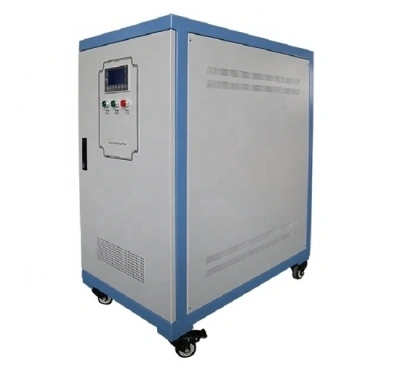
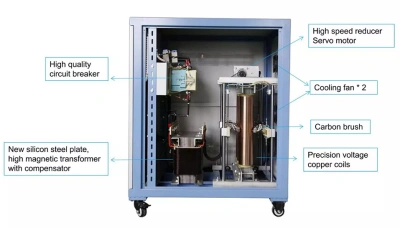
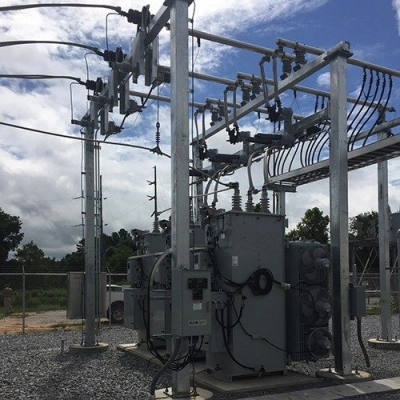
Trefase spenningsregulatorer er designet for å stabilisere og regulere spenningsnivåer i trefase kraftsystemer. De sikrer en jevn spenningsforsyning, beskytte elektrisk utstyr mot spenningssvingninger, overspenninger, og dråper.
Disse regulatorene er mye brukt i industrianlegg, fabrikker, datasentre, og kraftdistribusjonssystemer, spesielt der stabil spenning er kritisk.
Hvordan trefasespenningsregulatorer fungerer
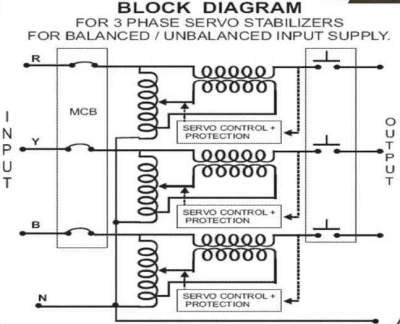
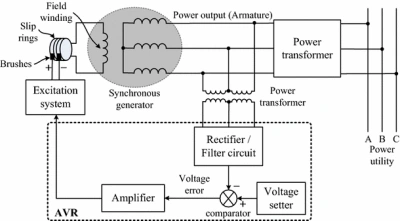
Spenningsregulatorer justerer utgangsspenningen automatisk.
| Komponent | Funksjon |
|---|---|
| Transformator | Adjusts voltage levels according to system requirements |
| Kontrollsystem | Detects voltage fluctuations and controls the regulation process |
| Servo motor / AVR | Automatically regulates output voltage |
| Voltage Sensing Unit | Measures the input and output voltage continuously |
| Kontrollpanel | Displays operating parameters and allows system settings |
| Trykk på Changer | Changes transformer turns ratio to maintain the required voltage |
| Beskyttelsessystem | Prevents overvoltage, underspenning, overbelastning, and other abnormal conditions |
| Circuit Breaker | Disconnects the circuit during faults or abnormal operation |
| Bypass System | Allows the load to continue operating during maintenance or regulator failure |
| Kjølesystem | Controls operating temperature and helps prevent overheating |
| Surge Protection | Protects the regulator and connected equipment from voltage surges |
| Innkapsling | Protects internal components from dust, fuktighet, and environmental conditions |
Typer trefase spenningsregulatorer
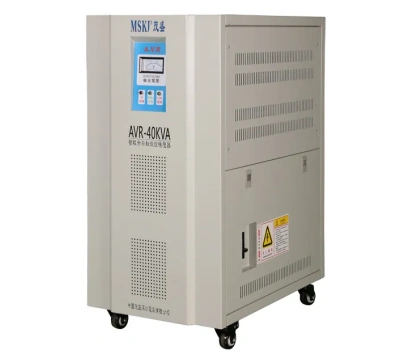
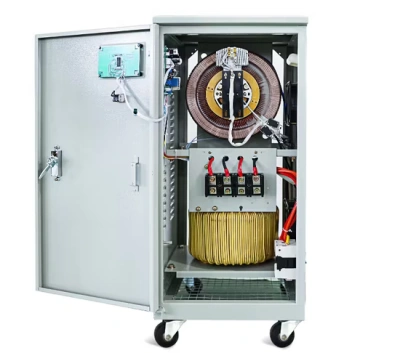
- Servo spenningsregulator – Høy presisjonsregulering
- Statisk spenningsregulator (AVR) – Rask respons elektronisk kontroll
- Automatisk spenningsstabilisator – Mye brukt i industrielle systemer
- Distribusjonsspenningsregulator – Spenningskontroll på nettet
Fordeler med spenningsregulatorer
- Pålitelig industriell drift
- Stabil utgangsspenning
- Beskyttelse for elektrisk utstyr
- Forbedret strømkvalitet
- Energieffektivitet
Bedriftsprofil
Luoyang Datang Energy Technology Co., Ltd. er en høyteknologisk bedrift som integrerer R&D, produksjon, og levering av kraftutstyr og fornybare energiløsninger. Spesialiserer seg på transformatorer, nye energikomponenter, distribusjonsskap, og invertere, vi har utvidet porteføljen vår til å inkludere solenergisystemer, energilagringsløsninger, og luftvarmepumper. Med teknologisk innovasjon som kjerne, vi fokuserer på å skape kraft- og energieffektive løsninger med høy pålitelighet og høy ytelse for å betjene globale kunder. Gjennom et strengt kvalitetskontrollsystem og internasjonal standardsertifisering, vi leverer kontinuerlig utmerkede produkter som gir kundene våre mulighet til å bygge trygt, stabil, og bærekraftige kraftsystemer.
Hvis du vil ha en høy kvalitetTre Phase spenningsregulator leverandør, vi inviterer deg til å kontakte oss eller spørre om relaterte produkter.
Betalingsmetoder forTre-Phase spenningsregulator
L/C, T/T, Western Union, Paypal, Kredittkort etc.
Frakt avTre-Phase spenningsregulator
Når betalingen er mottatt, til sjøs, luft, eller gi uttrykk for så snart som mulig.
Vanlige spørsmål om trefasespenningsregulator
1. Hva er en trefase spenningsregulator?
A three phase voltage regulator is an electrical device designed to automatically stabilize and regulate voltage in three-phase power systems. It compensates for voltage fluctuations and maintains a more consistent output voltage for connected electrical equipment.
2. Hvorfor er spenningsregulering viktig?
Stable voltage is important for the safe and reliable operation of electrical equipment. Excessive voltage fluctuations can cause overheating, reduced equipment life, malfunction, or unexpected shutdowns. A voltage regulator helps maintain the voltage within the required operating range.
3. How does a three phase voltage regulator work?
The regulator continuously monitors the input voltage through a voltage sensing system. When the voltage rises or falls outside the preset range, the control system adjusts the regulating mechanism to increase or decrease the output voltage. This process helps provide a stable voltage to the connected load.
4. What industries use three phase voltage regulators?
Three phase voltage regulators are commonly used in manufacturing plants, fabrikker, datasentre, næringsbygg, telecommunications facilities, sykehus, laboratories, og kraftdistribusjonssystemer. They are particularly useful where sensitive equipment requires a stable power supply.
5. What is the difference between servo and static voltage regulators?
Servo voltage regulators use a motor-driven mechanical mechanism to adjust the voltage, while static voltage regulators use electronic components to regulate voltage without moving mechanical parts. Servo regulators are commonly selected for applications requiring reliable voltage stabilization, while static regulators can provide very fast voltage correction.
6. Can a three phase voltage regulator improve energy efficiency?
A voltage regulator can help improve the operating conditions of electrical equipment by maintaining a stable supply voltage. It may reduce unnecessary energy consumption and equipment stress caused by excessive or unstable voltage. Imidlertid, the actual energy savings depend on the characteristics of the electrical system and connected loads.
7. What is the difference between a voltage regulator and a transformer?
A transformer primarily changes the voltage level between the input and output sides, while a voltage regulator automatically adjusts the output voltage to compensate for fluctuations. Some voltage regulation systems combine transformer technology with automatic voltage control to provide both voltage transformation and stabilization.
8. Can a three phase voltage regulator protect electrical equipment?
Ja. By maintaining a stable output voltage, a regulator can help reduce the risk of equipment problems caused by overvoltage and undervoltage. Many systems can also be equipped with protection functions such as overload, short-circuit, overspenning, og underspenningsvern.
9. What voltage range can a three phase voltage regulator handle?
The applicable voltage range depends on the regulator model and system requirements. Common specifications include different input and output voltage levels, such as 380V, 400V, 415V, or other customized ratings. The required input range, output voltage, kapasitet, and frequency should be confirmed before selection.
10. How do I choose the right three phase voltage regulator?
The selection should be based on several factors, including rated power, input voltage range, required output voltage, frequency, load type, regulation accuracy, responstid, installation environment, and protection requirements. For industrial applications, the maximum load and starting current of equipment should also be considered.
11. Can a three phase voltage regulator be used for industrial equipment?
Ja. Three phase voltage regulators are widely used for industrial equipment such as CNC machines, motorer, pumper, kompressorer, produksjonslinjer, welding equipment, and other electrical systems. The regulator capacity should be selected according to the actual load and operating conditions.
12. Does a three phase voltage regulator require maintenance?
Regular inspection is recommended to ensure reliable operation. Maintenance may include checking electrical connections, kjølesystemer, control components, beskyttelsesanordninger, and the operating condition of the regulator. For servo-type regulators, the mechanical components should also be inspected periodically.
13. Can the voltage regulator be customized?
Ja. Three phase voltage regulators can often be customized according to project requirements, including input and output voltage, kapasitet, regulation range, nøyaktighet, frequency, enclosure type, beskyttelsesfunksjoner, and installation method. Customers should provide the electrical system parameters so the appropriate model can be selected.
14. What information should I provide when requesting a quotation?
For an accurate quotation, it is recommended to provide the inngangsspenning, required output voltage, rated capacity (kVA/kW), frequency, number of phases, voltage regulation range, regulation accuracy, load type, installation environment, and quantity. If available, a technical specification or electrical system diagram can also help the supplier recommend a suitable model.