Fournisseur de composants électroniques | Transformateurs, Inducteurs, Onduleurs


Introduction aux transformateurs secs
Les transformateurs de type sec sont des appareils électriques essentiels qui fournissent une, distribution efficace de l'énergie sans refroidissement liquide. Contrairement aux transformateurs à huile, ils utilisent de l'air ou une isolation solide, les faireécologique, nécessitant peu d'entretien, et idéal pour les applications intérieures. Avec une demande croissante dedurable et résistant au feu solutions électriques, les transformateurs de type sec deviennent le choix préféré dans toutes les industries.
Principaux avantages des transformateurs secs
Pourquoi les transformateurs secs gagnent-ils en popularité? Voici pourquoi:
✔Aucun risque d'incendie – Pas d’huile inflammable, réduire les risques d'explosion.
✔Faible entretien – Aucune fuite d’huile ni filtration nécessaire.
✔Respectueux de l'environnement – Exempt de liquides toxiques, soutenir les initiatives vertes.
✔Compact & Polyvalent – Convient aux espaces restreints comme les bâtiments, hôpitaux, et centres de données.
Différents types de transformateurs secs
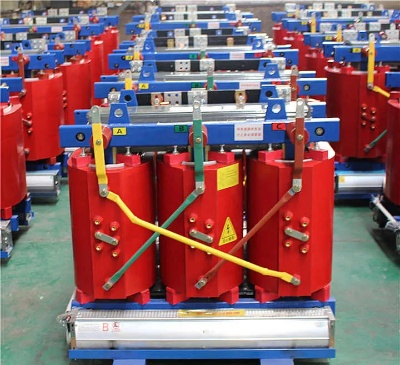
1. Transformateurs de type sec en résine coulée (CRT)
- Idéal pour: Environnements difficiles (humidité élevée, poussière, produits chimiques).
- Caractéristiques: L'encapsulation en résine époxy empêche les dommages causés par l'humidité.
- Applications: Parcs éoliens offshore, exploitation minière, installations industrielles.
2. Imprégné sous vide (VIP) Transformateurs
- Idéal pour: Commercial à forte charge & utilisation utilitaire.
- Caractéristiques: Isolé avec du vernis sous pression sous vide pour plus de durabilité.
- Applications: Hôpitaux, centres de données, immeubles de grande hauteur.
3. Plaie ouverte (Ventilé) Transformateurs de type sec
- Idéal pour: Distribution d'énergie économique à usage général.
- Caractéristiques: Refroidi par air, pas de clôture, nécessite des environnements propres.
- Applications: Usines, entrepôts, usines d'énergie renouvelable.
4. Encapsulé (Scellé) Transformateurs de type sec
- Idéal pour: Conditions extrêmes (corrosif, atmosphères explosives).
- Caractéristiques: Entièrement scellé pour bloquer la poussière et l'humidité.
- Applications: Usines chimiques, marin, huile & industries du gaz.
2024 Tendances des transformateurs secs
- Surveillance intelligente – Transformateurs compatibles IoT pour des diagnostics en temps réel.
- Efficacité énergétique – Conformité au DOE 2016 & CEI 60076 normes.
- Intégration renouvelable – Les parcs solaires/éoliens adoptent des transformateurs de type sec pour plus de durabilité.
- Conceptions hybrides – Combiner l’air & isolation solide pour de meilleures performances.
Comment choisir le bon transformateur de type sec
Considérez ces facteurs:
🔹Capacité de charge – Adaptez vos besoins en énergie (puissance kVA).
🔹Méthode de refroidissement – Air naturel (UN) ou air pulsé (DE) refroidissement.
🔹Conditions environnementales - Humidité, poussière, et températures nominales.
🔹Certifications – UL, CEI, ou conformité IEEE pour la sécurité.
Conclusion
Offre de transformateurs secsplus sûr, nettoyeur, et plus efficace distribution d'énergie par rapport aux alternatives remplies d'huile. Avec les progrès danstechnologie intelligente et conceptions respectueuses de l'environnement, ils sont l’avenir de l’infrastructure électrique.
ARTICLES CONNEXES
CRRC a reçu des investissements étrangers à vendre 1,008,500 actions en décembre 27

Matériau en résine époxy: Résistant à la chaleur et au froid, Assurer un fonctionnement stable du système électrique
Hors réseau vs. Systèmes solaires en réseau: Ce qui vous convient le mieux 2024?

Fabricants de transformateurs remplis d’huile: Le cœur battant des réseaux de distribution d’énergie
Sélection et tendances techniques des transformateurs pour systèmes photovoltaïques: Une analyse approfondie des applications d’ingénierie et des perspectives du marché