Fornecedor de componentes eletrônicos | Transformadores, Indutores, Inversores


Um transformador é projetado para operar de forma confiável por décadas, mas alguns componentes requerem mais atenção do que outros. Entre todos os acessórios para transformadores, buchas de transformador estão entre os componentes mais críticos porque fornecem as conexões entre os enrolamentos internos e a rede de energia externa.
Embora uma bucha pareça um simples componente isolante, na verdade, ele executa várias funções importantes:
- Transportando corrente de alta tensão com segurança;
- Evitando falhas elétricas entre o condutor e o tanque do transformador;
- Manter o desempenho do isolamento sob temperatura, umidade, e condições de poluição;
- Garantir a operação confiável do transformador durante toda a sua vida útil.
Uma bucha do transformador danificada pode causar descarga parcial, falha de isolamento, vazamento de óleo, e até desligamento inesperado do transformador.
Para concessionárias de energia, plantas industriais, e projetos de energia renovável, compreender as buchas do transformador é essencial para a seleção e manutenção adequadas.
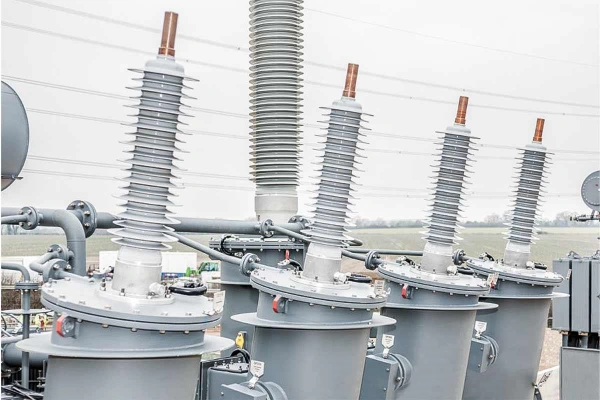
1. O que é uma bucha de transformador?
Uma bucha do transformador é um dispositivo isolado instalado no tanque do transformador que permite que um condutor elétrico passe com segurança através do invólucro aterrado..
Dentro de um transformador imerso em óleo, o enrolamento é cercado por óleo de transformador para isolamento e resfriamento. No entanto, a conexão elétrica deve se estender para fora do transformador para conectar-se aos cabos, barramentos, ou comutador.
A bucha do transformador cria um ponto de transição seguro:
Enrolamento do transformador → Condutor interno → Bucha do transformador → Conexão de alimentação externa
Sem uma bucha adequada, o condutor de alta tensão criaria tensão elétrica excessiva e poderia causar falha de isolamento.
2. Como funciona uma bucha de transformador?
O principal desafio de uma bucha de transformador é controlar o campo elétrico ao redor do condutor de alta tensão.
Alta tensão cria forte estresse elétrico. Se o estresse estiver concentrado em uma área, o material de isolamento pode deteriorar-se com o tempo.
As buchas de transformadores modernos usam múltiplas camadas de isolamento e estruturas de classificação para distribuir o campo elétrico uniformemente.
Os principais componentes incluem:
| Componente | Função |
|---|---|
| Condutor central | Transfere corrente elétrica |
| Camadas de isolamento | Fornece isolamento elétrico |
| Camadas de classificação capacitiva | Controla a distribuição de tensão |
| Isolador de porcelana ou composto | Fornece isolamento externo |
| Flange de montagem | Fixa a bucha no tanque do transformador |
| Sistema de vedação | Evita vazamento de óleo e umidade |
Uma bucha de alta qualidade deve manter um desempenho de isolamento estável durante:
- Operação normal;
- Condições de curto-circuito;
- Mudanças de temperatura;
- Exposição ambiental.
3. Principais tipos de buchas de transformador
Diferentes aplicações de transformadores exigem diferentes projetos de buchas.
3.1 Papel impregnado de óleo (OIP) Buchas
Papel impregnado de óleo (OIP) as buchas são amplamente utilizadas em transformadores de potência tradicionais.
O sistema de isolamento consiste em:
- Papel isolante especial;
- Camadas de classificação condutivas;
- Óleo de transformador.
Vantagens:
- Tecnologia comprovada;
- Longo histórico operacional;
- Adequado para transformadores de média e alta tensão.
As buchas OIP são comumente usadas em:
- Transformadores de distribuição;
- Transformadores de potência;
- Equipamento de subestação.
No entanto, eles exigem inspeção regular porque o envelhecimento do óleo e a umidade podem reduzir o desempenho do isolamento.
3.2 Papel impregnado de resina (RASGAR) Buchas
As buchas RIP usam resina epóxi em vez de óleo como principal material de isolamento.
Vantagens:
- Sem risco de vazamento de óleo;
- Menor necessidade de manutenção;
- Melhor desempenho ambiental.
Eles são cada vez mais usados em:
- Subestações de energia renovável;
- Redes de energia modernas;
- Aplicações de alta tensão.
3.3 Buchas de porcelana vs compósito
O material de isolamento externo é outra consideração importante.
| Recurso | Bucha de Porcelana | Bucha Composta |
|---|---|---|
| Resistência mecânica | Excelente | Excelente |
| Peso | Pesado | Leve |
| Resistência à poluição | Bom | Melhorar |
| Resistência ao impacto | Mais baixo | Mais alto |
| Transporte | Mais difícil | Mais fácil |
As buchas compostas estão se tornando populares em áreas costeiras e regiões com forte poluição devido à sua excelente resistência às condições ambientais..
4. Causas comuns de falha na bucha do transformador
Embora as buchas do transformador sejam projetadas para longa vida útil, vários fatores podem causar falha.
4.1 Entrada de umidade
A umidade é uma das maiores ameaças ao isolamento do transformador.
Causas comuns:
- Selos envelhecidos;
- Junta danificada;
- Armazenamento inadequado;
- Má instalação.
A umidade reduz a rigidez dielétrica e acelera o envelhecimento do isolamento.
4.2 Envelhecimento do Isolamento
Depois de anos de operação, materiais de isolamento deterioram-se naturalmente.
Os sinais típicos incluem:
- Aumento da perda dielétrica;
- Resistência de isolamento reduzida;
- Atividade de descarga parcial.
Testes regulares ajudam a identificar problemas antes que ocorram falhas.
4.3 Vazamento de óleo
O vazamento de óleo é um dos problemas mais fáceis de identificar visualmente.
Possíveis razões:
- Junta de vedação envelhecida;
- Conexão de flange solta;
- Expansão de temperatura;
- Danos mecânicos.
Mesmo pequenos vazamentos de óleo devem ser inspecionados porque podem permitir a entrada de umidade no sistema de isolamento.
4.4 Superaquecimento
Temperatura excessiva pode danificar o isolamento da bucha.
Possíveis causas:
- Conexões elétricas soltas;
- Alta resistência de contato;
- Sobrecarga do transformador.
O superaquecimento a longo prazo reduz significativamente a vida útil da bucha.
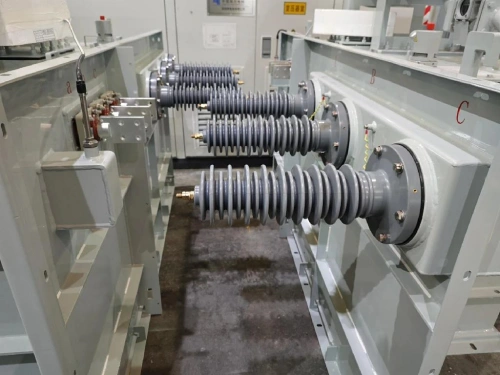
5. Como selecionar as buchas corretas do transformador?
Ao comprar ou substituir buchas de transformador, engenheiros devem considerar vários parâmetros.
1. Tensão nominal
A tensão nominal da bucha deve corresponder à tensão do sistema do transformador.
Exemplo:
- 11transformador kV → bucha classe 12kV
- 33transformador kV → bucha classe 36kV
2. Corrente nominal
A corrente nominal da bucha deve ser superior à corrente operacional do transformador.
A seleção incorreta pode causar superaquecimento.
3. Dimensões de instalação
Antes de solicitar buchas de reposição, confirme sempre:
- Dimensões do furo de montagem;
- Tamanho do flange;
- Tipo de conexão do condutor;
- Altura total;
- Distância de fuga.
Muitos problemas de substituição ocorrem porque os parâmetros elétricos estão corretos, mas as dimensões mecânicas são diferentes.
4. Padrões Aplicáveis
Os padrões comuns de buchas de transformadores incluem:
- CEI 60137: Buchas isoladas para tensões CA acima de 1000V;
- Padrões IEEE para aplicações em equipamentos de energia.
6. Lista de verificação de manutenção das buchas do transformador
A inspeção regular pode prolongar significativamente a vida útil do transformador.
| Item de inspeção | Ação recomendada |
|---|---|
| Vazamento de óleo | Verifique as vedações e o flange |
| Contaminação de superfície | Limpe a superfície de isolamento |
| Rachaduras | Inspecione o invólucro de porcelana/composto |
| Temperatura | Monitore o aquecimento anormal |
| Resistência de isolamento | Realize testes elétricos |
| Descarga parcial | Realizar diagnóstico, se necessário |
7. Perguntas comuns sobre buchas de transformadores
Quanto tempo dura uma bucha de transformador?
Uma bucha de transformador de alta qualidade normalmente pode operar por 20 a 30 anos ou mais sob manutenção adequada.
O que causa falha na bucha do transformador?
As principais causas incluem umidade, envelhecimento do isolamento, superaquecimento, vazamento de óleo, e danos mecânicos.
Uma bucha do transformador pode ser substituída?
Sim. A substituição é possível se a nova bucha corresponder:
- Classificação de tensão;
- Classificação atual;
- Dimensões mecânicas;
- Requisitos de instalação.
Por que as buchas do transformador racham?
Rachaduras podem resultar de estresse mecânico, mudanças de temperatura, envelhecimento, ou impacto externo.
Visão do fabricante
Como fabricante de transformadores e fornecedor de acessórios para transformadores, A PDDN entende que a operação confiável do transformador depende não apenas do corpo do transformador, mas também de cada componente conectado.
Para substituição de buchas de transformadores ou requisitos de OEM, os clientes devem fornecer:
- Tensão nominal do transformador;
- Classificação atual;
- Desenho de instalação;
- Modelo de bucha existente;
- Padrão exigido.
Estas informações ajudam a garantir compatibilidade elétrica e instalação confiável.
Sobre PDDN
PDDN é a plataforma online deLuoyang Datang Tecnologia de Energia Co., Ltda., um fabricante confiável e fornecedor global detransformadores de potência, acessórios para transformadores, componentes do painel, sistemas de armazenamento de energia de bateria (BESS), e soluções de carregamento de veículos elétricos. Desde 2015, apoiamos empresas de serviços públicos, Empreiteiros EPC, e clientes industriais em todo o mundo com produtos confiáveis, Serviços OEM/ODM, e conhecimento técnico.
POSTS RELACIONADOS

Alimentando o Futuro: Eletrificação e Sustentabilidade na Mineração

O inversor de energia WVC-700 ajuda áreas remotas a alcançar autossuficiência em eletricidade
Análise das tendências tecnológicas de painéis solares residenciais em 2026: Atualização abrangente de componentes eficientes, Sistemas de armazenamento de energia, e gerenciamento inteligente de energia
O futuro da energia verde: Carregadores solares EV revolucionando o transporte
Como funciona o controlador tiristor trifásico