Proveedor de componentes electrónicos | Transformadores, Inductores, Inversores


Un transformador está diseñado para funcionar de manera confiable durante décadas., pero algunos componentes requieren más atención que otros. Entre todos los accesorios para transformadores, bujes de transformador are among the most critical components because they provide the connections between the internal windings and the external power network.
Although a bushing looks like a simple insulating component, it actually performs several important functions:
- Carrying high-voltage current safely;
- Preventing electrical breakdown between conductor and transformer tank;
- Maintaining insulation performance under temperature, humedad, and pollution conditions;
- Ensuring reliable operation of the transformer throughout its service life.
A damaged transformer bushing can lead to partial discharge, falla de aislamiento, oil leakage, and even unexpected transformer shutdown.
For power utilities, plantas industriales, y proyectos de energías renovables, understanding transformer bushings is essential for proper selection and maintenance.
1. ¿Qué es un buje de transformador??
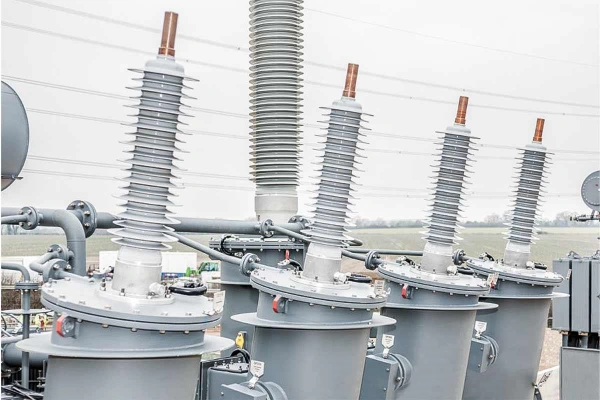
A transformer bushing is an insulated device installed on the transformer tank that allows an electrical conductor to pass safely through the grounded enclosure.
Inside an oil immersed transformer, the winding is surrounded by transformer oil for insulation and cooling. Sin embargo, the electrical connection must extend outside the transformer to connect with cables, barras colectoras, or switchgear.
The transformer bushing creates a safe transition point:
Transformer winding → Internal conductor → Transformer bushing → External power connection
Without a suitable bushing, the high-voltage conductor would create excessive electrical stress and could cause insulation failure.
2. How Does a Transformer Bushing Work?
The main challenge of a transformer bushing is controlling the electric field around the high-voltage conductor.
High voltage creates strong electrical stress. If the stress is concentrated in one area, the insulation material may deteriorate over time.
Modern transformer bushings use multiple insulation layers and grading structures to distribute the electric field evenly.
The main components include:
| Componente | Función |
|---|---|
| Central conductor | Transfers electrical current |
| Insulation layers | Provides electrical isolation |
| Capacitive grading layers | Controls voltage distribution |
| Porcelain or composite insulator | Provides external insulation |
| Mounting flange | Fixes bushing to transformer tank |
| Sealing system | Prevents oil and moisture leakage |
A high-quality bushing must maintain stable insulation performance during:
- Normal operation;
- Short circuit conditions;
- Temperature changes;
- Environmental exposure.
3. Main Types of Transformer Bushings
Different transformer applications require different bushing designs.
3.1 Oil Impregnated Paper (OPI) Bujes
Oil Impregnated Paper (OPI) bushings are widely used in traditional power transformers.
The insulation system consists of:
- Special insulating paper;
- Conductive grading layers;
- Aceite de transformador.
Ventajas:
- Proven technology;
- Largo historial operativo;
- Suitable for medium and high voltage transformers.
OIP bushings are commonly used in:
- Transformadores de distribución;
- Transformadores de potencia;
- Substation equipment.
Sin embargo, they require regular inspection because oil aging and moisture can reduce insulation performance.
3.2 Resin Impregnated Paper (ROTURA) Bujes
RIP bushings use epoxy resin instead of oil as the main insulation material.
Ventajas:
- Sin riesgo de fuga de aceite;
- Lower maintenance requirement;
- Mejor desempeño ambiental.
They are increasingly used in:
- Renewable energy substations;
- Modern power networks;
- High-voltage applications.
3.3 Porcelain vs Composite Bushings
The external insulation material is another important consideration.
| Característica | Porcelain Bushing | Composite Bushing |
|---|---|---|
| Resistencia mecánica | Excelente | Excelente |
| Peso | Pesado | Ligero |
| Pollution resistance | Good | Better |
| Impact resistance | Más bajo | Más alto |
| Transporte | More difficult | Easier |
Composite bushings are becoming popular in coastal areas and regions with heavy pollution because of their excellent resistance to environmental conditions.
4. Common Transformer Bushing Failure Causes
Although transformer bushings are designed for long service life, several factors can cause failure.
4.1 Entrada de humedad
Moisture is one of the biggest threats to transformer insulation.
Causas comunes:
- Aging seals;
- Damaged gasket;
- Improper storage;
- Poor installation.
Moisture reduces dielectric strength and accelerates insulation aging.
4.2 Envejecimiento del aislamiento
After years of operation, insulation materials naturally deteriorate.
Typical signs include:
- Increased dielectric loss;
- Reduced insulation resistance;
- Partial discharge activity.
Regular testing helps identify problems before failure occurs.
4.3 Fuga de aceite
Oil leakage is one of the easiest problems to identify visually.
Possible reasons:
- Aging sealing gasket;
- Loose flange connection;
- Temperature expansion;
- Mechanical damage.
Even minor oil leakage should be inspected because it may allow moisture to enter the insulation system.
4.4 Calentamiento excesivo
Excessive temperature can damage the bushing insulation.
Possible causes:
- Loose electrical connections;
- High contact resistance;
- Transformer overload.
Long-term overheating significantly reduces bushing lifespan.
5. How to Select the Right Transformer Bushings?
When purchasing or replacing transformer bushings, engineers should consider several parameters.
1. Tensión nominal
The bushing voltage rating must match the transformer system voltage.
Ejemplo:
- 11kV transformer → 12kV class bushing
- 33kV transformer → 36kV class bushing
2. Corriente nominal
The bushing current rating must be higher than the transformer operating current.
Incorrect selection may cause overheating.
3. Dimensiones de instalación
Before ordering replacement bushings, always confirm:
- Mounting hole dimensions;
- Tamaño de brida;
- Conductor connection type;
- Overall height;
- Distancia de fuga.
Many replacement problems occur because the electrical parameters are correct but the mechanical dimensions are different.
4. Applicable Standards
Common transformer bushing standards include:
- CEI 60137: Insulated bushings for AC voltages above 1000V;
- IEEE standards for power equipment applications.
6. Transformer Bushings Maintenance Checklist
Regular inspection can significantly extend transformer service life.
| Inspection Item | Recommended Action |
|---|---|
| Fuga de aceite | Check seals and flange |
| Contaminación superficial | Clean insulation surface |
| Grietas | Inspect porcelain/composite housing |
| Temperatura | Monitor abnormal heating |
| Resistencia de aislamiento | Perform electrical testing |
| Descarga parcial | Conduct diagnosis if required |
7. Common Questions About Transformer Bushings
How long does a transformer bushing last?
A high-quality transformer bushing can typically operate for 20–30 years or longer under proper maintenance.
What causes transformer bushing failure?
The main causes include moisture, envejecimiento del aislamiento, calentamiento excesivo, oil leakage, and mechanical damage.
Can a transformer bushing be replaced?
Sí. Replacement is possible if the new bushing matches:
- Clasificación de voltaje;
- Current rating;
- Mechanical dimensions;
- Requisitos de instalación.
Why do transformer bushings crack?
Cracking may result from mechanical stress, temperature changes, aging, or external impact.
Manufacturer Insight
As a transformer manufacturer and transformer accessories supplier, PDDN understands that reliable transformer operation depends not only on the transformer body but also on every connected component.
For transformer bushing replacement or OEM requirements, customers should provide:
- Transformer rated voltage;
- Current rating;
- Installation drawing;
- Existing bushing model;
- Required standard.
This information helps ensure electrical compatibility and reliable installation.
Acerca de PDDN
PDDN es la plataforma en línea deTecnología de energía Co. de Luoyang Datang., Limitado., un fabricante confiable y proveedor global detransformadores de potencia, accesorios para transformadores, componentes de aparamenta, sistemas de almacenamiento de energía en baterías (BESS), y soluciones de carga de vehículos eléctricos. Desde 2015, hemos apoyado a empresas de servicios públicos, contratistas EPC, y clientes industriales en todo el mundo con productos confiables, Servicios OEM/ODM, y experiencia técnica.
PUBLICACIONES RELACIONADAS
RCS: el “cerebro inteligente” que controla el calentador

Adaptador de voltaje 110 a 220: Tu compañero de viaje esencial

Transformadores de baja tensión: Componentes esenciales en los sistemas eléctricos modernos

La aparamenta de compensación de capacitores de alto y bajo voltaje juega un papel crucial en el sistema de energía., ayudando al funcionamiento eficiente de la red eléctrica

Por 2032, El mercado mundial de transformadores de tensión alcanzará $42.1 mil millones, con una tasa de crecimiento anual compuesta de 6.6%