


Leverandør af elektroniske komponenter | Transformere, Induktorer, Invertere


Overview of High Voltage Main Power Transformers
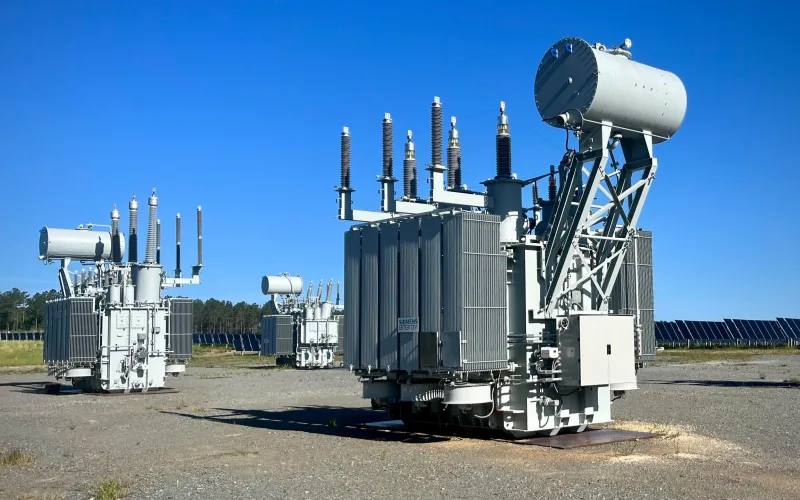
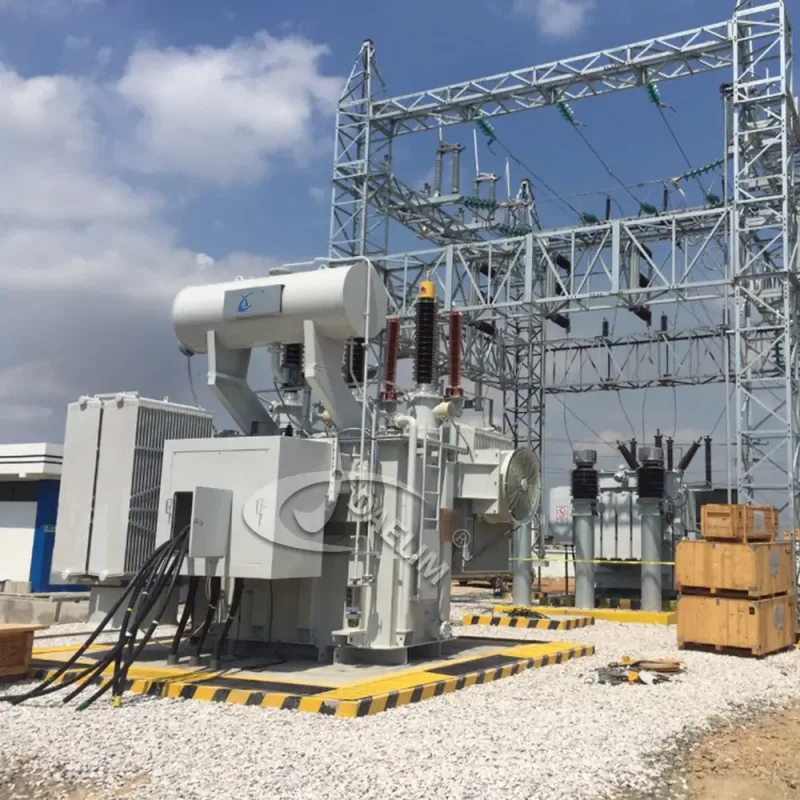
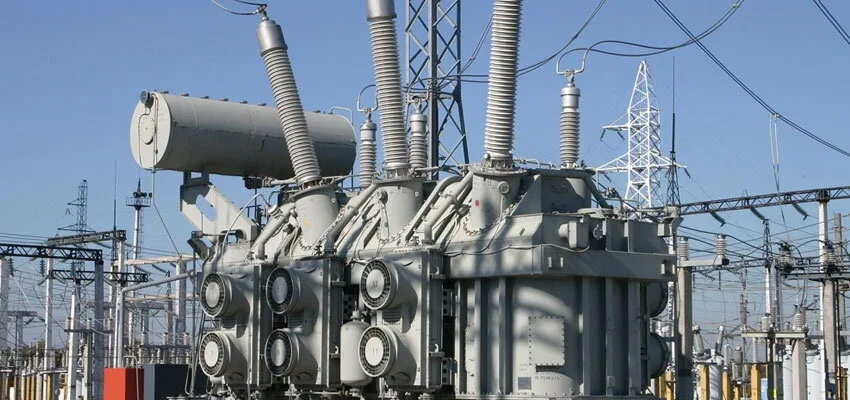
Højspændingshovedtransformatorer er kritisk udstyr i elektriske kraftoverførselssystemer, designet til at håndtere store elektriske belastninger og konvertere spændingsniveauer til langdistance-elektricitetstransmission.
Disse transformere er almindeligvis installeret i kraftværker, elektriske transformerstationer, og national netinfrastruktur, muliggør effektiv transmission af elektricitet på tværs af byer og regioner. Med robust design og høj isoleringsevne, højspændingstransformere sikrer stabil og pålidelig strømforsyning til moderne energinetværk.
Sådan fungerer højspændingstransformatorer
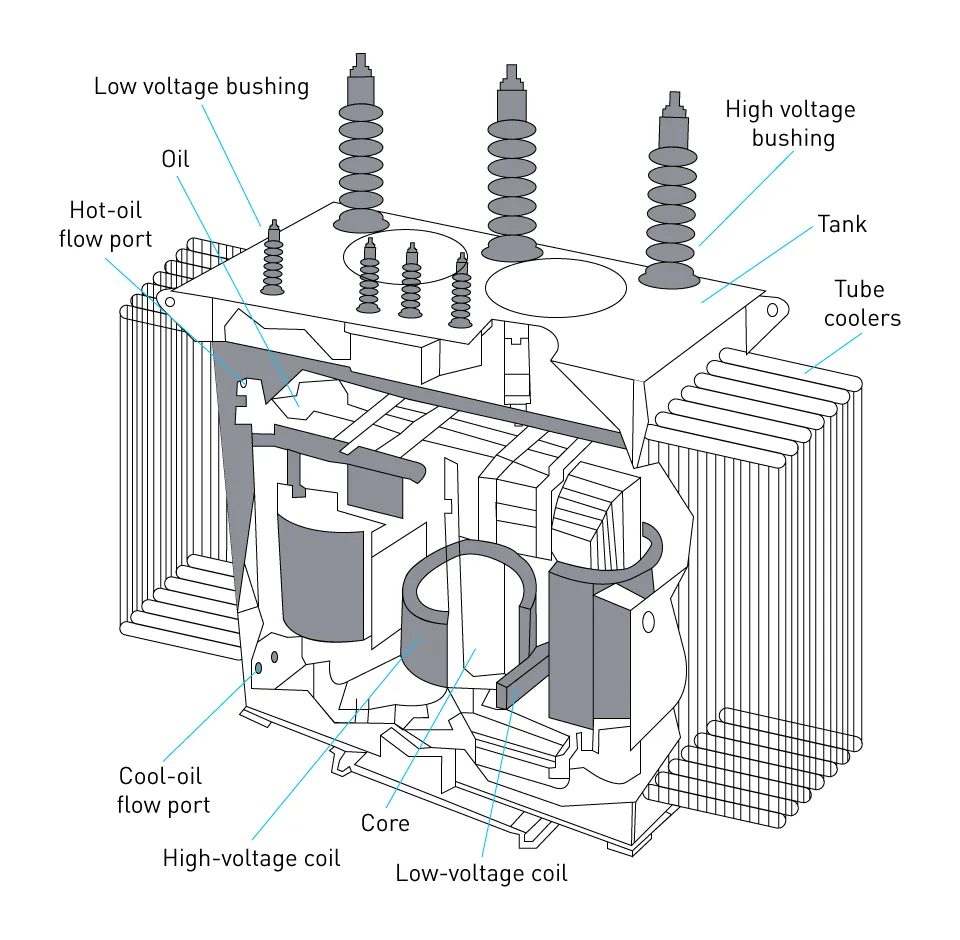
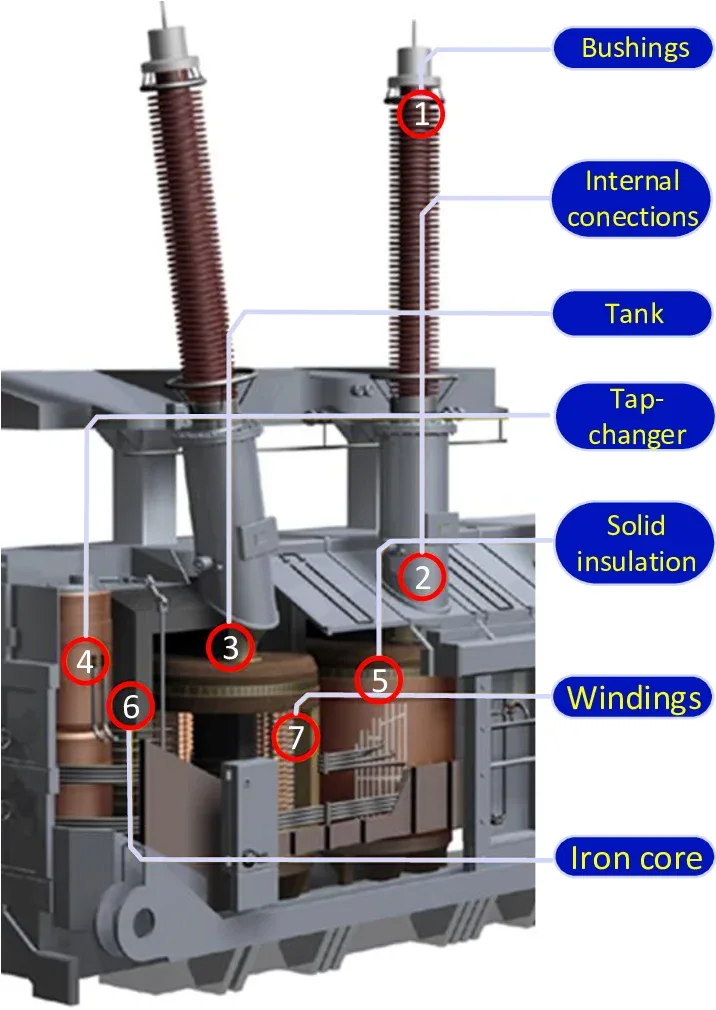
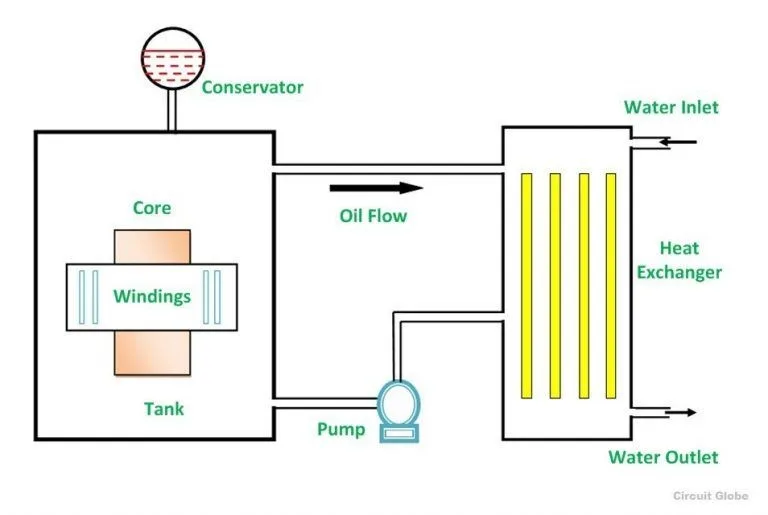
Højspændingstransformatorer overfører elektrisk energi mellem kredsløb, mens de øger eller sænker spændingsniveauerne igennem elektromagnetisk induktion.
| Komponent | Fungere |
|---|---|
| Kerne | Leder magnetisk flux for effektiv energioverførsel |
| Højspændingsvikling | Carries high-voltage electrical current and transfers electrical energy through electromagnetic induction |
| Lavspændingsvikling | Carries low-voltage electrical current and transfers energy to or from the high-voltage winding |
| Isolering | Electrically isolates the windings and other components to prevent short circuits and electrical breakdown |
| Transformer olie | Provides electrical insulation and removes heat generated during operation |
| Tank | Houses and protects the core, viklinger, og isoleringsolie |
| Bushing | Provides a safe insulated connection for conductors passing through the transformer tank |
| Tryk på Skifter | Adjusts the winding turns ratio to regulate the output voltage |
| Kølesystem | Dissipates heat from the transformer to maintain a safe operating temperature |
| Conservator Tank | Accommodates the expansion and contraction of transformer oil caused by temperature changes |
| Åndedræt | Prevents moisture from entering the transformer while allowing air exchange as the oil expands and contracts |
| Radiator | Increases the surface area for heat dissipation and helps cool the transformer oil |
| Grounding System | Provides a safe path for fault current and helps protect equipment and personnel |
Disse transformere er designet til at fungere under høj elektrisk belastning og tunge belastningsforhold, sikre pålidelig drift i elnet.
Typer af højspændingstransformatorer
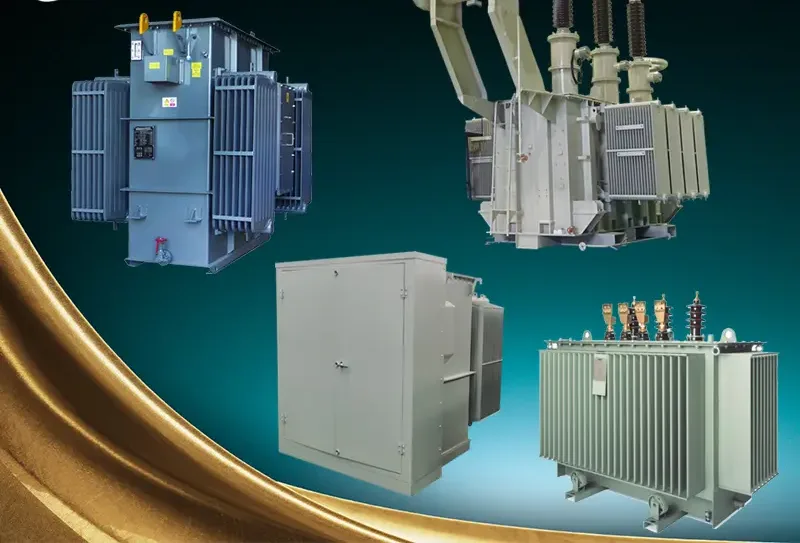
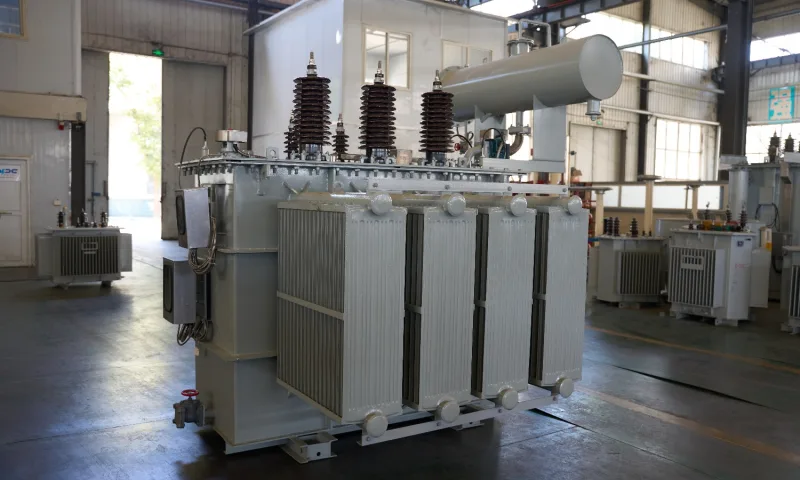
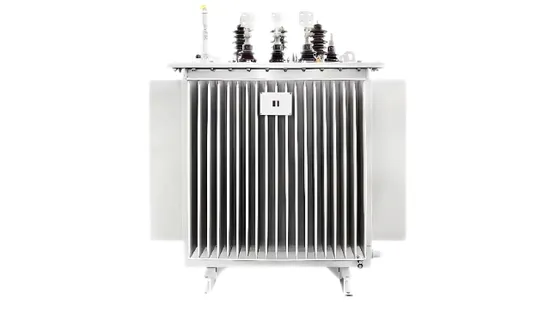
- Step-Up Power Transformer – Øger spændingen til langdistancetransmission.
- Step-Down Power Transformer – Reducerer spændingen til distributionsnetværk.
- Trefaset Power Transformer – Anvendes i storskala elsystemer.
- Nettransformator understation – Installeret i transmissionsstationer.
Fordele ved højspændingstransformatorer
- Effektiv langdistance krafttransmission
- Høj belastningskapacitet for elnet
- Robust isolerings- og køledesign
- Pålidelig drift i forsyningsnetværk
- Lang levetid med stabil ydeevne
Virksomhedsprofil
Luoyang Datang Energy Technology Co., Ltd. er en højteknologisk virksomhed, der integrerer R&D, fremstilling, og levering af strømudstyr og vedvarende energiløsninger. Specialiseret i transformatorer, nye energikomponenter, fordelingsskabe, og invertere, vi har udvidet vores portefølje til at omfattesolcelleanlæg, energilagring løsninger, ogluftvarmepumper. Med teknologisk innovation som vores kerne, vi fokuserer på at skabe høj-pålidelighed og højtydende kraft- og energieffektivitetsløsninger til at betjene globale kunder. Gennem et strengt kvalitetskontrolsystem og international standard certificering, vi leverer konstant fremragende produkter, der giver vores kunder mulighed for at bygge sikkert, stabil, og bæredygtige elsystemer.
Hvis du leder efter en høj kvalitet, højspændingsledende krafttransformator leverandør, vi inviterer dig til at kontakte os eller klikke på relaterede produkter for at forespørge.
Payment Methods of High Voltage Main Power Transformers
L/C, T/T, Western Union, Paypal, Kreditkort osv.
Shipment of High Voltage Main Power Transformers
Når betalingen er modtaget, til søs, med fly, eller udtrykkeligt hurtigst muligt.
FAQs of High Voltage Main Power Transformers
1. Hvad er en højspændingstransformer?
A high voltage power transformer is a large electrical device designed to increase or decrease voltage levels in power generation, smitte, and distribution systems. It operates based on the principle of elektromagnetisk induktion, transferring electrical energy between circuits while maintaining the same frequency.
High voltage transformers are typically engineered for høj effektivitet, pålidelig drift, og lang levetid, making them essential components of modern electrical power networks.
2. Hvor bruges højspændingstransformere?
High voltage power transformers are widely used in kraftværker, elektriske transformerstationer, transmissionsnet, industrianlæg, og national elnetinfrastruktur.
They are commonly installed at different stages of the power system to:
- Step up voltage for long-distance power transmission
- Step down voltage at substations
- Connect different voltage levels within the power grid
- Supply electricity to large industrial loads
- Improve the efficiency and reliability of power transmission systems
3. Hvilke spændingsniveauer anses for højspænding?
High voltage transformer applications can cover a wide range of voltage levels depending on the power system and regional standards.
Common transmission and sub-transmission voltage levels include 35kV, 66kV, 110kV, 132kV, 220kV, 330kV, 500kV, og højere.
The appropriate voltage rating depends on factors such as transmission distance, kraftkapacitet, grid configuration, insulation requirements, and local electrical standards.
4. Hvorfor er højspændingstransformatorer vigtige for kraftoverførsel?
High voltage transformers play a critical role in reducing energy losses during long-distance electricity transmission.
Ved stepping up the voltage, the same amount of electrical power can be transmitted at a lower current. Lower current helps reduce losses in transmission conductors, improving overall transmission efficiency.
At the receiving end of the network, transformers can then step down the voltage to levels suitable for distribution, industrielt udstyr, or other electrical loads.
5. Hvad er den typiske levetid for en strømtransformator?
A properly designed, manufactured, installed, and maintained power transformer can typically operate for 30-40 år eller mere.
The actual service life depends on several factors, inklusive:
- Operating temperature
- Electrical loading
- Insulation condition
- Transformer oil quality
- Moisture and contamination
- Short-circuit events
- Cooling system performance
- Regular inspection and maintenance
Proper monitoring and preventive maintenance can help extend the transformer’s operational life and improve reliability.
6. What are the main components of a high voltage power transformer?
A high voltage power transformer consists of several key components that work together to ensure safe and efficient operation.
The major components include:
- Kerne – Provides a low-reluctance path for magnetic flux.
- Højspændingsvikling – Handles the high-voltage side of the transformer.
- Lavspændingsvikling – Handles the low-voltage side and transfers electrical energy through electromagnetic induction.
- Isoleringssystem – Electrically isolates windings and other energized components.
- Transformer olie – Provides insulation and helps transfer heat away from the active parts.
- Tank – Protects the internal components and contains the insulating oil.
- Bøsninger – Provide insulated electrical connections between the internal windings and external circuits.
- Kølesystem – Dissipates heat generated during transformer operation.
- Tryk på Skifter – Adjusts the voltage ratio to help maintain the required output voltage.
7. What is the difference between a step-up and a step-down transformer?
The main difference is the relationship between the input and output voltage.
EN step-up transformer increases the voltage from the primary side to the secondary side. It is commonly used at power generation facilities to increase voltage before electricity enters the transmission network.
EN nedtrappende transformer reduces voltage to a lower level. It is commonly used at substations and distribution systems to provide suitable voltage levels for industrial, kommercielle, and residential applications.
8. How does a high voltage transformer work?
A high voltage transformer works through elektromagnetisk induktion.
When alternating current flows through the primary winding, it produces a changing magnetic field in the transformer core. This changing magnetic flux induces a voltage in the secondary winding.
The voltage ratio is primarily determined by the turns ratio between the primary and secondary windings.
This allows the transformer to transfer electrical energy between circuits while changing the voltage level according to the requirements of the power system.
9. How is a high voltage transformer cooled?
Under drift, transformers generate heat due to winding losses, core losses, and other electrical losses. Effective cooling is therefore essential for maintaining reliable operation.
Depending on the transformer design and capacity, cooling may involve:
- Natural oil circulation
- Naturlig luftkøling
- Forced oil circulation
- Forced air cooling
- Radiators
- Fans and pumps
Large power transformers often use a combination of oil circulation, radiatorer, fans, and pumps to efficiently remove heat.
10. What maintenance does a high voltage transformer require?
Regular maintenance is important for detecting potential problems before they lead to equipment failure.
Typical maintenance activities include:
- Checking transformer oil condition
- Inspecting bushings and terminals
- Monitoring oil and winding temperatures
- Checking for oil leakage
- Inspecting cooling equipment
- Testing insulation resistance
- Checking protection and monitoring devices
- Inspecting the tap changer
- Performing electrical diagnostic tests when required
The specific maintenance schedule should be determined according to the transformer’s design, driftsforhold, manufacturer recommendations, and applicable standards.