Lieferant elektronischer Komponenten | Transformatoren, Induktoren, Wechselrichter


Einführung
Einelectrical transformer is a fundamental device in power distribution and electronics, entworfen, umtransfer electrical energy between circuits through electromagnetic induction. Durch Erhöhen oder Verringern des Spannungsniveaus, transformers enable efficientlong-distance power transmission and safe voltage adaptation for household and industrial use.
With the global push towardIntelligente Netze, Integration erneuerbarer Energien, and electric vehicle (EV) charging infrastructure, transformers are more critical than ever. This article exploreshow transformers work, their key types, efficiency considerations, and emerging trends, optimized forSEO and readability to attract organic traffic.
How Does an Electrical Transformer Work?
Transformers operate on the principle ofFaraday’s Law of Electromagnetic Induction, which states that a changing magnetic field induces a voltage in a conductor. A basic transformer consists of:
- Primärspule – Receives input AC voltage.
- Sekundärspule – Delivers transformed output voltage.
- Ferromagnetic Core – Enhances magnetic coupling between coils.
When AC flows through the primary coil, it generates afluctuating magnetic field, inducing a voltage in the secondary coil. DerWindungsverhältnis (N₁/N₂) determines whether the transformersteps up (increases) odersteps down (decreases) Stromspannung.
Types of Electrical Transformers
1. Step-Up & Step-Down Transformers
- Step-Up – Increases voltage (z.B., power plants to transmission lines).
- Step-Down – Decreases voltage (z.B., household outlets).
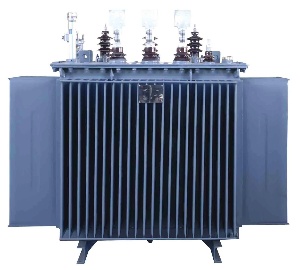
2. Verteilungstransformatoren
- Verwendet inlocal power grids to supply homes and businesses.
- Typischerweiseoil-cooled or dry-type zur Sicherheit.
3. Isolation Transformers
- Provideelectrical separation for safety in medical and industrial equipment.
4. Autotransformers
- Single-winding design forkompakt, cost-effective voltage adjustment.
5. Instrument Transformers
- Stromwandler (CTs) & Potenzielle Transformatoren (PTs) – Used for metering and protection in high-voltage systems.
Key Advantages of Transformers
✔Effiziente Kraftübertragung – Reduce energy loss over long distances.
✔Voltage Adaptation – Enable safe usage in different applications.
✔Galvanic Isolation – Prevent electrical shocks in sensitive devices.
✔Zuverlässigkeit – Long lifespan with minimal maintenance.
Herausforderungen & Modern Solutions
- Energy Losses – Core losses (hysteresis & Wirbelströme) and copper losses reduce efficiency.
- Lösung: Amorphous metal cores and high-efficiency designs (e.g.,Energy Star-rated transformers).
- Heat Dissipation – Large transformers require cooling systems.
- Lösung: Oil-immersed cooling or forced-air systems.
- Environmental Concerns – Traditional oil-filled transformers risk leaks.
- Lösung: Eco-friendly ester-based fluids and dry-type transformers.
Transformers in Modern Applications
- Intelligente Netze – Enable bidirectional power flow forIntegration erneuerbarer Energien.
- Elektrofahrzeuge (Elektrofahrzeuge) – Fast-charging stations rely onhigh-power transformers.
- Erneuerbare Energie – Solar/wind farms usestep-up transformers to feed power into the grid.
- Industrielle Automatisierung – Provide stable voltage forrobotics and CNC machines.
- Rechenzentren – Ensure uninterrupted power withredundant transformer systems.
Zukünftige Trends & Innovationen
- Halbleitertransformatoren (SSTs) – Use power electronics forsmaller, schlauer, und effizienter voltage conversion.
- IoT-Enabled Monitoring – Sensors predict failures viareal-time diagnostics.
- Grüne Transformatoren – Sustainable materials and biodegradable insulation oils.
Abschluss
Electrical transformers remain indispensable inStromverteilung, erneuerbare Energie, and modern electronics. Mit fortschreitender Technologie, innovations likesolid-state transformers and smart grid compatibility will drive the next generation of energy-efficient systems.
Über PDDN
PDDN ist die Online-Plattform vonLuoyang Datang Energy Technology Co., Ltd., ein vertrauenswürdiger Hersteller und globaler Lieferant vonLeistungstransformatoren, Transformatorzubehör, Schaltanlagenkomponenten, Batterie-Energiespeichersysteme (BESS), und Ladelösungen für Elektrofahrzeuge. Seit 2015, Wir haben Versorgungsunternehmen unterstützt, EPC-Auftragnehmer, und Industriekunden weltweit mit zuverlässigen Produkten, OEM/ODM-Dienste, und technisches Fachwissen.
DerPDDN-Blog vermittelt praktisches Ingenieurwissen, Leitfäden zur Produktauswahl, Wartungstipps, und Brancheneinblicke für Fachleute im Energie- und Energiesektor.
Erfahren Sie mehr: https://www.pddn.com/
E-Mail: sales@pddn.com
VERWANDTE BEITRÄGE

So entwerfen und optimieren Sie die Effizienz eines Diodengeräts mit schneller Freilaufphase
Dioden-Leistungsmodul: Die treibende Kraft grüner Energie

So erhellen Sie Ihren Garten, ohne einen Elektriker zu rufen
Verteilungs- und Leistungstransformatoren: Das stille Rückgrat des modernen Netzes
Das stille Kraftpaket: Wie ölgefüllte Transformatoren auf Pad-Montage moderne Städte elektrisieren