


Fournisseur de composants électroniques | Transformateurs, Inducteurs, Onduleurs


Introduction
An electrical transformer is a fundamental device in power distribution and electronics, conçu pour transfer electrical energy between circuits through electromagnetic induction. En augmentant ou en abaissant les niveaux de tension, transformers enable efficient long-distance power transmission and safe voltage adaptation for household and industrial use.
With the global push towardréseaux intelligents, intégration des énergies renouvelables, and electric vehicle (VE) charging infrastructure, transformers are more critical than ever. This article exploreshow transformers work, their key types, efficiency considerations, and emerging trends, optimized forSEO and readability to attract organic traffic.
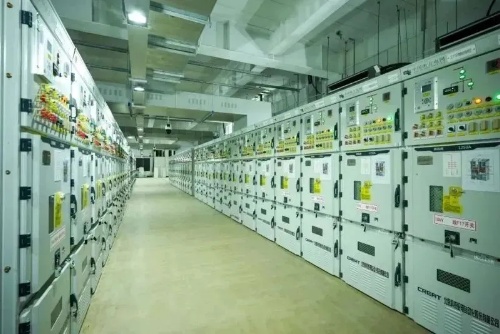
How Does an Electrical Transformer Work?
Transformers operate on the principle ofFaraday’s Law of Electromagnetic Induction, which states that a changing magnetic field induces a voltage in a conductor. A basic transformer consists of:
- Primary Coil – Receives input AC voltage.
- Secondary Coil – Delivers transformed output voltage.
- Ferromagnetic Core – Enhances magnetic coupling between coils.
When AC flows through the primary coil, it generates afluctuating magnetic field, inducing a voltage in the secondary coil. Lerapport de rotation (N₁/N₂) determines whether the transformersteps up (increases) ousteps down (decreases) voltage.
Types of Electrical Transformers
1. Step-Up & Step-Down Transformers
- Step-Up – Increases voltage (par ex., power plants to transmission lines).
- Step-Down – Decreases voltage (par ex., household outlets).
2. Transformateurs de distribution
- Used inlocal power grids to supply homes and businesses.
- Typiquementoil-cooled or dry-type pour la sécurité.
3. Isolation Transformers
- Provideelectrical separation for safety in medical and industrial equipment.
4. Autotransformers
- Single-winding design forcompact, cost-effective voltage adjustment.
5. Instrument Transformers
- Transformateurs de courant (CT) & Potential Transformers (PTs) – Used for metering and protection in high-voltage systems.
Key Advantages of Transformers
✔Transmission de puissance efficace – Reduce energy loss over long distances.
✔Voltage Adaptation – Enable safe usage in different applications.
✔Galvanic Isolation – Prevent electrical shocks in sensitive devices.
✔Fiabilité – Long lifespan with minimal maintenance.
Challenges & Modern Solutions
- Energy Losses – Core losses (hysteresis & eddy currents) and copper losses reduce efficiency.
- Solution: Amorphous metal cores and high-efficiency designs (e.g.,Energy Star-rated transformers).
- Heat Dissipation – Large transformers require cooling systems.
- Solution: Oil-immersed cooling or forced-air systems.
- Environmental Concerns – Traditional oil-filled transformers risk leaks.
- Solution: Eco-friendly ester-based fluids and dry-type transformers.

Transformers in Modern Applications
- Smart Grids – Enable bidirectional power flow forintégration des énergies renouvelables.
- Electric Vehicles (VÉ) – Fast-charging stations rely onhigh-power transformers.
- Renewable Energy – Solar/wind farms usestep-up transformers to feed power into the grid.
- Industrial Automation – Provide stable voltage forrobotics and CNC machines.
- Centres de données – Ensure uninterrupted power withredundant transformer systems.
Tendances futures & Innovations
- Solid-State Transformers (SSTs) – Use power electronics forsmaller, smarter, and more efficient voltage conversion.
- IoT-Enabled Monitoring – Sensors predict failures viareal-time diagnostics.
- Green Transformers – Sustainable materials andbiodegradable insulation oils.
Conclusion
Electrical transformers remain indispensable indistribution d'énergie, énergie renouvelable, and modern electronics. As technology advances, innovations likesolid-state transformers and smart grid compatibility will drive the next generation of energy-efficient systems.
À propos du PDDN
PDDN est la plateforme en ligne deLuoyang Datang Energy Technology Co., Ltée., un fabricant de confiance et un fournisseur mondial detransformateurs de puissance, accessoires de transformateur, composants d'appareillage, systèmes de stockage d'énergie par batterie (BESS), et solutions de recharge pour véhicules électriques. Depuis 2015, nous avons soutenu les entreprises de services publics, Entrepreneurs EPC, et clients industriels du monde entier avec des produits fiables, Services OEM/ODM, et expertise technique.
LeBlog PDDN fournit des connaissances pratiques en ingénierie, guides de sélection de produits, conseils d'entretien, et des informations sur l'industrie pour les professionnels du secteur de l'électricité et de l'énergie.
Apprendre encore plus: https://www.pddn.com/
E-mail: sales@pddn.com
ARTICLES CONNEXES

Quels facteurs affectent le prix de l'onduleur solaire hors réseau
10 Guide des prix des transformateurs HP 2024: Frais, Facteurs & Conseils d'achat intelligent

Yitong of diodes, transistors and thyristors

Thyristor Phase Control Calculator: an efficient tool for precise control of thyristor phase

How light-activated thyristors are used in application fields
