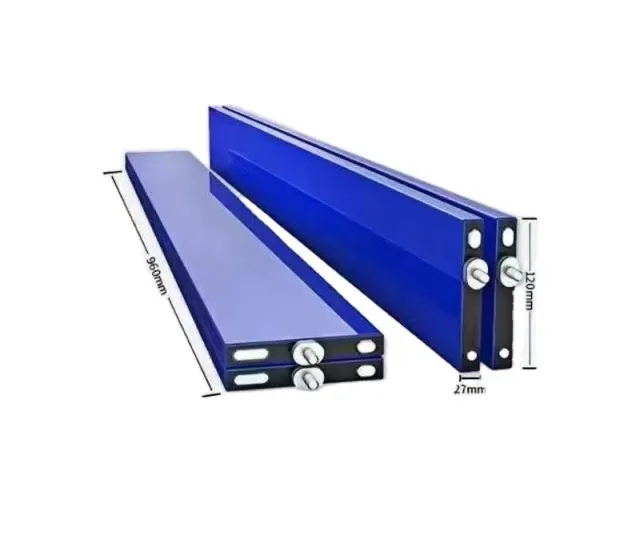
3.2V 440Ah PT-6887 Blade Battery Cell
Explore PT-6887 3.2V blade battery cell specifications for automotive battery systems and customized power applications. Contact us for technical details and customization options.
View Product

Product Categories
Blade cells are long, thin, flat LFP cells built for direct integration into the pack without intermediate modules (CTP) and, in cell-to-body designs, into the vehicle structure itself (CTB).
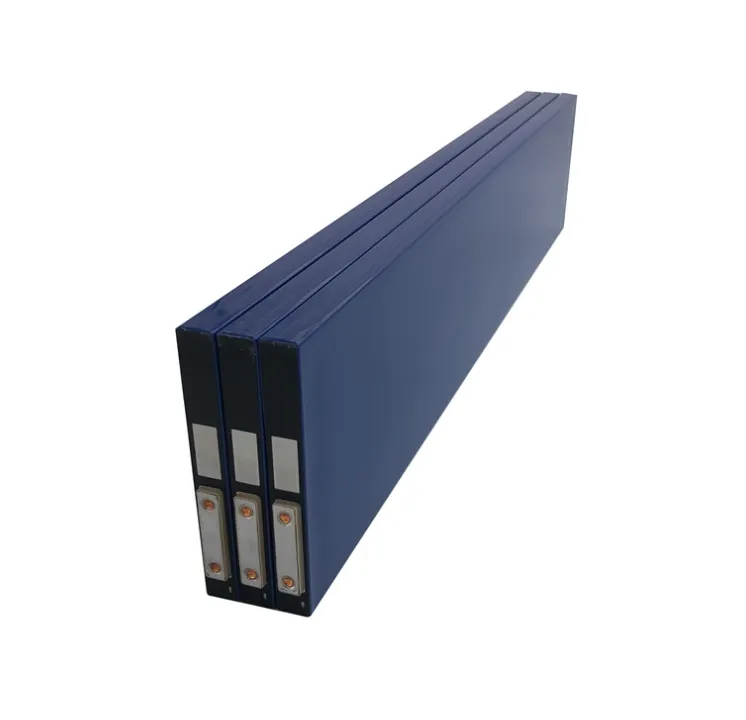
Explore PT-6887 3.2V blade battery cell specifications for automotive battery systems and customized power applications. Contact us for technical details and customization options.
View ProductBlade cells are long, thin, flat LFP cells built for direct integration into the pack without intermediate modules (CTP) and, in cell-to-body designs, into the vehicle structure itself (CTB). The format originated with BYD and is defined by structural participation: the cells act as load-bearing members, not just energy carriers. This is not a general-purpose cell that can be freely repackaged. The blade cell's value is inseparable from the CTP/CTB system it was designed into—buying the cell without the integration architecture discards most of its advantage.
Typical ranges for Gen 1 and Gen 2 blade cells. Exact values depend on supplier, generation, and pack integration; confirm against the specific cell drawing and system-level validation before design lock.
Parameter | Gen 1 Blade Cell | Gen 2 Blade Cell |
|---|---|---|
Chemistry | LFP | LFP (manganese-iron-phosphate blend reported for Gen 2) |
Format | Long, thin prismatic; max 960 × 90 × 13.5 mm | Elongated high-aspect-ratio prism |
Nominal voltage | 3.2 V | ~3.2 V (reported voltage uplift on Gen 2 chemistry, confirm per supplier) |
Cell energy density | ~180 Wh/kg | 190–210 Wh/kg |
Pack volume utilization | >60% (CTP); 66% (CTB system) | Improved packing; cell-to-pack ratio 0.74 |
Cycle life | >3,000 cycles; >1,000,000 km service life | >3,000–4,500 cycles reported; confirm test conditions |
Fast charge (system-level) | — | 10–70% in 5 min; 10–97% in 9 min (BYD flash-charging) |
Low-temperature discharge | −20°C: 90% of room-temperature capacity (BYD Gen 1 data) | Cold-soak performance improved per BYD; cell-level S/V trade-off remains |
Integration requirement | CTP only | CTP or CTB |
Procurement boundary: the values above describe blade cells as integrated into a BYD-defined pack architecture. Cell-level cycle-life and fast-charge figures are system-dependent and should not be compared directly against standalone prismatic cell datasheets without matching thermal management, compression, and BMS conditions.
Technically possible, practically inadvisable. The blade cell’s value—0.74 cell-to-pack ratio, 60%+ volume utilization, structural participation—depends on the pack architecture it was designed for. A self-built pack that does not replicate the structural bonding, thermal plate layout, and terminal configuration will not achieve the published system-level metrics, and may not pass safety validation.
At cell level, no—the thin, high-S/V geometry of blade cells loses more heat to convection and retains less discharge energy at low temperature than thicker prismatic LFP cells. BYD reports 90% capacity at −20°C for Gen 1; independent cell-level studies show the S/V penalty is real. For sustained sub-zero duty without pack heating, thick prismatic LFP or sodium-ion is the more defensible starting point.
Treating the blade cell as a commodity cell selected by Wh/kg and $/kWh. The defensible specification is a pack-level architecture: cell-to-pack ratio, structural integration method, thermal plate design, and serviceability strategy. A blade cell quotation without the corresponding CTP/CTB system design is an incomplete offer.
Share your product requirements, estimated order quantity, and target delivery destination.

Hi! Before we connect you to our WhatsApp team, please share 5 quick details.