Product Overview
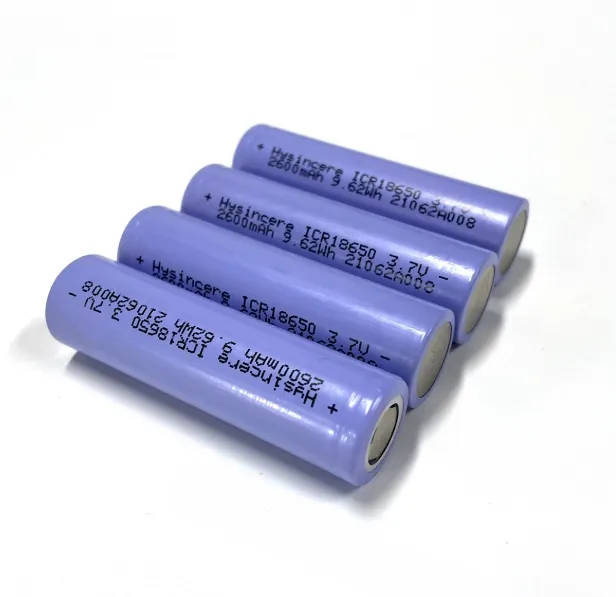
Cylindrical modules are the configuration-flexibility play in the battery module category. Instead of a fixed prismatic or pouch format, cylindrical cells (18650, 21700, 32700, 4680) are assembled into series/parallel arrays to hit a target voltage and capacity — 12.8 V / 100 Ah for a 32700 LFP pack, 43.2–132.8 V traction modules in 21700 NMC, or any custom configuration the host system requires.
The trade-off is explicit: cylindrical modules deliver mechanical standardization and configurational freedom, not the cycle life of large-format LFP cells. Module-level cycle life in this category typically falls in the 1,000–2,000 cycle range to 80% capacity, depending on chemistry and depth of discharge. That makes cylindrical the correct shortlist for mobility, power tools, and space-constrained packs where weight, volume or standardized cell supply matter more than 6,000-cycle stationary duty.
Key Features
- Cell-format flexibility — 18650 (2,000–3,500 mAh), 21700 (3,000–6,000 mAh), 32700 LFP, and emerging 4680 formats available in one category.
- Series/parallel configuration to target — voltage and capacity are set at module assembly, not constrained by a fixed prismatic can size.
- LFP and NMC chemistries both available — 32700 LFP for cost-sensitive, thermally stable packs; 21700 NMC for higher energy density and cold-weather discharge.
- Module-level energy density — 21700 NMC traction modules cited at 176–207.5 Wh/kg and 304–358 Wh/L depending on thermal management.
- Integrated BMS and cell-level fusing — wire-bond fusing, temperature sensing and isoSPI or CAN communication are standard in industrial/EV-grade modules.
- Certification set: UN38.3, IEC 62619, UL 1973; UL 9540A at system level where fire propagation must be demonstrated.
Technical Specifications(Typical Configurations)
Parameter | 32700 LFP | 21700 NMC (Traction) | 21700 NMC (Performance) |
|---|
Configuration | 4S17P | 36S16P | 12S27P |
Nominal voltage | 12.8 V | 132.8 V | 43.2 V |
Nominal capacity | 100 Ah | 79.2 Ah | 121.5 Ah |
Nominal energy | 1.28 kWh | 10.5 kWh | 5.25 kWh |
Gravimetric density | — | 207.5 Wh/kg | 176 Wh/kg |
Cycle life to 80% | ~2,000 cycles | >1,000 cycles | 1,000 cycles |
Continuous discharge | 100 A max | 86 A / 1.1C | 600 A / 4.9C |
Thermal management | Air / passive | Liquid (water/glycol) | Immersion cooling |
Communication | CAN / RS485 | isoSPI | Wireless CMB |
Source basis: 32700 LFP figures from commercial 12.8 V/100 Ah pack data; 21700 NMC figures from ElringKlinger traction and performance module datasheets. These are representative configurations, not a universal specification — cycle life and C-rate vary substantially by cell supplier and operating strategy.
Typical Applications
Application | Why cylindrical fits |
|---|
E-mobility / light EV / e-bike | 21700 NMC modules in 48–52 V configurations (e.g. 14S5P / 13S4P) for range within a fixed frame volume |
Power tools & outdoor power equipment | 18650 / 21700 high-current cells support 10–15C pulse discharge; standardized format simplifies pack assembly |
Robotics / AGVs | Configurable voltage and capacity within a compact envelope; cell-level fusing supports safety requirements |
Traction & specialty vehicles | 21700 NMC modules stackable to 500–1,000 V system voltage; liquid or immersion cooling for sustained power |
OEM packs with fixed interfaces | Series/parallel configuration is set at build, so the module can match an existing voltage/capacity requirement without tooling changes |
Installation & Maintenance Notes
Installation
- Torque values must come from the specific module datasheet. Published figures across cylindrical module classes range from ~12 N·m (M8 terminals) to 15–20 N·m (pack-level connections) depending on hardware; there is no universal cylindrical torque. Use a calibrated wrench — loose terminals are a leading cause of overheating in high-current cylindrical packs.
- Parallel modules only after voltage matching to ≤0.05 V. Cylindrical modules have low internal resistance; a voltage mismatch at the moment of paralleling produces large circulating current that can damage the BMS or fuses.
- Do not mix cell formats, capacities or production batches in one series string. 21700 and 32700 cells have different impedance and thermal profiles; even within 21700, batch-to-batch resistance spread affects current sharing.
- Thermal management is not optional at high C-rate. Liquid-cooled and immersion-cooled 21700 modules are rated for sustained 4.9–11C discharge; air-cooled configurations require derating at elevated ambient.
Maintenance
- Terminal torque and busbar inspection: every 6–12 months. Vibration environments (mobility, power tools) are more exposed to connection loosening; torque markers help detect shift.
- Cell voltage spread: monthly via BMS. Cylindrical modules have many parallel cells; a growing spread between parallel groups indicates a weak cell or failing interconnect. >50 mV spread warrants investigation.
- Thermal imaging: quarterly in high-cycle duty. Cylindrical cells can develop localized hotspots at the cap-to-busbar weld; IR inspection catches this before it becomes a capacity or safety event.
- Capacity test: baseline at commissioning, then annually for critical duty. Cylindrical cycle life is lower than large-format LFP; track against the warranted end-of-life threshold rather than headline cycle count.