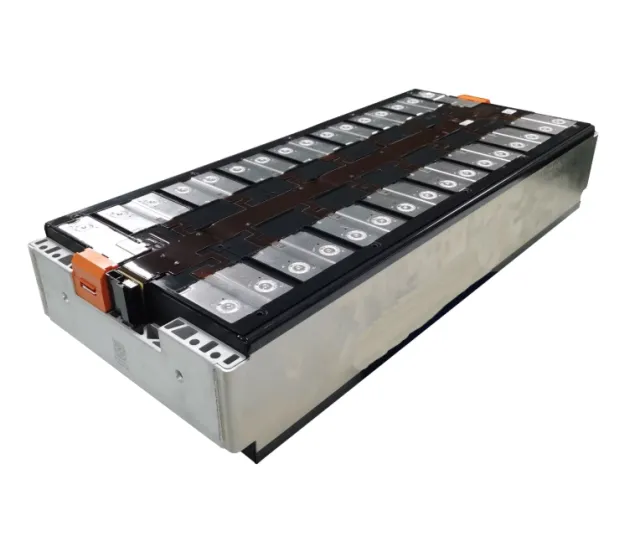
16S1P NMC Battery Module 59.2V 218Ah
High-energy 16S1P NMC battery module (59.2V 218Ah). Supports fast charging to 80% in 45 mins, 2000+ cycles. Ideal for EV conversions, marine & solar storage. Get a quote!
View Product
Product Categories
Nickel manganese cobalt modules for buyers whose binding constraint is weight or volume, not cycle count.
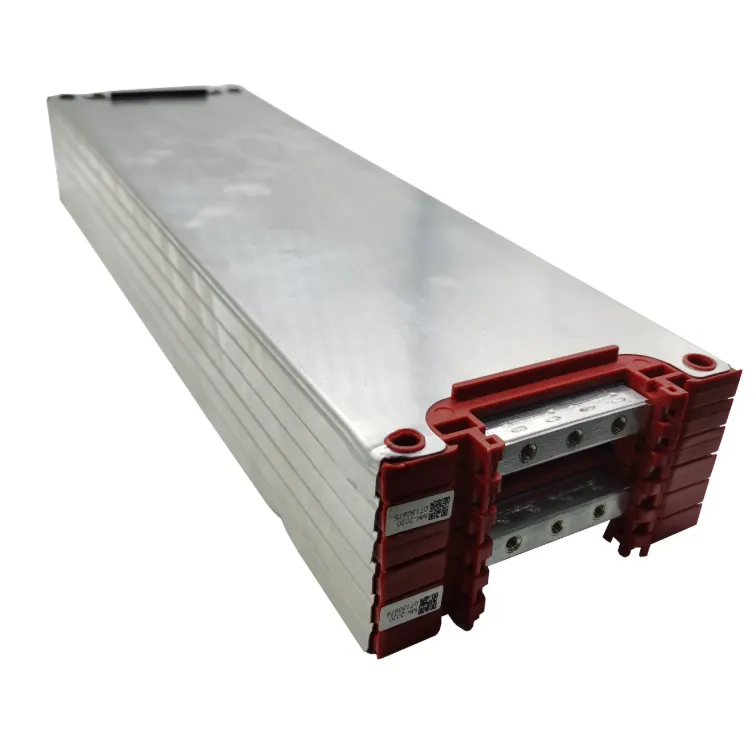
High-energy 16S1P NMC battery module (59.2V 218Ah). Supports fast charging to 80% in 45 mins, 2000+ cycles. Ideal for EV conversions, marine & solar storage. Get a quote!
View ProductNickel manganese cobalt modules for buyers whose binding constraint is weight or volume, not cycle count. NMC’s layered oxide cathode delivers higher gravimetric and volumetric energy density than LFP, and holds discharge capability below freezing where LFP weakens. The trade-off is explicit: shorter cycle life at comparable depth of discharge, and a lower thermal runaway onset temperature (roughly 180–210 °C vs ~270 °C for LFP), which changes enclosure, spacing and fire-mitigation requirements rather than disqualifying the chemistry.
This category is not a drop-in substitute for LFP in stationary storage. It is the correct shortlist when the application cannot afford the mass or footprint, or must operate in cold ambient conditions.
Parameter | Typical value | Notes |
|---|---|---|
Nominal voltage | 44.4 V / 48 V / 96 V | 1P12S VDA modules common at 44.4 V |
Capacity / energy | 50 Ah / 2.2 kWh; up to 250 Ah class | Module format drives capacity |
Energy density | ~140–260 Wh/kg | Cell-to-module integration dependent |
Cycle life(to ~80%) | 2,000–4,000 typical; up to 5,000 some products | Shorter than LFP at same DoD |
Thermal runaway onset | ~180–210 °C | Lower than LFP ~270 °C |
Low-temperature discharge | Better than LFP below freezing | Verify specific product’s cutoff |
Certifications | UN38.3, IEC 62619, UL 1973 | Module-level scope required |
Cooling | Air or liquid, product-dependent | Liquid thermal management common in EV-class modules |
Caveat: Ranges are indicative commercial values. Use the specific module datasheet for procurement — energy density and cycle life vary substantially by cell design and depth of discharge.
Application | Fit rationale |
|---|---|
E-mobility / light EV / e-truck | VDA-format 44.4 V modules standardized for EV pack assembly; higher energy density extends range within fixed volume |
Robotics and AGVs | Weight and volume directly constrain payload and runtime; NMC’s density advantage translates into operating hours |
Portable power and space-constrained industrial packs | Where LFP’s larger footprint cannot be accommodated |
Cold-climate outdoor equipment | Better sub-zero discharge than LFP; verify charge cutoff below 0 °C |
Installation
Maintenance
When mass or volume is the binding constraint, or when the module must discharge reliably below freezing. LFP remains the lower-lifetime-cost default for daily deep cycling in stationary storage. NMC’s cycle life is typically 2,000–4,000 cycles to 80%, versus 3,000–10,000+ for LFP, so the chemistry choice should follow the duty cycle, not a general preference.
UN38.3 for transport, IEC 62619 for industrial module safety, and UL 1973 for North America. Confirm the certificate scope covers the module assembly, not only the cells — this is the most common gap in NMC module procurement.
NMC has a lower thermal runaway onset temperature (~180–210 °C vs ~270 °C for LFP), which raises the bar for enclosure design, cell spacing and fire mitigation. That does not make NMC modules inherently unsafe — it means the system design must account for the chemistry. Module-level IEC 62619 and UL 1973 testing is the baseline evidence that this has been done.
No. Mixing chemistries in one bank creates voltage and impedance mismatch that the BMS cannot manage safely. Even within NMC, do not parallel different capacities or production batches without engineering review and pre-balancing to matched voltage.
Share your product requirements, estimated order quantity, and target delivery destination.

Hi! Before we connect you to our WhatsApp team, please share 5 quick details.