
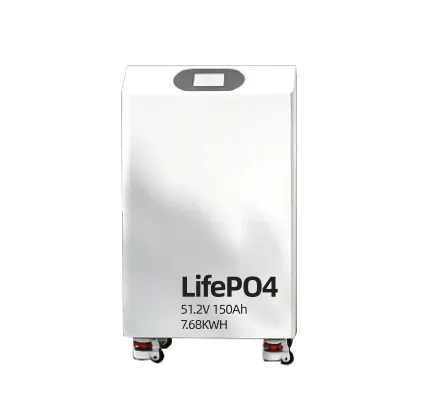
Product Overview
LiFePO4 residential storage modules for buyers who need grid-tied self-consumption, tariff arbitrage and backup resilience with a documented inverter-compatibility path and a warranty that survives 10 years of daily cycling. The dominant building block remains the 51.2 V nominal / 100 Ah (5.12 kWh) LFP module, stackable in roughly 5 kWh steps to 20.48 kWh, 30.72 kWh and 40.8 kWh in low-voltage architectures. The category has bifurcated: low-voltage 51.2 V stackable systems dominate retrofit and hybrid-inverter installations, while 400 V-class high-voltage all-in-one systems (e.g., EcoFlow Ocean 2 at 5.02 kWh/module, 100% DoD) compete in new-build markets with integrated hybrid inverters. LFP remains the default chemistry because the module lives in a garage, utility room or outdoor cabinet for a decade — thermal stability and cycle life outweigh the energy-density penalty versus NMC.
Key Features
51.2 V / 100 Ah modular building block — 5.12 kWh per module, stackable to 20–40 kWh in ~5 kWh steps with module-level auto-balancing. The HX Group BLF-SR series runs 5.12, 10.24, 15.4, 20.5, 25.6, 30.7 and 35.8 kWh on the same 51.2 V/100 Ah module; Solis FlexHome spans 5.1–40.8 kWh in eight variants.
≥6,000 cycles at 80–90% DoD — the commercial baseline, with 10-year warranties now common. Solis rates its residential lines at over 6,000 cycles at 90% DoD; some 314 Ah-cell products claim >10,000 cycles.
Integrated smart BMS with CAN / RS485 (and often RS232) — protocol mapping to the inverter is the real integration gate. The BMS manages charge/discharge, cell balancing and protection; the procurement question is whether the specific protocol variant (PYLON CAN, Growatt CAN, Victron CAN, SMA CAN V2.0, Deye/Sunsynk) has been validated on the target inverter.
Broad inverter compatibility is a checklist, not a claim. The recurring validated list includes Pylontech, Growatt, Victron, Deye, SMA, Luxpower, Voltronic, Must, SofarSolar and Solis; confirm the protocol name and firmware version, not just the brand.
IP65/IP66 enclosure plus low-temperature charge cutoff or heating — the difference between an indoor-only module and an outdoor-rated system. HX Group rates IP65 with a low-temperature heating function for cold-weather charging; Solis FlexHome is IP66.
A-grade LFP cells, cobalt-free, with module-level certification scope. IEC 62619, UL 1973, UN38.3 and CE-EMC are the recurring certificate set; confirm the certificate names the module, not only the cell.
Technical Specifications (Typical 51.2 V / 100 Ah Low-Voltage Class)
Parameter | Typical value | Notes |
|---|---|---|
Nominal voltage | 51.2 V (16S LFP) | Operating window 44.8–57.6 V typical |
Nominal capacity / energy | 100 Ah / 5.12 kWh per module | 200/300/314 Ah modules and 10 kWh wall-mount variants exist |
Stackable range | 5.12–40.8 kWh in ~5 kWh steps | Low-voltage stackable; HV all-in-one is a separate architecture |
Depth of discharge | 90% typical; 100% on selected products | DoD affects usable kWh and cycle-life warranty terms |
Cycle life | ≥6,000 @ 80–90% DoD, 25 °C; up to 10,000 on 314 Ah cells | 10-year warranty common; confirm DoD/warranty linkage |
Continuous charge/discharge | 50 A / 50–100 A typical per module | System current scales with parallel modules |
Communication | CAN / RS485 (RS232 on some) | Protocol name and firmware version must be verified |
Operating temperature | Charge 0–55 °C (heated option extends to −20 °C); discharge −20 to 55/60 °C | Low-temperature charge cutoff or heating is mandatory for outdoor installs |
Enclosure | IP65 standard on many stackables; IP20 wall-mount variants | IP66 on selected outdoor-rated systems |
Certifications | IEC 62619, UL 1973, UN38.3, CE-EMC, RoHS | Module-level scope |
Inverter compatibility (validated list) | Pylontech, Growatt, Victron, Deye, SMA, Luxpower, Voltronic, Must, SofarSolar, Solis | Protocol variant, not brand name, is the procurement key |
Caveat: Values describe the common 51.2 V/100 Ah low-voltage stackable class. High-voltage all-in-one systems use different voltage classes and stack logic. Use the specific system datasheet for procurement.
Typical Applications
Application | Fit rationale |
|---|---|
Residential solar self-consumption (retrofit) | 51.2 V architecture mates with the installed hybrid inverter’s low-voltage battery input without replacing the PV array; 5–20 kWh covers evening and night load |
Tariff arbitrage / peak shaving | 10–20 kWh stackable capacity shifts cheap overnight or solar-surplus energy into peak-tariff windows; DoD and cycle-life warranty determine the economics |
Whole-home backup (with backup interface) | Stacked modules plus a compatible hybrid inverter and transfer switch carry essential circuits through grid outages; LFP thermal stability supports indoor utility-room placement |
Outdoor / garage installation | IP65/IP66 enclosure and low-temperature heating option remove the indoor-only constraint; confirm charge cutoff temperature against local winter minima |
Small commercial load shifting | 20–40 kWh stackable capacity serves small retail, clinic or office loads; parallel expansion without replacing existing modules |
Installation & Maintenance Notes
Installation
Terminal torque and cable strain relief follow the module datasheet, not a generic LFP rule. Residential modules use M6 or M8 fasteners with published torque in the 8–12 N·m range, but terminal construction varies. Use a calibrated wrench and re-check after the first full charge/discharge thermal cycle.
Do not parallel modules of different capacities, brands or production batches without engineering review. Voltage and impedance mismatch at the paralleling point causes inrush current; charge each module individually to matched voltage before closing paralleling breakers. This is the single most common commissioning error in stackable residential systems.
Verify the inverter protocol table against the exact firmware version before energizing. “Compatible with Growatt” is insufficient — the BMS must be set to the Growatt CAN protocol variant that the inverter’s firmware expects. A protocol mismatch presents as a CAN communication fault, not a battery fault.
Confirm low-temperature charge behavior. If the module lacks a heating function, the BMS must block charging below 0 °C; if it has heating, confirm the heating circuit is powered and the thermostat is set for the local climate. Charging a cold LFP pack without cutoff causes lithium plating and permanent capacity loss.
Maintenance
BMS log review monthly in the first year, then quarterly. Cell voltage spread, temperature trend and state-of-health degradation rate are the early indicators of module imbalance. LFP’s flat discharge curve makes voltage-only SOC estimation unreliable; the BMS is the primary diagnostic instrument, not a voltmeter.
Capacity test at commissioning as a baseline, then annually for backup duty. Compare usable capacity against nameplate and against the warranty’s end-of-term threshold. A module that tests below 80% of nameplate inside the warranty period is a claim candidate.
Torque and visual inspection every 6–12 months. Re-check terminal torque, look for discoloration or corrosion, and verify lugs cannot be rotated by hand after tightening. Outdoor enclosures: inspect door gaskets and cable glands for UV degradation at the same interval.
Modules stored >12 months: capacity-check before deployment. Do not assume a stored module retains nameplate capacity without verification; LFP calendar aging at elevated SOC is real, and a stored module may need a full charge/discharge/charge cycle to rebalance.
FAQs
What distinguishes a residential LFP module from a portable power station?
The residential module is a building block optimized for cycle life, protocol-verified inverter integration and parallel expansion in a fixed installation; it has no integrated inverter or AC output. The portable station is a finished appliance optimized for Wh/kg and plug-and-play AC output. They share LFP chemistry but serve different procurement logic: protocol compatibility and warranty terms for residential, port count and carry weight for portable.
Which certifications should appear on the residential module datasheet?
IEC 62619, UL 1973, UN38.3 and CE-EMC are the recurring set, with RoHS commonly added. Confirm the certificate scope is module-level, not cell-level — a UL 1973 listing for the cell alone does not certify the module enclosure, BMS or terminal assembly.
Can LFP modules of different capacities be paralleled in a residential stack?
Only with engineering review. Mixing 100 Ah and 200 Ah modules in one parallel string creates impedance mismatch and uneven current sharing; most manufacturers prohibit it outside factory-configured stacks. Expansion should use the same module capacity and, ideally, the same production batch.
Is LFP suitable for cold-climate residential installations?
LFP is suitable, but charging below 0 °C requires either a BMS charge cutoff or an integrated heating function. Discharge at −20 °C is within the operating window of most products; the constraint is charge acceptance, not discharge delivery. For outdoor cabinets in cold climates, specify a heated module or an enclosure with thermostatic heating.
Discuss Your Project
Share your product requirements, estimated order quantity, and target delivery destination.