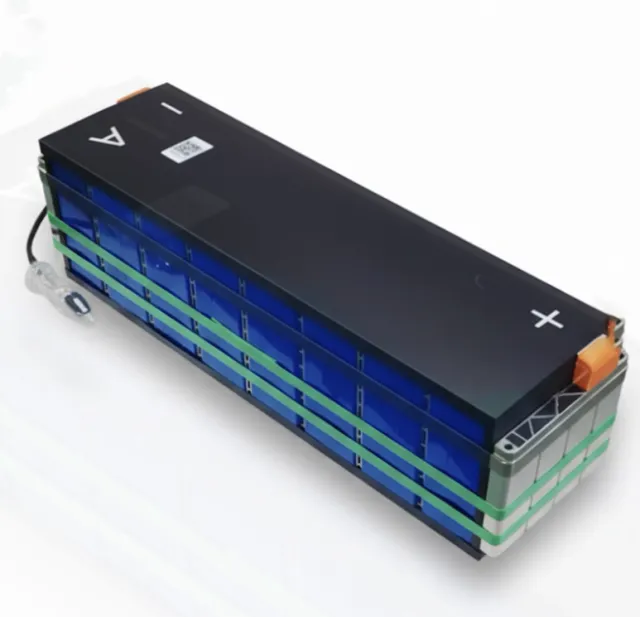
Product Overview
Sodium-ion modules are the lithium-free, cold-performance play in the battery category. They are not an energy-density substitute for LFP or NMC — commercial module-level energy density sits in the 90–175 Wh/kg range, with the higher end now entering volume production. The value proposition is different: discharge capability at –40°C with >75% capacity retention, a chemistry that can be shipped at 0 V without safety risk, and cycle life claims from 6,000 cycles at 80% DoD up to 20,000 cycles at 50% DoD depending on cathode chemistry and module design.
The category is commercially real in 2026, but chemistry and certification maturity vary widely by supplier. NFPP (sodium iron pyrophosphate) and layered-oxide systems behave differently on cycle life and energy density. The procurement task is not “sodium-ion yes or no” — it is which sodium-ion chemistry, at what energy density, with which certificate scope.
Key Features
- Cold-climate discharge without derating. –40°C discharge with >75% capacity retention is a recurring module-level claim; LFP typically loses substantially more capacity at the same temperature.
- Lithium-free chemistry. No lithium, cobalt or nickel in the cathode; relevant for supply-risk mitigation and certain market-access requirements.
- 0 V shipment tolerance. Sodium-ion modules can be discharged to 0 V for transport without safety risk, which simplifies logistics compared with lithium modules at partial state of charge.
- Cycle life split by chemistry. NFPP-class modules commonly cite 6,000–8,000 cycles at 80% DoD; higher-cycle claims (15,000–20,000) come from specific cell designs at partial DoD or 50% DoD conditions.
- 48 V / 58 V modular architecture emerging as the standard. 48 V modules at ~3.5–5 kWh and 58 V modules at ~4.5 kWh are the current commercial building blocks for residential and small C&I storage.
- Certification path exists, but scope varies. UL 1973, IEC 62619 and UL 9540A are achievable for sodium-ion modules; several suppliers now hold these certificates, but cell-level certification does not automatically cover the module.
Technical Specifications(Typical Commercial Modules)
Parameter | 48 V NFPP Module | 58 V NFPP Module | Notes |
|---|
Nominal voltage | 48 V(17S) | 58 V | 51.3 V / 58 V classes both active |
Nominal energy | 3.55 kWh | 4.5 kWh | 74 Ah / 170 Ah cell basis |
Cycle life | ≥6,000 @ 80% DoD | 8,000 @ 80% DoD, 0.5C/0.5C | Chemistry and test condition dependent |
Discharge temperature | –40 to +80°C | –30 to +55°C | –40°C capacity retention >75% cited |
Charge temperature | –10 to +45°C | –20 to +55°C | Charging below 0°C requires reduced voltage cutoff, not blocked entirely |
Max continuous discharge | 74 A(customizable) | 55 A per module(3 kW) | C-rate varies by cell and BMS |
Communication | CAN / RS485 | RS485 / CAN / USB-C | Protocol mapping to inverter required |
Certifications(typical achieved) | UN38.3, IEC 62619 | UL 1973, UL 9540A(pursuing/completed depending on supplier) | Verify module-level scope |
Module format | 442 × 650 × 177 mm, ~39 kg | 670 × 420 × 250 mm, ~65 kg | Rack or floor-standing |
Caveat: Sodium-ion module specifications are moving faster than lithium equivalents. Energy density and cycle life values above reflect current commercial products, not a stable category average. Use the specific module datasheet and certificate scope for procurement.
Typical Applications
Application | Why sodium-ion fits |
|---|
Cold-climate residential storage | –40°C discharge capability extends usable range in unheated installations; LFP would require heating or derating |
Telecom backup in remote/cold sites | 48 V modular format matches telecom DC plant; 0 V shipment simplifies logistics to off-grid locations |
Cost-sensitive C&I storage where space is not binding | Energy density below LFP/NMC is acceptable when footprint is not the constraint and lithium-free supply is valued |
Applications requiring 0 V transport | No lithium shipping restrictions on state of charge; simplifies cross-border logistics |
Installation & Maintenance Notes
Installation
- Charge cutoff voltage is temperature-dependent. Sodium-ion modules require lower charge cutoff at lower temperatures — for example, 3.95 V at ≥45°C, 3.65 V at –10 to 0°C, and 3.5 V at –20 to –10°C at the cell level. The BMS must implement this profile; do not apply a fixed charge voltage across the operating temperature range.
- Do not assume lithium-equivalent torque or terminal hardware. Terminal torque must come from the specific module datasheet; sodium-ion module terminal designs are not yet standardized across suppliers.
- Verify inverter/EMS protocol mapping before ordering. Sodium-ion modules use CAN or RS485, but the protocol implementation is supplier-specific. Confirm the module communicates with the target inverter without a third-party gateway.
Maintenance
- BMS log review: monthly. Cell voltage spread and temperature trend remain the primary diagnostics; sodium-ion’s flatter discharge curve makes voltage-only state-of-charge estimation unreliable.
- Capacity test: baseline at commissioning, then annually for backup duty. Track against the warranted end-of-life threshold, not the headline cycle count. The 20,000-cycle claims in the market are condition-specific and should not be treated as a universal specification.
- Terminal and connection inspection: every 6–12 months. Sodium-ion modules are newer to field deployment than lithium; connection integrity checks should not be skipped on the assumption that the chemistry is “maintenance-free.”