
PDDN
Frequently Asked Questions
Battery cells, battery modules, customization, quality, and quotation questions.
Frequently Asked Questions
Who is Luoyang Datang Energy Tech Co., Ltd.?
Luoyang Datang Energy Tech Co., Ltd. is a battery manufacturer with its own battery cell production facility. We specialize in battery cells and battery modules, serving customers in energy storage, battery pack manufacturing, industrial equipment, and other related industries.
What battery products do you offer?
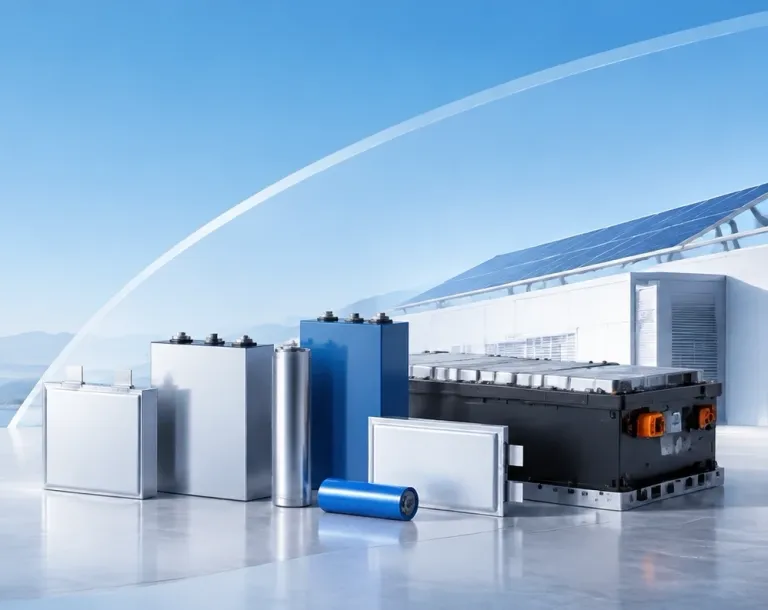
Our product portfolio includes prismatic LFP battery cells, prismatic NMC battery cells, cylindrical battery cells, pouch cells, blade battery cells, sodium-ion battery cells, and lithium titanate (LTO) battery cells. We also offer LFP, NMC, cylindrical, sodium-ion, and customized battery modules.
Do you have your own battery cell factory?
Yes. We have our own battery cell manufacturing facility. Our manufacturing capabilities and product offerings depend on the specific battery chemistry and product type. Please contact us for information about the production capabilities relevant to your requirements.
Who are your main customers?
We work with B2B customers, including battery pack manufacturers, energy storage system integrators, industrial equipment manufacturers, distributors, and other businesses that require battery cells or modules for their products and projects.
Do you support international customers?
Yes. We serve international B2B customers by providing product information, technical communication, quotation support, and export coordination according to project requirements.
What types of battery cells are available?
We offer various battery cell types, including prismatic LFP cells, prismatic NMC cells, cylindrical cells, pouch cells, blade cells, sodium-ion cells, and lithium titanate (LTO) cells. Availability depends on the specific model and technical requirements.
What is the difference between LFP and NMC battery cells?
LFP (lithium iron phosphate) and NMC (nickel manganese cobalt) are two common lithium-ion battery chemistries. LFP is often selected for its thermal stability and long cycle life, while NMC is commonly chosen for its higher energy density. The best option depends on your application, operating conditions, cost targets, and performance requirements.
What are prismatic battery cells?
Prismatic battery cells use a rigid rectangular housing that allows efficient use of space in many battery pack designs. They are commonly used in energy storage systems, electric vehicles, and industrial battery applications. Their suitability depends on cell specifications and pack design.
What are cylindrical battery cells?
Cylindrical battery cells have a round metal casing and are available in different sizes and chemistries. They are used in applications such as battery packs, industrial equipment, and energy storage products. Model selection depends on capacity, discharge requirements, dimensions, and intended use.
What are pouch battery cells?
Pouch battery cells use a flexible laminated packaging structure. They can offer high packaging efficiency and flexible form factors for applications with specific space or weight requirements. Appropriate mechanical protection and cell integration are important in the final battery design.
What are blade battery cells?
Blade battery cells are long, flat battery cells designed for space-efficient battery pack configurations. Their dimensions, electrical characteristics, and integration requirements vary by design. Please provide your target specifications to help identify a suitable product.
What are sodium-ion battery cells?
Sodium-ion battery cells use sodium ions as the charge carriers instead of lithium ions. They are being developed for applications where factors such as material availability, operating conditions, cost, and power performance are important. Their suitability depends on the specific cell chemistry and application requirements.
What are LTO battery cells?
LTO stands for lithium titanate, a battery chemistry known for its potential for high cycle life and fast charging under suitable conditions. LTO cells are used in selected industrial, transportation, and energy applications. Actual charging performance and service life depend on the cell model and operating conditions.
How do I choose the right battery cell?
The right battery cell depends on your required chemistry, nominal voltage, capacity, energy density, charge and discharge rates, cycle life, operating temperature, dimensions, and budget. Please share your application and technical requirements so our team can help evaluate suitable options.
Can I purchase battery cells for battery pack manufacturing?
Yes. Our battery cells are intended for B2B applications, including battery pack manufacturing and energy-related products. Please provide your target cell model, specifications, and estimated quantity to discuss availability and supply options.
What types of battery modules do you offer?
Our battery module portfolio includes LFP battery modules, NMC battery modules, cylindrical battery modules, sodium-ion battery modules, and customized battery modules. Available configurations depend on the product and application requirements.
What is a battery module?
A battery module is an assembly of battery cells connected and arranged in a defined configuration. Depending on its design, a module may include mechanical supports, electrical connections, monitoring components, or other protective features. The exact configuration varies by product.
What is the difference between a battery cell and a battery module?
A battery cell is the basic electrochemical unit that stores and releases electrical energy. A battery module combines multiple cells into a larger assembly with a defined electrical and mechanical configuration. Modules can be integrated into larger battery packs or energy storage systems, depending on their design.
Can you provide customized battery modules?
We can discuss customized battery module solutions based on your voltage, capacity, dimensions, cell configuration, electrical connections, and application requirements. Please provide a technical specification, drawing, or reference model for evaluation.
Can battery modules be integrated into an existing battery system?
Potentially, yes. Compatibility depends on electrical characteristics, dimensions, communication protocols, thermal management, protection requirements, and system architecture. Please provide your existing system specifications so compatibility can be assessed before ordering.
Do battery modules include a battery management system (BMS)?
BMS availability depends on the module design and product configuration. Please specify whether you require cell monitoring, voltage and temperature protection, communication interfaces, or an integrated BMS when requesting a quotation.
How do I select the right battery module?
Consider the required voltage, capacity, energy output, current rating, dimensions, cell chemistry, cooling method, communication requirements, and installation environment. Your equipment or system specifications will help determine the appropriate module configuration.
Can you supply battery modules for energy storage systems?
We can evaluate battery module requirements for energy storage applications based on the system design, chemistry, electrical parameters, operating environment, and integration requirements. Please share your project specifications to discuss a suitable solution.
Discuss Your Project
From battery cell selection to custom module design, we help businesses find battery solutions tailored to their application, performance requirements, and integration needs.