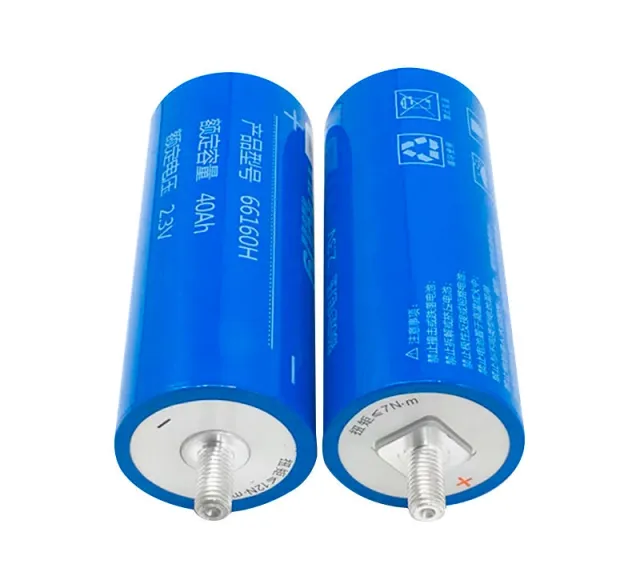
LTO40 2.4V 45Ah Lithium Titanate Battery Cell
Explore LTO40 2.4V 45Ah lithium titanate battery cells for industrial power, electric mobility and energy storage applications. Review cycle life and discharge specifications.
View Product

Product Categories
LTO (lithium titanate oxide) cells replace graphite with a lithium-titanate anode.
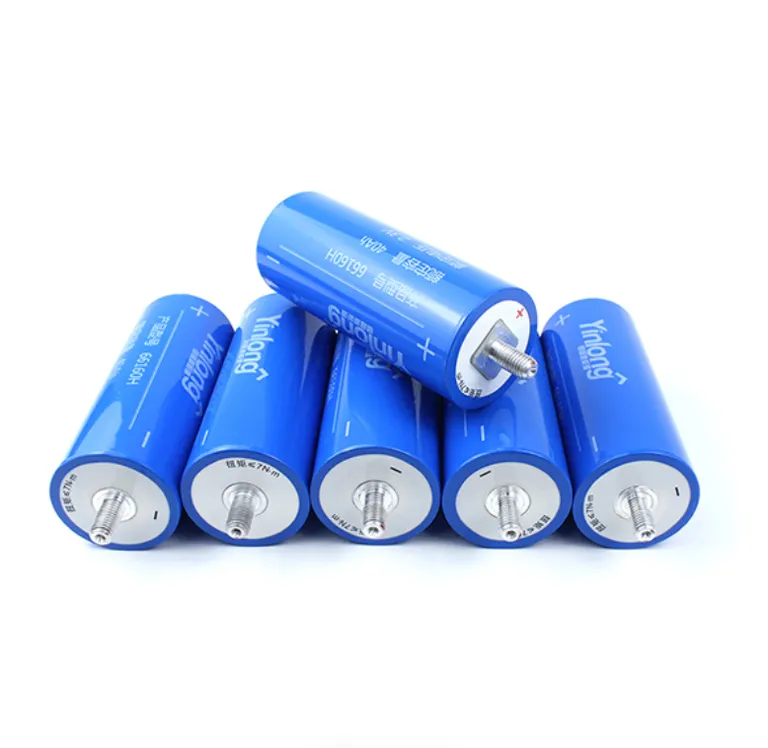
Explore LTO40 2.4V 45Ah lithium titanate battery cells for industrial power, electric mobility and energy storage applications. Review cycle life and discharge specifications.
View ProductLTO (lithium titanate oxide) cells replace graphite with a lithium-titanate anode. The “zero-strain” anode structure—volume change of only 0.2% during lithiation, versus ~10% for graphite—is the origin of LTO’s defining characteristics: very long cycle life, safe fast charging, and stable operation from −30°C to +60°C. The trade-off is equally structural: the higher anode potential (1.55 V vs. Li/Li⁺) reduces full-cell voltage to 2.3–2.4 V, which caps energy density at 60–110 Wh/kg. LTO is not an energy cell. It is a power, cycle-life, and temperature-window cell, and should be specified on those terms.
Cells are supplied as components; BMS, thermal management, and pack integration remain module-level deliverables. Do not evaluate LTO against LFP or NMC on $/kWh at the cell level alone—the TCO case depends on cycle count, downtime eliminated, and heating systems avoided.
Typical cell-level ranges across commercial LTO products. Exact values depend on manufacturer, format, and test condition; confirm against the specific datasheet before design lock.
Parameter | Typical Range / Value |
|---|---|
Chemistry | Lithium titanate oxide (Li₄Ti₅O₁₂) anode; NMC or LFP cathode in full cell |
Nominal voltage | 2.3–2.4 V |
Capacity classes | Cylindrical: 1.3–45 Ah; prismatic: 20–155 Ah |
Gravimetric energy density | 60–110 Wh/kg; commercial products at 76–89 Wh/kg (Yinlong cylindrical/prismatic), 84–106 Wh/kg (Toshiba SCiB), 85 Wh/kg (Saft LP 31MTi) |
Volumetric energy density | 128–229 Wh/L; typical 176–187 Wh/L |
Cycle life (to 80%) | 6,000–45,000+ headline; 20,000 cycles at 4C/4C, 80% DOD (Saft LP 31MTi); 25,000 cycles listed for Yinlong 66160 |
Continuous charge/discharge | 10C (Saft LP 31MTi: 310A charge/discharge); 6-minute full charge stated for Yinlong cylindrical |
Operating temperature | −50°C to +65°C (Yinlong cylindrical); −25°C to +60°C (Saft LP 31MTi); charging permitted to −30°C |
Storage temperature | −40°C to +70°C (short-term); long-term storage typically −5°C to +35°C |
Certifications (confirm per batch) | IEC 62619, UL 1642, UN 38.3 (transport) where claimed |
Format note: the same LTO chemistry appears in cylindrical (66160, 18650, 14500) and prismatic formats. Cylindrical cells suit standardized pack assembly and high-rate power; prismatic cells suit space-constrained industrial packs. Format does not change the voltage or cycle-life chemistry; it changes integration cost and thermal path.
No. The nominal voltage is 2.3–2.4V vs. 3.2V for LFP, so series count, BMS thresholds, and charger voltage must change. Energy density is roughly half of LFP at cell level, so a like-for-like volume and weight replacement is not achievable. LTO is selected when cycle life, cold-temperature charge acceptance, or fast-charge safety are the binding constraints—not when energy density is.
Specify the C-rate, DOD, and temperature. A cell rated 25,000 cycles at low DOD is not equivalent to 20,000 cycles at 80% DOD, 4C/4C. Saft’s LP 31MTi illustrates the spread within a single product: 20,000 cycles at 4C/4C, 80% DOD, and 1.6 million cycles at 6C/6C, 3% DOD. Use the condition that matches the duty cycle.
No. LTO reduces thermal runaway risk and changes the failure mode under internal short circuit, but module-level propagation protection, fusing, and thermal barriers remain necessary. Chemistry-level safety is a risk reduction, not a design exemption. The phase-change behavior at a short-circuit point is a mitigation, not a guarantee against all abuse conditions.
Share your product requirements, estimated order quantity, and target delivery destination.

Hi! Before we connect you to our WhatsApp team, please share 5 quick details.