Product Overview
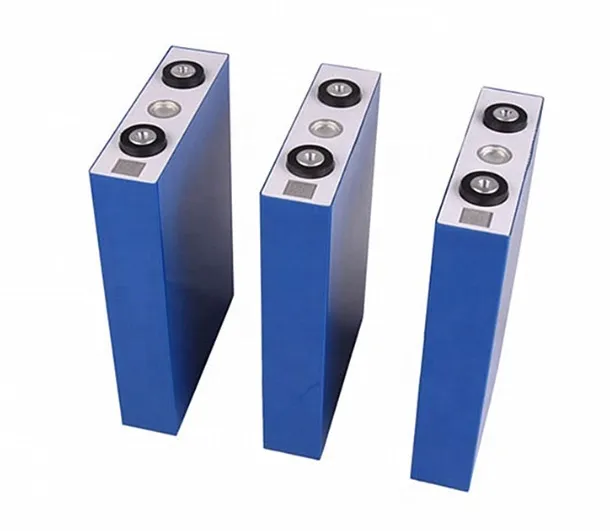
Prismatic LFP cells pair a rigid aluminum or steel housing with lithium iron phosphate chemistry. This is the dominant cell format for stationary energy storage and a growing choice for cost-sensitive EV and commercial vehicle platforms where cycle life, thermal stability, and $/kWh outweigh gravimetric energy density. Cells are supplied at component level; BMS, thermal management, and electrical protection are implemented at module and pack level.
Key Features
- Large-format capacity cuts system complexity. Moving from 314Ah to 587Ah reduces cell count by roughly 47% for the same energy, lowering busbar, terminal, and BMS sense-channel overhead.
- Cycle life is the economic lever, but condition-bound. 8,000–10,000+ cycles are quoted at specified temperature, C-rate, and end-of-life thresholds; headline figures are not interchangeable across suppliers without matching test conditions.
- Thermal stability is intrinsic. The phosphate-oxygen bond reduces thermal-runaway risk relative to NMC, enabling simpler cooling architectures in ESS racks.
- Low-temperature charging is the practical limit. Discharge extends to −20°C, but charging is typically restricted above 0°C on commercial prismatic cells; LFP is not the default for sustained sub-zero duty without heating or derating.
- Cost benchmark: LFP cells price materially below NMC on a $/kWh basis, driven by iron and phosphate abundance versus nickel and cobalt.
Technical Specifications
Typical cell-level ranges. Exact values vary by manufacturer and test condition; confirm against the specific datasheet before design lock.
Parameter | Typical Range / Value |
|---|
Chemistry | Lithium iron phosphate (LiFePO₄) |
Nominal voltage | 3.2 V |
Capacity classes | 280–314Ah mainstream; 587Ah, 628Ah large-format in production |
Cell energy | 314Ah: ~1,005 Wh; 587Ah: ~1.88 kWh; 628Ah: ~2,010 Wh |
Gravimetric energy density | ~160–180 Wh/kg (capacity-dependent) |
Volumetric energy density | ~350–434 Wh/L; 587Ah class reaches 434 Wh/L |
Cycle life | 8,000–10,000+ cycles to 80% capacity under rated conditions |
Operating voltage window | 2.5 V – 3.65 V |
Discharge temperature | −20°C to 55°C; charge upper limit typically 45°C |
Certifications (confirm per batch) | UN38.3 (transport); IEC62619 (industrial safety); UL1973 (stationary storage) |
Typical Applications
- Grid-scale & C&I BESS — cycle life, thermal stability, lowest LCOS among lithium chemistries
- Long-duration storage (4–8 h) — large-format cells (587Ah–1,175Ah) reduce connections and balance-of-system cost per MWh
- Residential & commercial solar storage — 314Ah class in 16S delivers ~16 kWh per pack; 628Ah class roughly doubles without parallel connections
- Electric buses, trucks & commercial vehicles — $/kWh and cycle life align with high-utilization duty cycles
- Material handling (forklifts, AGVs) — safety profile and cycle life suit indoor high-cycling operations
- Telecom & off-grid backup — thermal stability reduces enclosure and cooling complexity
Installation & Maintenance Notes
- Compression: Prismatic cells require even compression at ~10–12 psi; leave slight expansion room and use spring washers to maintain preload over time.
- Terminal torque: M6: 4 N·m; M8: 8–10 N·m. Do not exceed; over-torquing damages the terminal seal.
- Initial charge: Charge to full voltage before first assembly to ensure activation and balance.
- Voltage limits: Avoid charging above 3.65V and discharging below 2.5V; both accelerate capacity loss.
- Storage: Controlled temperature, low humidity. Long-term storage above 45°C accelerates calendar fade.