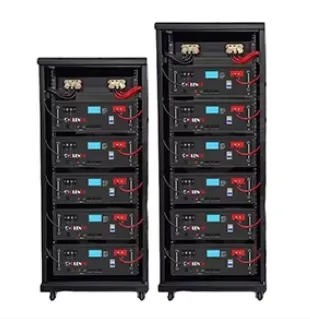
96V/144V/192V Customizable LiFePO4 Battery Modules
Scalable high-voltage rack LiFePO4 battery modules. Customizable 96V/144V/192V, 6000+ cycles, and seamless inverter compatibility. Get a factory-direct quote!
View Product

Product Categories
Lithium iron phosphate (LiFePO4) modules for buyers who need long cycle life, thermal stability and a well-documented certification path more than maximum energy density.
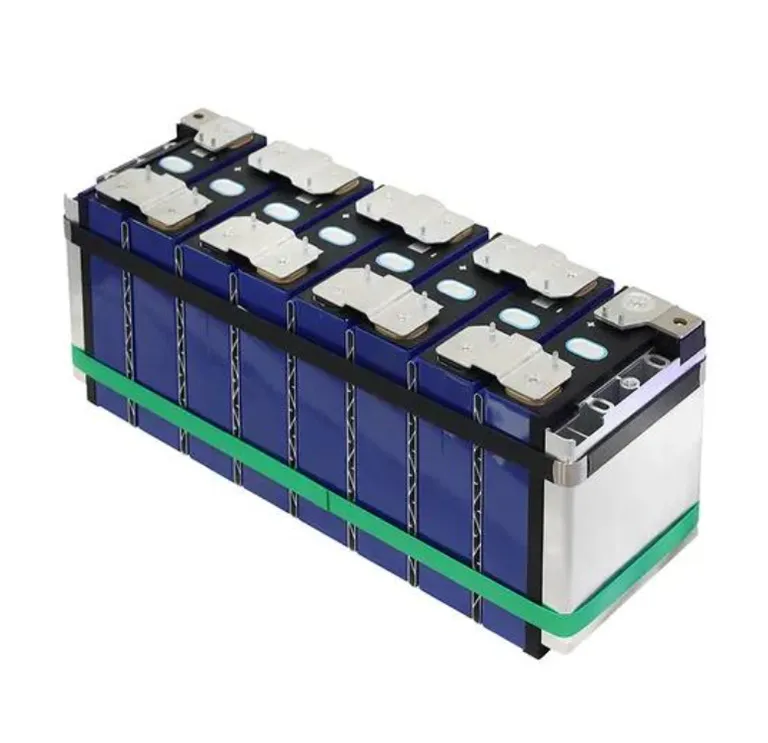
Scalable high-voltage rack LiFePO4 battery modules. Customizable 96V/144V/192V, 6000+ cycles, and seamless inverter compatibility. Get a factory-direct quote!
View ProductLithium iron phosphate (LiFePO4) modules for buyers who need long cycle life, thermal stability and a well-documented certification path more than maximum energy density. The dominant module format in this category is the 51.2 V nominal / 100 Ah (5.12 kWh) building block, stackable in parallel to 20 kWh and beyond for residential storage, telecom sites, UPS and small commercial ESS. LFP’s phosphate-oxygen bond gives it a higher thermal runaway threshold than NMC, which is why this chemistry dominates stationary and backup applications where the module sits indoors or near occupied space.
Parameter | Typical value | Notes |
|---|---|---|
Nominal voltage | 51.2 V (16S LFP) | Voltage window 45.6–56.8 V |
Nominal capacity | 100 Ah / 5.12 kWh | 200/300/400 Ah stackable variants |
Cycle life | ≥6,000 @ 80% DoD, 25°C | 10-year warranty options available |
Continuous charge/discharge | 50 A / 100 A typical | System-dependent up to 200 A |
Communication | CAN (500 kb/s) / RS485 (9600 b/s) / RS232 | Protocol mapping to inverter must be verified |
Operating temperature | –10 to +50°C (discharge/charge range varies by product) | Confirm low-temperature charge cutoff |
Parallel expansion | Up to 63 modules in parallel(product-dependent) | Module-level auto-balancing required |
Certifications | IEC 62619, UL 1973, UN38.3, CE-EMC | Module-level scope, not cell-level |
Enclosure | IP22 standard / IP54 optional | Wall-mount or rack-mount form factors |
Caveat: Values above describe the common 51.2V/100Ah class, not every product in the category. Use the specific module datasheet for procurement.
Application | Fit rationale |
|---|---|
Residential solar self-consumption | 51.2V architecture retrofits existing PV systems without full replacement; 5–20 kWh modular capacity range |
Telecom base stations & remote towers | Stable backup for 5G and remote telecom sites; long float life at 25°C cited up to 15 years in some products |
UPS & data centers | Reliable backup for servers and IT infrastructure; LFP thermal stability suits indoor deployment |
Small commercial peak shaving / load shifting | Modular capacity scales with tariff structure; parallel expansion without replacing existing modules |
Hybrid & off-grid systems | Compatible with hybrid inverters for islanded, agricultural and microgrid sites |
Installation
Maintenance
Cycle life and thermal stability, primarily. LFP modules in this category are typically rated ≥6,000 cycles at 80% DoD with higher thermal runaway thresholds. NMC offers higher energy density and better cold-temperature discharge, but shorter cycle life at comparable depth of discharge. For daily-cycling stationary storage where space is not the binding constraint, LFP is the lower-lifetime-cost default.
At minimum UN38.3 for transport and IEC 62619 for industrial module safety. For North America, UL 1973 is the module credential. Confirm the certificate scope covers the module assembly, not only the cells — this is the most common certification gap in LFP module procurement.
Only with engineering review and a BMS that supports mixed-capacity strings. Paralleling different capacities creates current imbalance during charge and discharge; the larger module can overcharge the smaller one or vice versa. The safe procurement rule is: match capacity, voltage window and BMS protocol across every module in a parallel bank.
LFP discharge performance weakens below freezing, and charging below 0°C must be blocked by the BMS to prevent lithium plating. If the installation site regularly drops below freezing, verify the module’s low-temperature charge cutoff and consider a heated enclosure or an NMC alternative where cold-weather charge acceptance is required.
Share your product requirements, estimated order quantity, and target delivery destination.

Hi! Before we connect you to our WhatsApp team, please share 5 quick details.